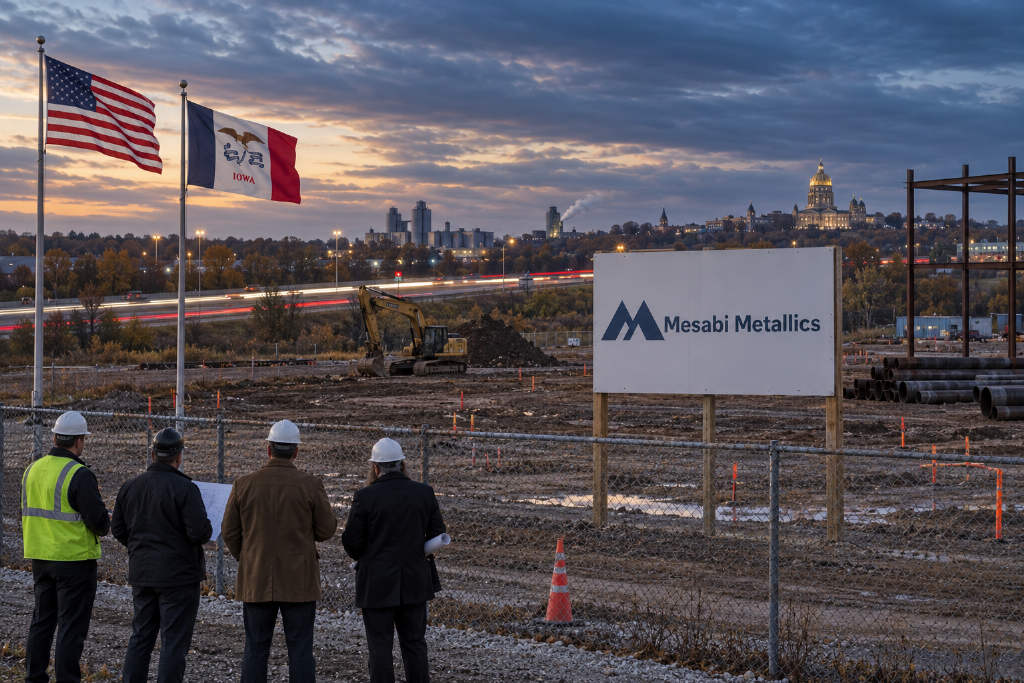
A $15 billion steel plant project in Iowa announced by the Trump administration at the White House on Sept. 28 has not been finalized, according to a Techub News brief citing Watcher Guru. The project was presented as a major economic pledge ahead of the election and was said to create 1,750 jobs. But key pieces are still missing. The site has not been determined, permits have not been secured, and no binding contracts are in place, the report said.
The project was proposed by Mesabi Metallics, a unit of India’s Essar Group, with a target to begin operations by 2030. Local media reports cited in the brief said the company has not yet purchased land or applied for permits. Iowa officials also said they do not have details about the plan. The gap between the White House announcement and the project’s current status has drawn scrutiny over the credibility of the economic promise.
A $15 billion steel plant project in Iowa announced by the Trump administration at the White House on Sept. 28 is still far from finalized, according to Techub News, citing Watcher Guru.
The project was presented as creating 1,750 jobs. So far, however, no site has been confirmed, permits have not been obtained, and there are no binding contracts in place. The report said those gaps have raised questions about an economic pledge made ahead of the election.
The plant proposal came from Mesabi Metallics, a subsidiary of India’s Essar Group, with a goal of starting operations by 2030. Local media, according to the report, said the company has not purchased land or filed permit applications. Iowa officials also said they do not have details on the project.
This article was originally published by Bit.Fan. For more cryptocurrency news and market insights, visit www.bit.fan. Disclaimer:
The market information, project data, and third-party content displayed on this platform are for industry information sharing only and do not constitute any form of investment advice or return commitment.
Cryptocurrency trading carries high risks. Users should fully assess their risk tolerance and make independent decisions. All profits, losses, and legal responsibilities are borne by the users themselves.