
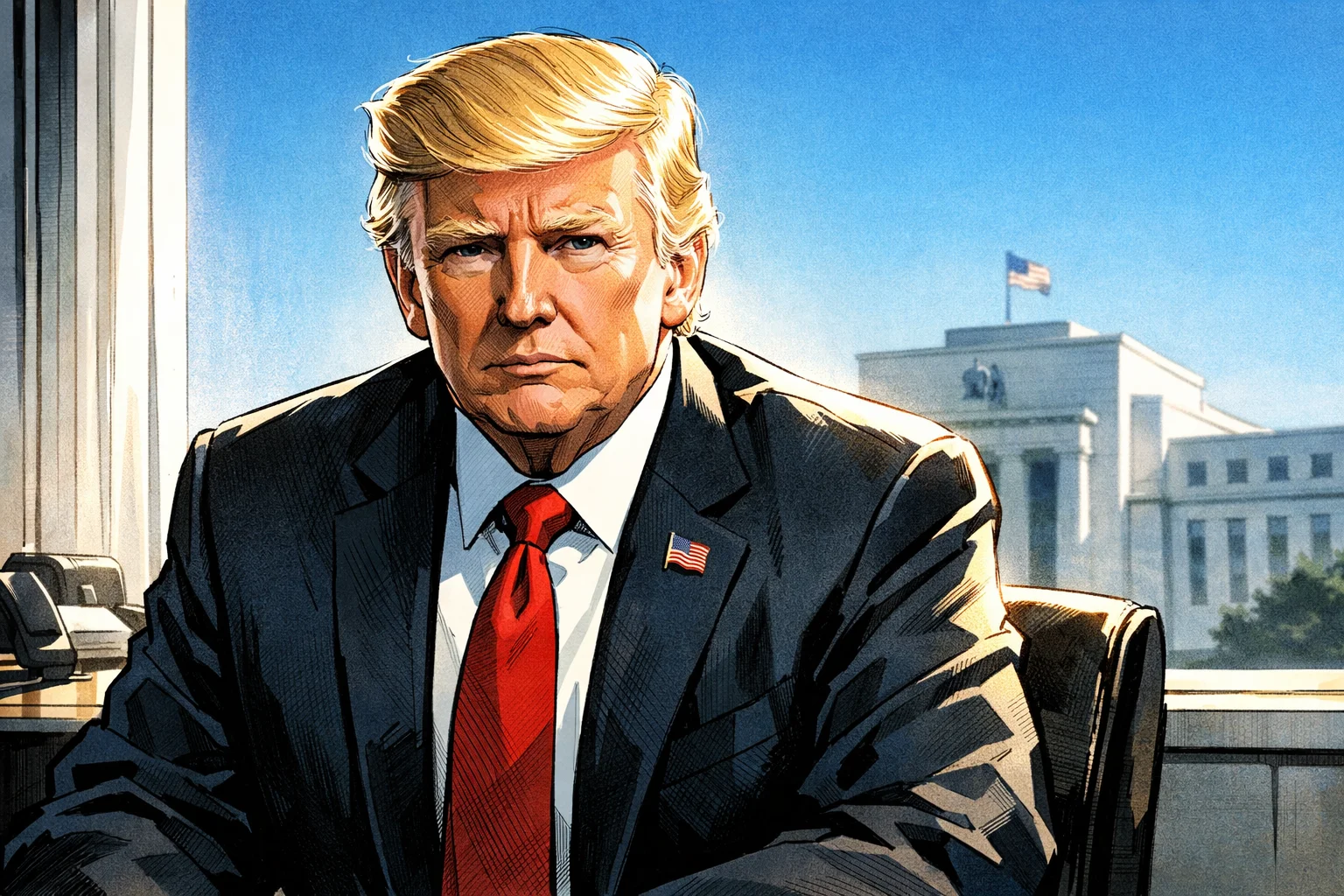
U.S. President Donald Trump said the next Federal Reserve chair could be announced as soon as Friday morning in Washington, which would put the decision around tonight in Taipei time. He paired that timeline with a fresh call for lower rates, arguing that the current 3.50%–3.75% range should be reduced by another 2 to 3 percentage points to bring the U.S. toward what he described as the world’s lowest interest rates.
Current Chair Jerome Powell is set to see his term expire in May this year. Trump’s remarks put immediate attention on the succession process and on whether the next Fed leader would align more closely with the White House on rate policy. That question matters now, because the administration is pressing for rapid easing while the central bank has not moved in that direction.
Prediction market shows Kevin Warsh with a commanding lead
Data from Polymarket places former Fed Governor Kevin Warsh in first place with 86% odds. BlackRock Chief Investment Officer Rick Rieder follows at 8%, while current Fed Governor Christopher Waller stands at 2%.
Trump also said the new chair should have “star quality” and be aligned with the administration’s policy direction. That comment has sharpened scrutiny over the Fed’s political independence. The institution has long been expected to operate at arm’s length from elected officials, and the choice of a successor now carries clear implications for how that boundary is viewed.
Trump wants aggressive cuts while the Fed holds rates steady
Trump’s case for lower rates centers on cutting federal debt interest costs, easing mortgage pressure, and improving market liquidity. The source material says such a move could save hundreds of billions of dollars in debt servicing costs if borrowing rates fall sharply.
The Fed, however, kept rates unchanged at its January meeting this week. The economic backdrop remains firm: 2025 third-quarter GDP growth came in at 4.3%, the unemployment rate was 4.4%, and inflation was 2.7%. That inflation reading is still above the Fed’s 2% target, though the source describes it as remaining within an acceptable range. For now, policymakers have not endorsed the scale of cuts Trump is asking for.
Leadership change could shape capital flows in late 2026
The market is watching the chair decision for more than symbolism. According to the source, a large one-time rate cut could bring inflation back with more force, especially as Trump’s tariff policies are expected to push prices higher by mid-2026.
Whoever takes the job, and how that person approaches the rate path, could influence global capital flows and asset prices in the second half of 2026. The tension is now clear: Trump is calling for fast and deep cuts, while the Fed is still balancing inflation control against demands from the White House.