
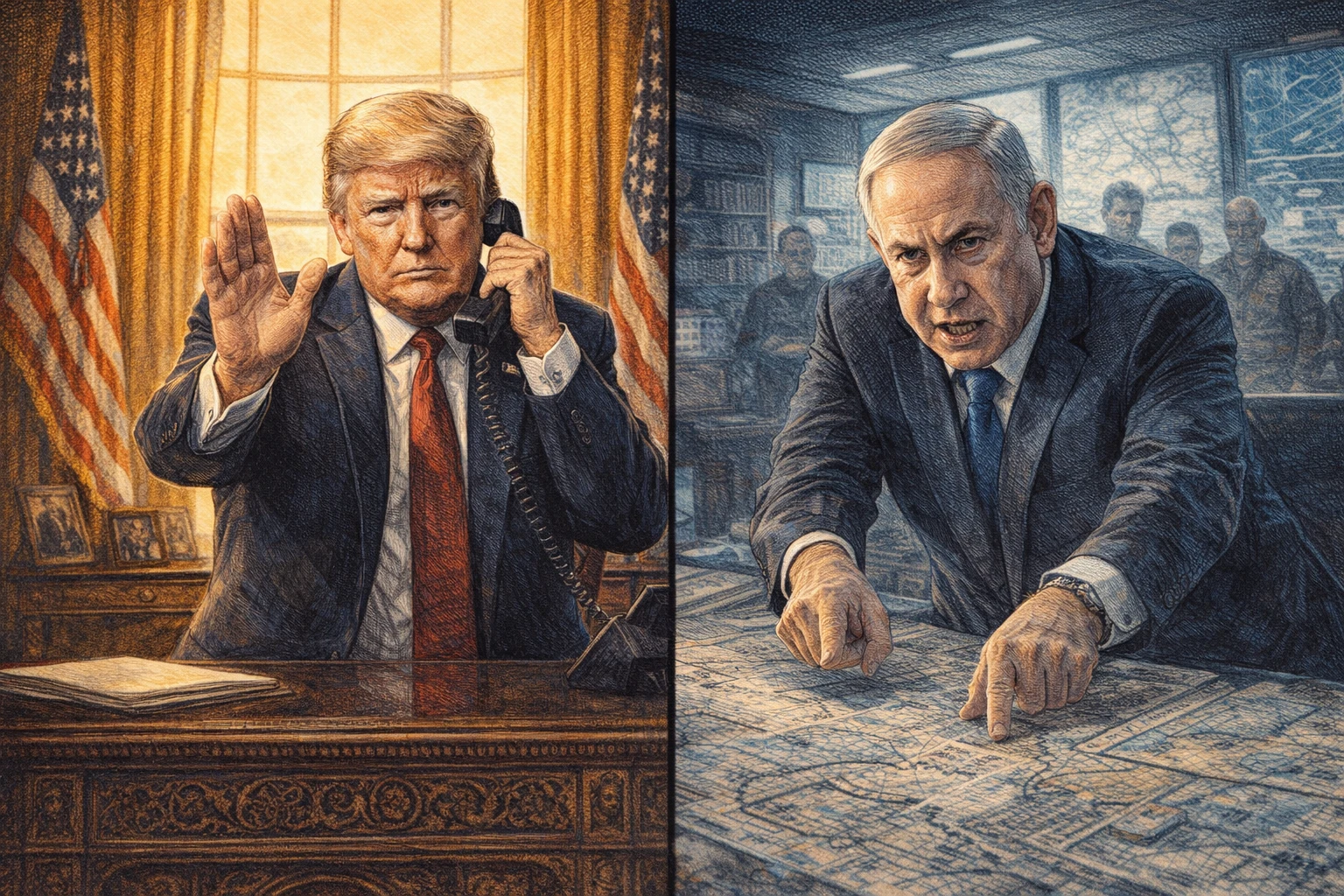
A sharp disagreement between Washington and Jerusalem over an Israeli response to Iran spilled into public view over the past 24 hours. Axios reported that Trump personally warned Prime Minister Benjamin Netanyahu to be careful or risk standing alone, but the message did not produce a concession. Accounts from US and Israeli sources point to the same divide: the White House wanted to contain the crisis, while Netanyahu insisted on keeping a military response on the table.
Beirut strike reached CENTCOM, not the White House
The immediate trigger came on June 7, when Israeli forces struck a Hezbollah target in Beirut. An Israeli source said the operation was communicated to US Central Command before it happened, but not to the White House. Trump was said to be unhappy with that. Iran then followed through on an earlier warning and launched missiles at Israel, marking the first direct missile exchange since April and sharply raising the temperature.
That night, Trump called Netanyahu and told him not to retaliate. According to an Israeli source briefed on the call, Trump laid out two options: reach an agreement with Iran within days and remove the need for an Israeli strike, or, if diplomacy collapsed, let Trump himself lead military action against Iran. US officials described the call as notably calmer than an earlier conversation in which Trump had reacted angrily to Israeli strikes in Lebanon.
Netanyahu argued restraint would project weakness
Israeli officials did not share the White House view. A source on the Israeli side said Netanyahu argued that failing to respond to an Iranian attack would damage Israel and also hurt the ceasefire effort Trump was trying to advance. His position was that silence would signal Iran had succeeded in deterring joint US-Israeli military action, weakening leverage at the negotiating table rather than preserving it.
The call ended without a clear common position. Some US officials who were involved believed Trump had at least bought a few days of breathing room. Israeli sources read it differently. In their view, Trump opposed retaliation, but had not delivered an absolute order not to strike. One US official later said plainly that Netanyahu could not reasonably interpret Trump’s words as approval, because he had been told directly that the president did not support such a move.
Washington was informed after missiles were already launched
Even so, Netanyahu, after consultations with senior security officials, ordered a strike on Iran. Trump told Israeli media that Washington was only notified after the missiles were already in the air. He also said he had succeeded in reducing the scale of the attack, a comment that fueled speculation that a broader Israeli plan was pulled back at the last minute.
Trump also told Axios that five Middle Eastern countries had called him and asked him to pressure Netanyahu to stop the attack. He said those governments were deeply worried and supported the agreement under discussion. On the morning of June 8, according to Trump, the US received a message from Iran saying it was prepared to halt attacks if Israel did the same, and asking Washington to tell Israel to stop as well.
The situation then cooled temporarily. An Israeli source said that despite the dispute, Netanyahu eventually agreed that Israel would hold fire as long as Iran did not strike again. After the call, he instructed senior military commanders to cancel the attack plan.
Alliance intact, political needs moving in opposite directions
US and Israeli sources quoted in the report said the latest episode exposed a deeper divergence in strategic interests. One US official summed it up in stark terms: Netanyahu needs the war to continue in order to preserve his political life in Israel, while Trump needs the war to end in order to preserve his political life in the United States. That line has become the clearest description of the current split.
In an interview with NBC’s Meet the Press, Trump said the US was very close to an agreement and warned that otherwise military action would follow. Iran’s chief negotiator and parliament speaker Ghalibaf pushed back, saying Trump’s comments about a memorandum draft contradicted what had already been agreed, and adding that Iran had no trust in the other side. The opening for a ceasefire has not closed, but the public disagreement between the US and Israel over how to handle Iran is now difficult to hide.