
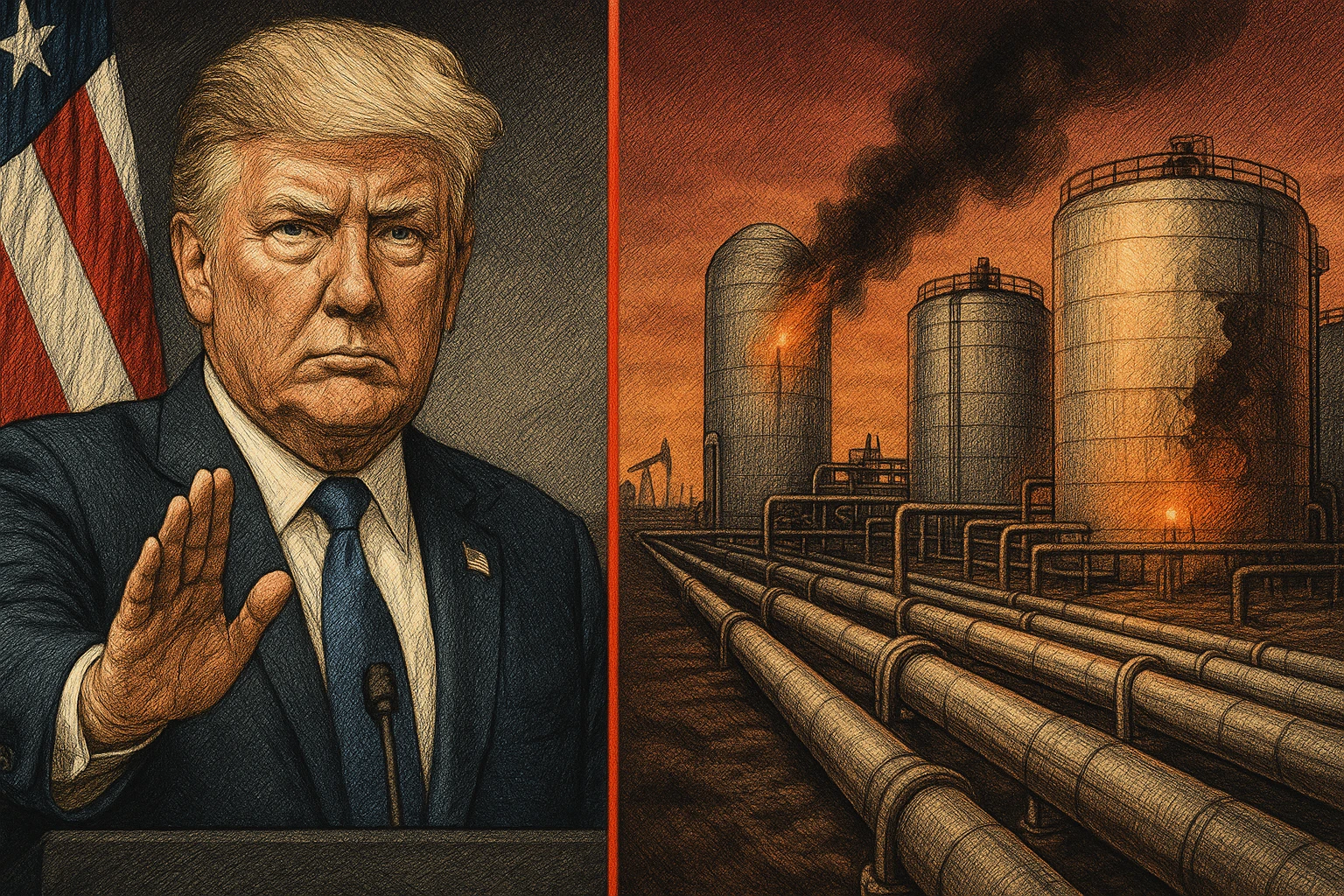
After Israel struck Iran’s South Pars gas field, Iran retaliated by attacking liquefied natural gas facilities in Qatar, pushing Middle East tensions sharply higher on March 18. Trump responded on social media by saying the United States had “no knowledge” of the specific operation in advance and that Qatar had no involvement, while warning Iran that any new attack on Qatari facilities would trigger U.S. intervention with “unprecedented” force.
Trump draws a red line around South Pars and Qatar
In his post, Trump described the Israeli strike as a powerful blow against the South Pars field and framed it as a reaction to anger over the regional situation. He said Israel would not carry out additional strikes on South Pars unless Iran made what he called the unwise decision to attack Qatar. The message was blunt. If Qatari LNG infrastructure is hit again, Washington says it will respond directly.
That account is in direct tension with a report from The Wall Street Journal. The paper, citing anonymous U.S. officials, said Trump had been briefed on the attack plan in advance and supported it. There has been no official clarification reconciling the two versions.
Senate again rejects effort to curb military action on Iran
At the same time, the domestic political fight in Washington continued. The U.S. Senate voted 53 to 47 against a war powers resolution introduced by Democratic Senator Cory Booker. It was the third failed congressional attempt to limit Trump’s authority to take military action against Iran.
Separately, sources said the Trump administration is evaluating the deployment of several thousand additional U.S. troops to the Middle East. No detailed timetable was included in the material, but the move points to a broader escalation debate inside the administration.
Former counterterrorism chief resigns and faces FBI scrutiny
Another development came from Joe Kent, the former head of the U.S. counterterrorism center, who resigned on March 18. He said there was no intelligence basis for going to war with Iran and accused Israel of pushing military action under the shelter of U.S. security guarantees.
Shortly after resigning, Kent was reported to be under FBI investigation over alleged disclosure of classified information. He denied wrongdoing and said his resignation was based on principle. Public information in the source stops there.
Energy risk spills into broader market moves
South Pars is the world’s largest natural gas reserve and is shared by Iran and Qatar. The source notes that Qatar’s LNG exports account for more than one-fifth of global supply. Any damage to those facilities would have consequences well beyond a single regional incident.
The material also says rising tensions in the Middle East often create short-term selling pressure for Bitcoin, while safe-haven flows may return later. For now, the immediate effect has been visible in oil prices and broad market volatility, with the next phase dependent on whether the conflict expands.