Goldman Sachs2026-10-10 04:30:10Goldman Sachs Picks 10 Energy and Power Stocks for Q4, Sees 27% Average UpsideGoldman Sachs said in an Oct. 8, 2026 report that it sees an average total return potential of 27% across 10 energy and power stocks, all of which carry Buy ratings based on Oct. 7 closing prices. The list spans four themes: oil and gas exploration and production, power and LNG, refining, and natural gas upstream and midstream. Goldman’s core view is that these names offer attractive risk-reward at current levels, with several fourth-quarter catalysts lined up. Among the triggers highlighted in the report are progress at ConocoPhillips’ Willow project, a possible earnings guidance increase from Duke Energy, and a commercial contract announcement tied to Golar LNG’s fourth FLNG vessel. The report, summarized by Chaoxiang Research and cited by MarsBit, also includes target prices and cash flow or earnings assumptions for each company, ranging from refinery operator HF Sinclair to infrastructure and services names such as Quanta Services and Baker Hughes. Goldman said the combination of grid buildout, data center demand, LNG expansion, and tighter refining fundamentals underpins its stock selection.140
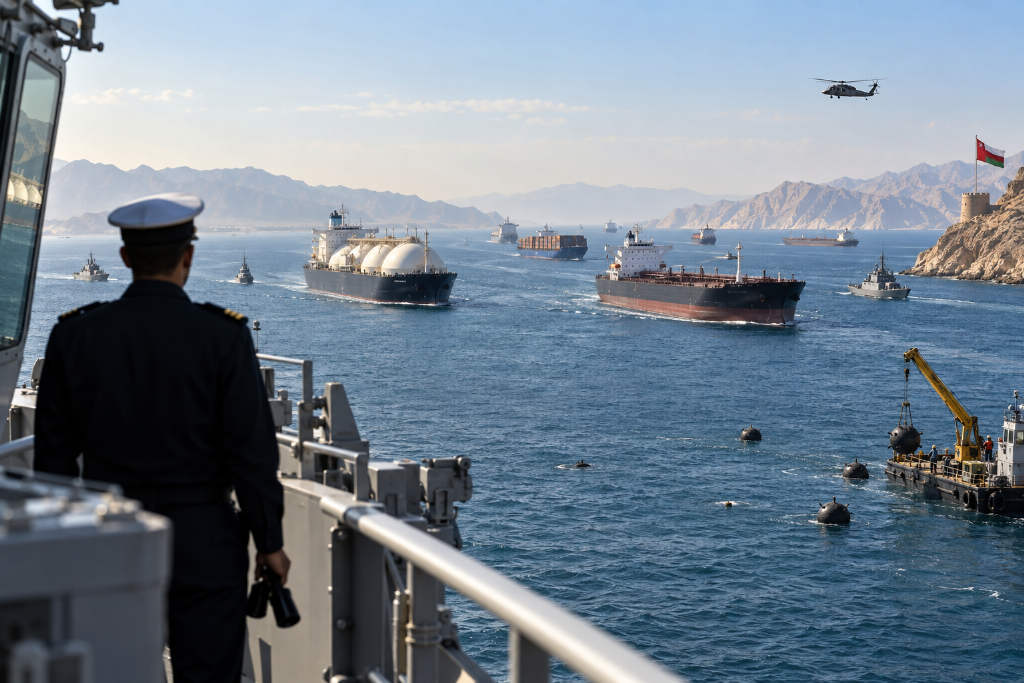
Strait of Hor2026-09-19 13:49:32US military says mines cleared from Strait of Hormuz shipping lanesThe US military said the main shipping lanes in the Strait of Hormuz have been cleared of mines, with maritime traffic returning to normal. Brad Cooper, commander of US Central Command, said thousands of vessels have already passed through the waterway after the clearance work was completed. He also said Gulf regional partners have shipped more than 1 billion barrels of crude oil. Over the past two weeks, shipments of crude, cargo and liquefied natural gas reached their highest level in six months, according to his statement. The update points to a recovery in traffic through one of the world’s key energy transit routes, based on the figures and remarks cited in the original report.430
Strait of Hor2026-09-19 13:47:46US commander says main shipping lane in Strait of Hormuz has been cleared of minesBrad Cooper, commander of U.S. Central Command, said the main shipping channel in the Strait of Hormuz has completed mine-clearing operations and that thousands of vessels have already passed through the route. He also said oil exports shipped by Gulf regional partners have exceeded 1 billion barrels. Over the past two weeks, transport volumes for crude oil, cargo and liquefied natural gas reached their highest level in six months. The remarks were cited by ChainCatcher in a brief news update.340
JERA2026-09-14 05:21:48JERA CEO Says Russian Gas Supplies to Europe Will Stop From Jan. 1, Prices May Rise FurtherAccording to ChainCatcher, the global chief executive officer of JERA, Japan’s largest power company, said Russian liquefied natural gas and natural gas shipments to Europe will stop from Jan. 1 next year. The executive also said gas prices could climb further. The update points to a potential supply shift in the European energy market at the start of the year. No additional details on volumes, policy measures, or affected buyers were provided in the original brief. The report only stated the timeline for the halt and the CEO’s view that natural gas prices may continue moving higher.910
JPMorgan2026-08-24 21:21:44JPMorgan and Santander to lead financing support for Argentina LNG projectAccording to ChainCatcher, JPMorgan and Santander will lead financing support for a liquefied natural gas project in Argentina, with total support of up to $15 billion. The brief did not name the project, outline the financing structure, or provide a timeline for the arrangement. No additional parties or terms were disclosed in the source text. The report presents the planned financing role of the two banks and the maximum size of the support, without further operational or regulatory details.1190
Qatar2026-08-11 15:58:11Qatar LNG Loadings Hit Highest Level Since March as Strait of Hormuz Reopening Expectations BuildQatar’s liquefied natural gas loadings climbed to their highest level since March on Aug. 11, a sign the country may be preparing for a possible reopening of the Strait of Hormuz. At Ras Laffan port, average daily LNG loadings were about 80,000 tons, according to the report. Even so, that level remained roughly 60% below the same period last year, showing that exports have not yet returned to normal levels. The report also said seven of Qatar’s 14 LNG production trains have shown signs of resuming operations, pointing to a gradual recovery in output after disruptions caused by the conflict. Still, a full rebound in exports depends on whether shipping traffic through the Strait of Hormuz can fully resume. Diplomatic talks tied to that issue are still underway, but there is no assurance that an agreement will be reached.1930
prediction ma2026-08-09 07:15:51Predict.fun Shows IG at 85% to Beat LNG in LPL Third StagePPP's monitoring data reveals that predict.fun currently shows the probability of IG defeating LNG at 85% in the 'LPL Third Stage IG vs LNG' prediction event. This is the headline number from the prediction market platform. The two teams will meet today at 3 PM in a BO3 matchup, which means the first team to win two games takes the series. Recent results put both teams in contrasting positions. IG, fresh off a win over LNG, then suffered a narrow 1:2 loss to NIP. LNG, having lost 0:2 to IG in their prior meeting, followed that with another 0:2 defeat against WBG in the last game. That makes it three consecutive losses for LNG, while IG's recent form is mixed. The 85% figure comes from PPP's real-time monitoring of predict.fun and reflects the current market assessment of the upcoming LPL Third Stage contest.1950
prediction ma2026-08-08 07:00:50LNG vs WBG: predict.fun Shows 30% Win Probability, Both Teams Still WinlessMonitoring data from prediction market tool PPP shows predict.fun currently lists LNG's win probability at 30% for today's LPL third split match against WBG. The match kicks off at 3 PM and is a best-of-three series. LNG have lost both of their matches so far in the third split, falling 0:2 to NIP and 0:2 to IG, which leaves them with an 0-4 record in maps. WBG have also not secured a win yet, falling 1:2 to IG and then 0:2 to NIP, giving them a 1-4 map record. With both teams still winless, the result of this match will hand one of them their first victory of the split. The stakes are straightforward: the winner picks up the opening win, while the losing side remains without a victory. The PPP monitoring data reflects the market's current assessment at the time of writing, with predict.fun setting the probability for an LNG win at 30%.1930