
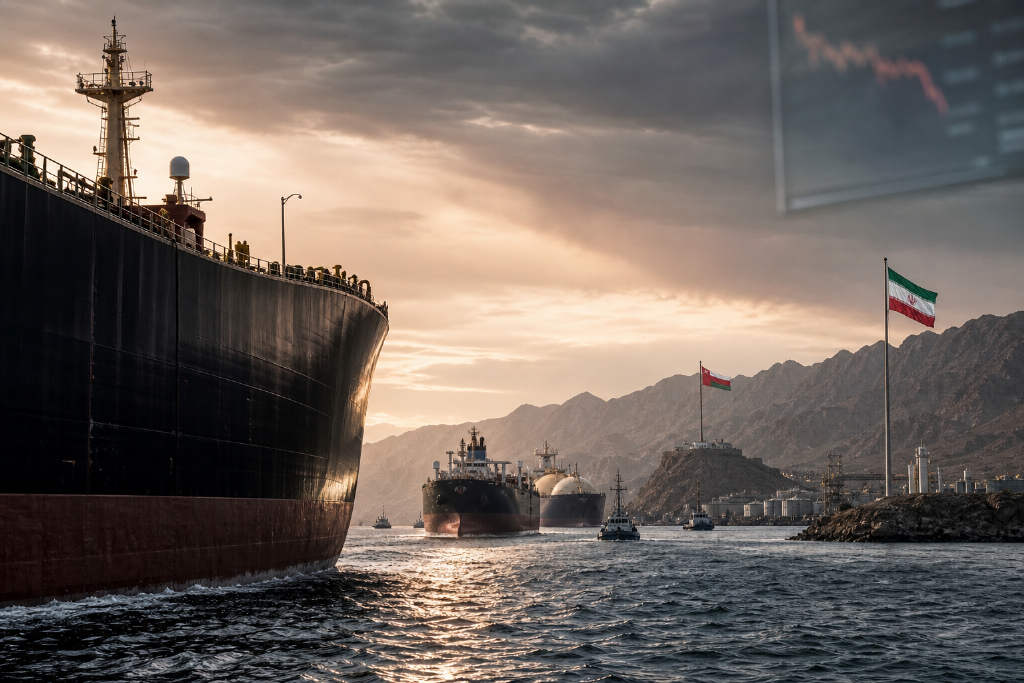
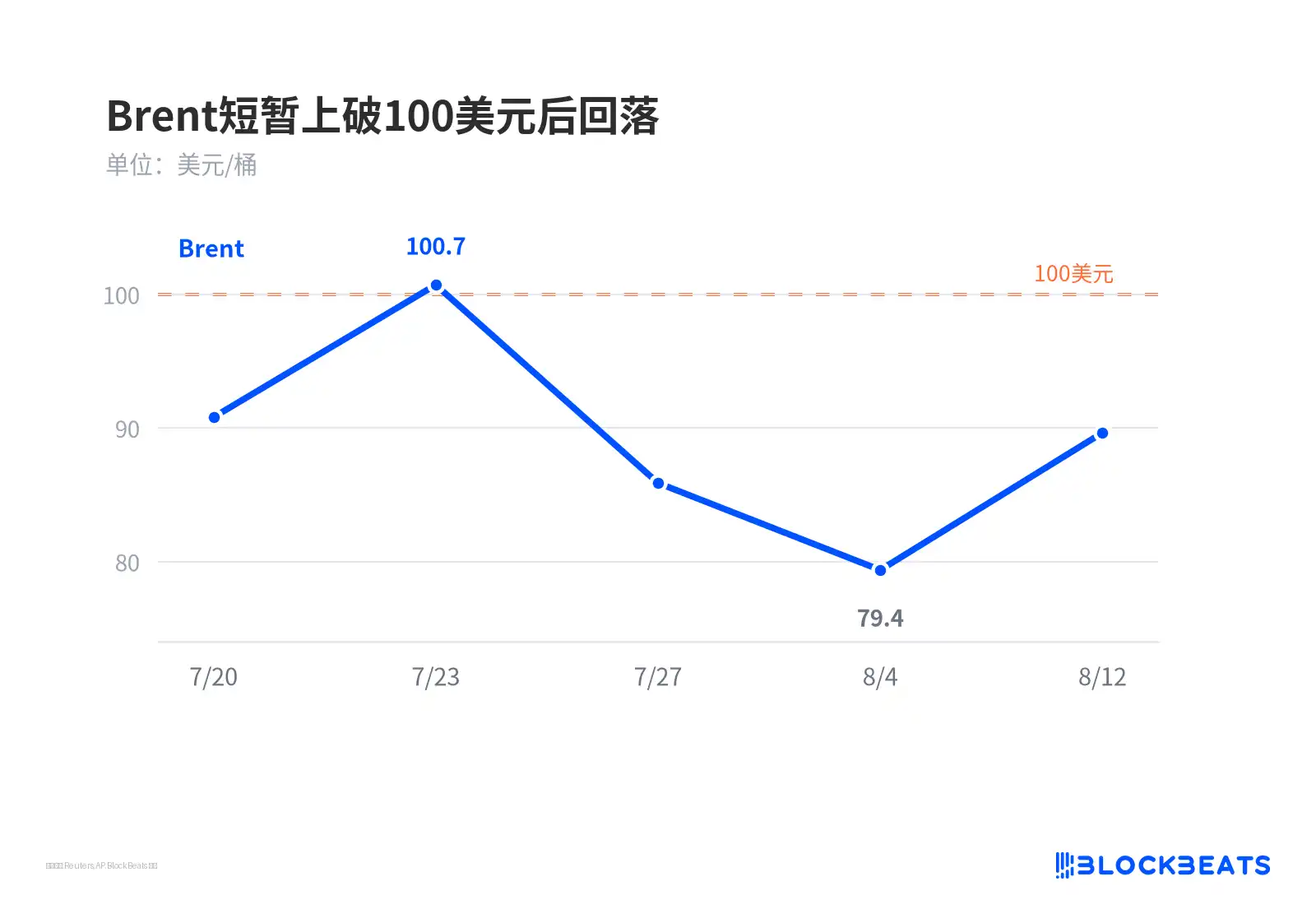
Since August, shipping trackers and media reports have shown that some daily measures of traffic through the Strait of Hormuz have fallen to extremely low levels, with some tallies at times showing almost no tankers passing through. Even so, Brent crude has not managed to hold above $100. After a brief jump in late July, it has spent more time recently back near $90.
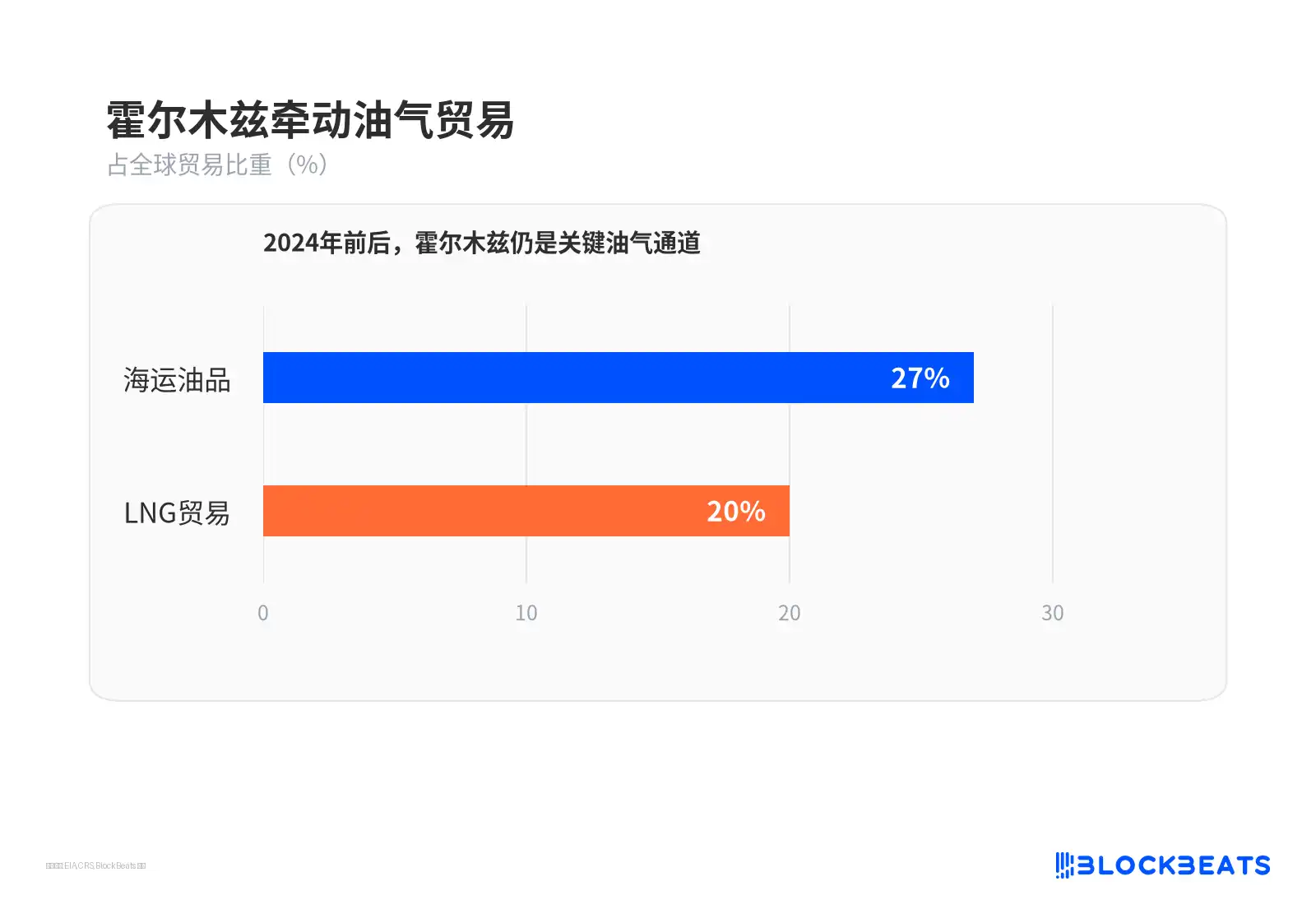
That is the core puzzle for the energy market. The report says that around 20 million barrels a day of oil moved through Hormuz around 2024, accounting for about 27% of global seaborne oil trade. LNG, or liquefied natural gas, also represented about one-fifth of global trade. Under a conventional pricing framework, a prolonged threat to such a chokepoint would normally push crude to price in a sharper supply disruption premium.
The market is pricing more expensive passage, not a total shutdown
The report says the market response has been more restrained. The risk has not gone away, but investors are for now betting that inventory releases, transfers outside the Gulf, alternative export routes and shipping arrangements can absorb part of the shock. In that reading, crude is not trading the security of the strait itself. It is trading the rising cost of moving through it.
The political backdrop for this repricing is the US-Iran standoff. According to the report, the two sides are disputing the implementation terms of a temporary memorandum reached in June. The United States is maintaining blockade and sanctions pressure, while Iran is demanding that conditions be met before normal transit resumes. In market terms, that dispute comes down to who absorbs the extra burden from insurance, financing, longer voyages and sanctions risk.
Current prices do not reflect the worst-case scenario
For now, prices suggest traders are not treating Hormuz as a case of long-term, full-scale supply loss.
If the market believed that seaborne oil flows on the order of 20 million barrels a day would disappear for an extended period, it would be difficult for Brent to keep oscillating near $90. The fact that prices have not stayed above $100 points to a different interpretation: blocked transit, higher costs and slower delivery, rather than an outright break in the supply chain.
The report also notes that there is statistical noise in the data. Sharp drops in some daily traffic readings may reflect vessels switching off AIS tracking, shipowners waiting on the sidelines for a short period, or differences in data-source filters. They could also show that commercial owners are unwilling to enter higher-risk waters. The first case looks more like data distortion. The second would be more likely to create a sustained supply shock.
That is why the failure to hold above $100 does not mean Hormuz has become less important. It means the market is still waiting for harder confirmation. Whether Iran can continue to expand attacks, whether Washington turns the blockade into more direct action, and whether Asian buyers can keep working around transport and sanctions constraints will all shape the next move in pricing.
Inventories, transfers and rerouting are splitting the shock into stages
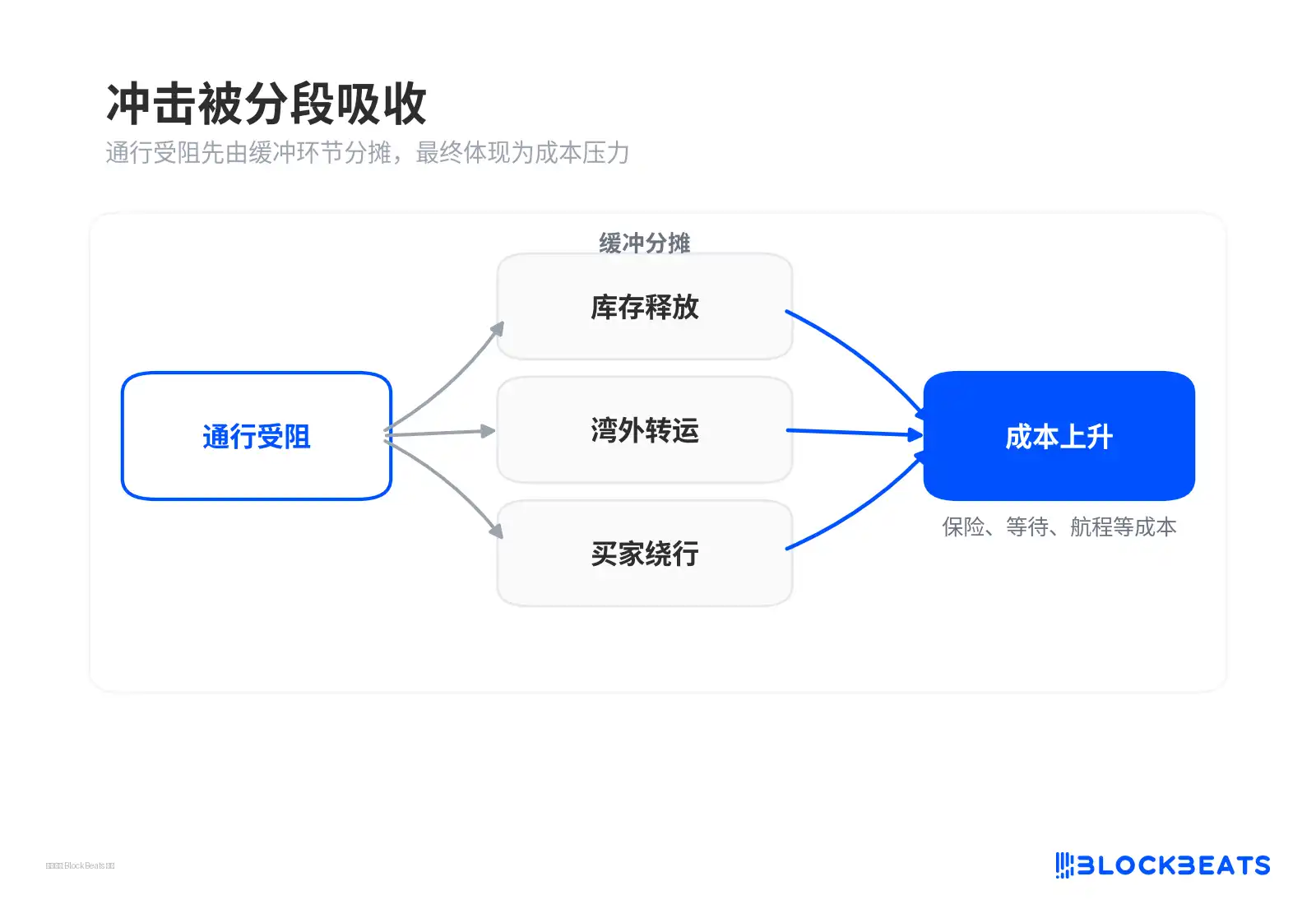
One reason crude has not immediately spiraled higher, the report says, is that the disruption has not hit end supply all at once. Instead, it is being distributed across inventories, shipping, trade and finance.
The first layer of buffering comes from inventories and expectations of replacement supply. Strategic petroleum reserves, coordinated international releases, OPEC+ spare capacity, and export capability outside the strait in Saudi Arabia and the United Arab Emirates could all soften the impact of a single-route disruption on spot prices. None of those tools is unlimited, but they are enough for the market to avoid pricing a disaster scenario for now.
The second layer comes from ship-to-ship transfers. Some cargoes can be moved near Fujairah or the Gulf of Oman and then sent onward on adjusted routes. That raises insurance costs, waiting time and operating expenses, but it also preserves some flexibility in physical flows.
The third layer comes from decisions made by buyers and shipowners. Some Asian buyers and vessel operators may switch to loading outside the Gulf, use transfers, or delay port calls. LNG shipments may adopt similar risk-avoidance measures. The result is that lower passage through Hormuz does not automatically mean an equal drop in globally available oil and gas.
That is the center of the current pricing logic. The physical risk is still there, but it is being spread across financial inventories, shipping engineering and trade arrangements. Oil is not exploding higher because the system is still functioning. It is not falling either because the system has become more expensive to run.
Effective short-term buffers make the long-term rebuild case clearer
The report says stronger short-term buffering may actually sharpen the rationale for long-term restructuring.
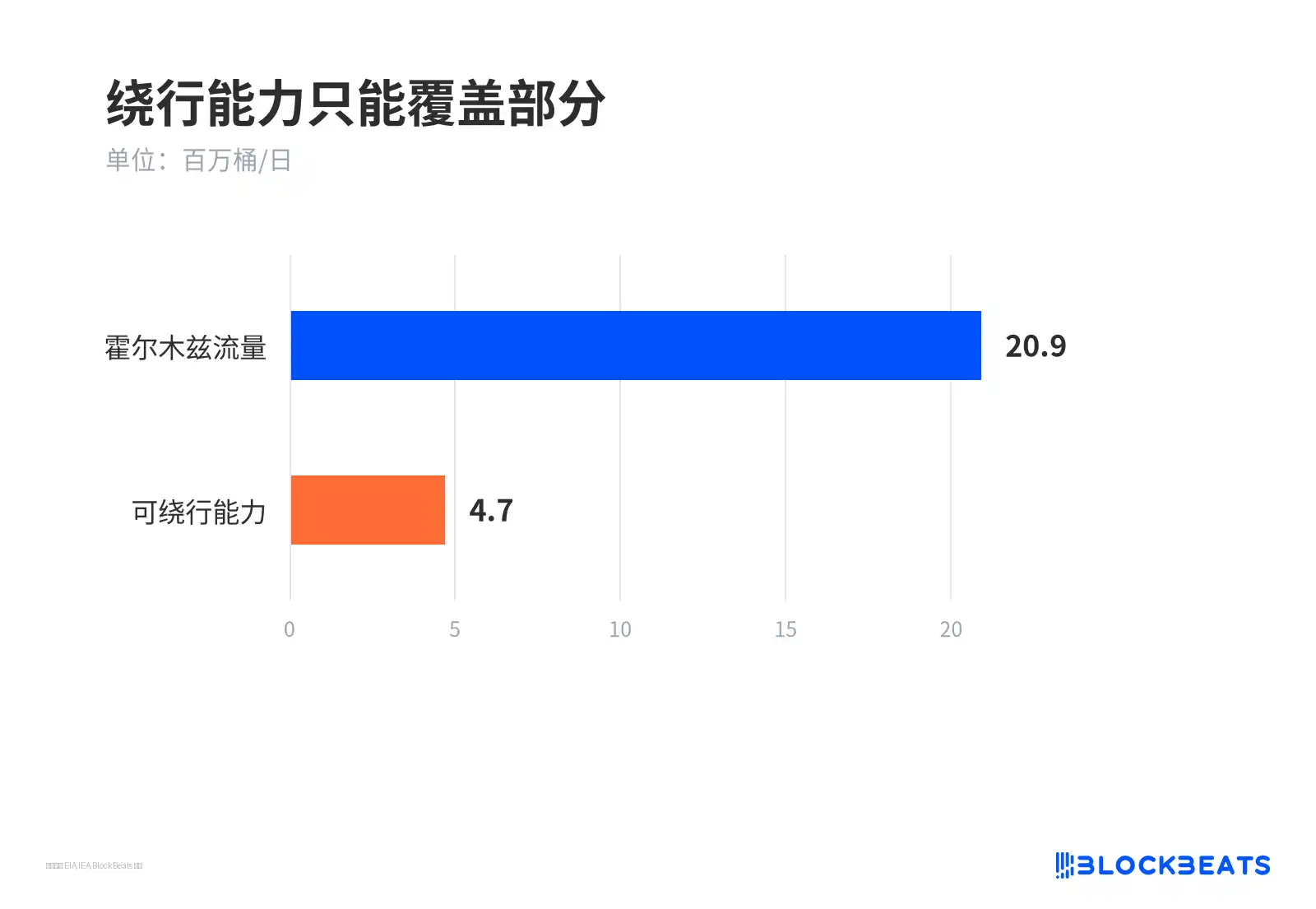
Saudi Arabia and the United Arab Emirates are pushing storage outside the strait, transfers through Fujairah and alternative export capacity. Discussion is also picking up around pipelines and port investments designed to bypass Hormuz. All of that points in one direction: the energy chain is trying to reduce dependence on a single chokepoint.
That kind of restructuring will not immediately rewrite the global supply-demand balance. New pipelines need financing, construction and security conditions. Expanding strategic reserves also takes time. But it does change the long-run cost structure. Ports, storage, insurance, tanker scheduling and loading capacity outside the Gulf are shifting from backup plans to required costs.
For Asian buyers, another cost lies in secondary sanctions, meaning US pressure extending to third-party refineries, banks and marine insurers. If sanctions are enforced more explicitly against the trading chain that buys Iranian crude, the discount advantage long relied on by China’s independent refiners could be eroded by risks tied to dollar settlement, financing and insurance.
That is also why the report argues that the energy market cannot look only at the front-month Brent contract. Diesel, freight, insurance premiums, refinery margins and regional spreads may show the real transmission of Hormuz risk earlier than crude futures do.
Inventory cover and sanctions enforcement may reset pricing
The present period of relatively contained volatility rests on one assumption: the existing buffers can keep working, and military escalation does not cross the market’s red lines.
Inventories can buy time, but they cannot replace long-term supply. Transfers can bypass part of the high-risk zone, but they mean higher insurance bills and longer voyages. Alternative export capacity can cushion prices, yet it is hard to absorb the main flow in full over a short period. If the marginal strength of those buffers weakens, oil prices may start reassessing the probability of supply disruption.
Sanctions enforcement could also alter the price path. If the US is mainly signaling deterrence, Asian buyers may still be able to absorb the shock through trade structures and financial arrangements. If sanctions begin to hit refineries, banks and marine insurers directly, discounts on Iranian exports could stop working and costs could move from shipping into refining.
The report’s conclusion is not that the risk around Hormuz has disappeared. It is that the risk is being absorbed in stages. Whether Brent can reclaim and sustain levels above $100 will depend on how long inventories, transfers and buyer rerouting can keep carrying the load. The next clear price signal may appear first in freight, insurance and diesel crack spreads.