
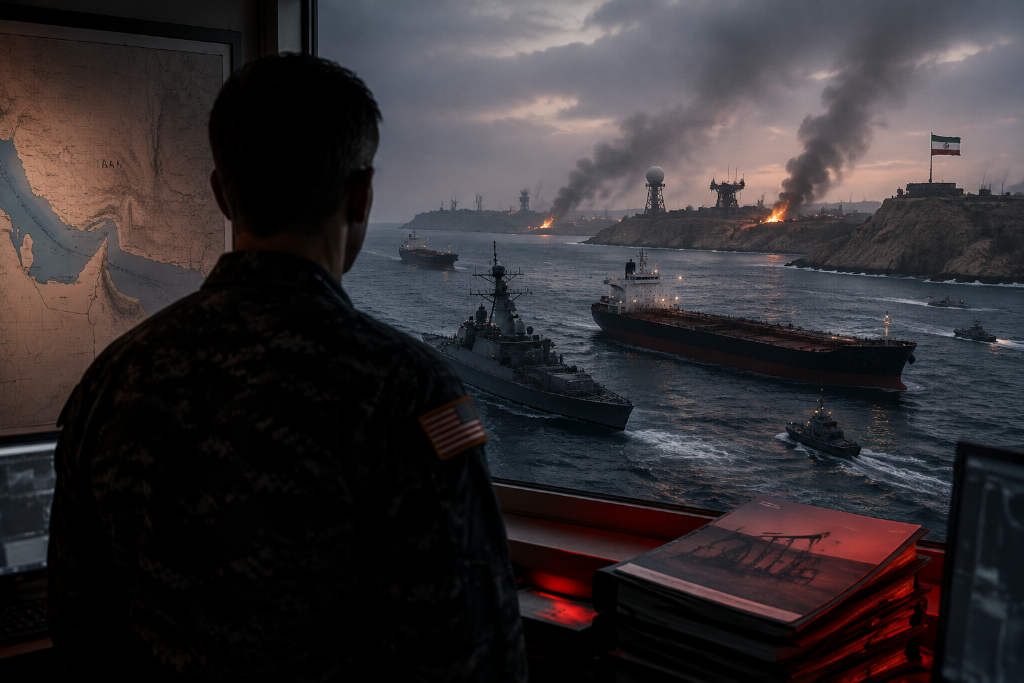
U.S. President Donald Trump said on Sept. 2 that, if American forces already control the Strait of Hormuz, it might as well be renamed the "Trump Strait." In the same post on Truth Social, he said a new round of attacks on Iran "won't last too long."
Second U.S. strike on Iran in three days
The comment landed as the U.S. carried out its second strike on Iran in three days. This time, the targets were radar systems and mine-laying equipment along Iran's southern coast. Trump later said in an interview that new facilities Iran had planned to add along the strait, whether for offensive or defensive use, had all been destroyed, and he added that U.S. forces were ready to do it again at any time if ordered.
U.S. Central Command described the latest attack as a retaliatory action, saying Iran's Revolutionary Guard had previously tried to target commercial vessels in the strait as well as U.S. personnel. Iran then responded with drones and missiles aimed at several U.S. military bases across the Middle East.
Iran offered a different account. It accused the U.S. of bombing a wedding site in the southern city of Sirik, saying at least four people were killed and around 67 were injured. The U.S. said it had not targeted civilians.
Hormuz tensions rise again
The exchange ended nearly a month of relative calm and renewed pressure on oil shipments through the Strait of Hormuz. The report said traffic through the waterway had already recovered to about half of its pre-conflict level.
U.S. Energy Secretary Wright said 17 million barrels of crude still passed through the strait on Monday alone. Recent daily volumes have averaged about 8 million barrels, suggesting flows have not been fully cut off.
Brent moves above $95
Energy markets reacted quickly. Brent crude briefly touched $97 a barrel and was later quoted around $95.63. West Texas Intermediate also strengthened, rising 9% over three trading sessions to around $91 a barrel, with natural gas and diesel moving higher as well.
A trading executive at BOK Financial Securities said a wider conflict would keep supporting oil prices, but also said both Washington and Tehran were looking for an off-ramp. If talks restart, oil could retreat quickly.
White House seen waiting until after Nov. 3 to review next steps
According to people familiar with the matter, Trump's camp is trying to keep the conflict contained before the midterm elections, hoping to avoid damage to Republican efforts to hold narrow majorities in the House and Senate.
White House officials are said to be planning to wait until after the Nov. 3 vote before deciding whether to expand military action. Tight ammunition stockpiles have also made a pause useful from a logistics standpoint.
For now, the strategy has shifted toward heavier economic pressure on Iran in an effort to win concessions at the negotiating table. Treasury Secretary Bessent said Iran's leadership was already under severe economic strain and would eventually return to talks. Even so, neither side has signaled a restart in negotiations since the temporary ceasefire broke down.
The report added that several analysts believe Iran has spent months disrupting traffic through the strait without paying much domestic cost, raising the risk that U.S. bases, oil tankers and energy infrastructure could remain on the list of possible retaliation targets. It also said that even if the White House does not want a broader conflict, events could still keep pushing in that direction.