Since January, the global AI frenzy has drawn a flood of ordinary East Asian investors into the stock market. Na Se-bin, a 24-year-old Korean programmer, has poured nearly all her life savings (about $47,000) into stocks. She says she has gained or lost the equivalent of one month's salary in a single second during violent swings. Over the past 18 months, South Korea's stock market has been one of the world's best performers. Na's colleagues joke about selling their underwear to buy more shares. "Even friends who never touched stocks before are now entering," Na says. "Everyone is speculating on something."

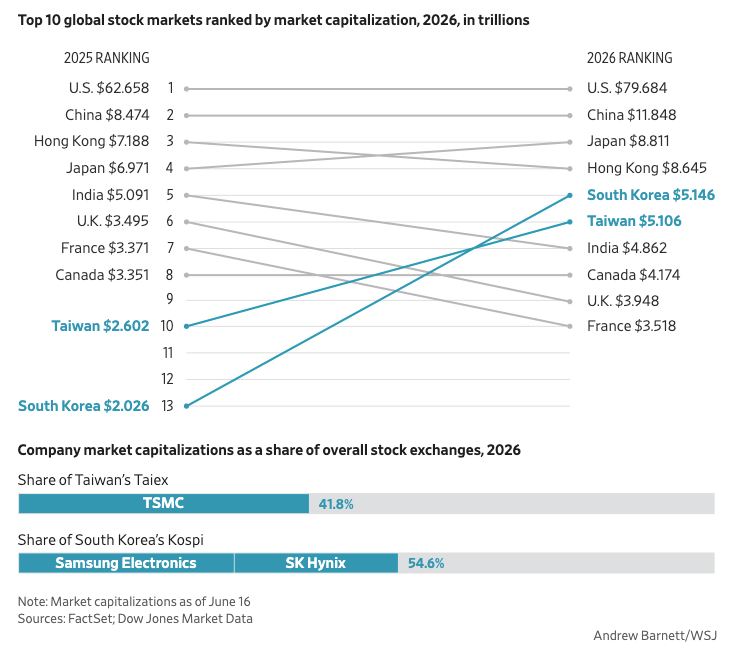
Trillions of dollars are pouring into AI infrastructure, relying on a few Asian exporters for semiconductors and chip manufacturing. Despite recent pullbacks, Taiwan's stock market has doubled in market value over the past year, South Korea's has tripled, and Japan's Nikkei has surged over 80%, three times the gain of the S&P 500. According to Allianz Trade, global AI-related exports reached nearly $4 trillion last year, with Asia accounting for two-thirds. Gartner forecasts AI direct spending (services, infrastructure, software) will hit $2.6 trillion in 2026, up 47% from 2025.
TSMC: Taiwan's Wealth Creation Myth
TSMC is the main driver of Taiwan's stock surge. With over 90% revenue share in advanced chip manufacturing, it is the world's seventh most valuable company ($2.2 trillion). Its stock doubled in a year, pushing the Taiwan Weighted Index past France, the UK, and India. Ye Lunhao, a 37-year-old insurance agent, invests more than half of his $2,100 monthly salary in local AI and chip stocks, quadrupling his returns and recently buying a four-bedroom apartment in Taichung. "Without semiconductors, none of this would happen," Ye says. "Investing has lifted me out of survival mode and allowed me to enjoy the beauty of the world."
TSMC engineers earn three times the salary of comparable positions. A high-end liquor store owner in Zhubei, Wang Canlong, has supplied TSMC multiple times, even selling a Napa Valley whiskey to founder Morris Chang. TSMC-branded secondhand items sell at high prices online: a rice cooker goes for $312, four times the employee purchase price. In Taiwan, saying "I work at TSMC" has become one of the most effective pick-up lines.

South Korea: Chip Duo Leads the Rally
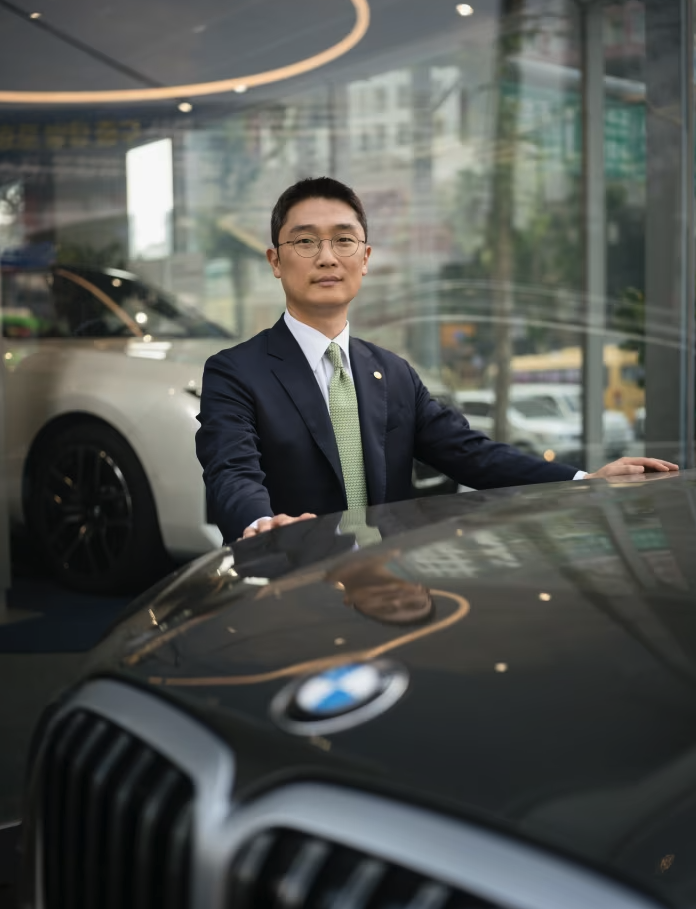
South Korea's market is dominated by Samsung and SK Hynix, both surpassing $1 trillion in market cap and accounting for over half of the KOSPI's total value. Choi Sung-ho, a 35-year-old elementary school teacher, saw his stock portfolio grow nearly fivefold in a year, exceeding $300,000. He plans to spend six figures on his next car, possibly a Mercedes S-Class or Tesla Model X. In the first three months of this year, Korean brokerage Toss Securities opened over 180,000 trading accounts for minors aged 18 and under. On YouTube, the "ETF-explaining Bro" channel has attracted over 127,000 subscribers since launching last July. Luxury spending has heated up; some Cartier jewelry in Seoul is now only available online. BMW sales manager Lim Chae-hoon says, "Clearly more people have money to spend now."

Japan: Multiple Beneficiaries
In Japan, SoftBank surpassed Toyota as the most valuable company due to its heavy investments in OpenAI and data centers, but was soon overtaken by lesser-known memory chip maker Kioxia, whose stock soared from $14 to about $600. Luxury toilet maker TOTO uses its high-tech ceramics to hold silicon wafers during etching; its stock doubled. Ajinomoto, using a byproduct of its umami seasoning to produce insulation film for AI chips, saw its stock rise 50%. Views on consumption have shifted. One worker says, "I wanted to wait until my income was substantial before investing, but the stock market frenzy might not wait for me."
From Seoul to Taipei, from Tokyo to Zhubei, the AI gold rush has enabled ordinary East Asians to achieve wealth leaps. The chip giants, acting as "shovel sellers," continue to benefit, while the retail frenzy is set to write more chapters.