
TSMC Q2 Earnings Focus: Gross Margin, AI Demand, and 2nm Ramp
TSMC will hold its Q2 2026 earnings call on July 16 at 14:00 Taiwan time, preceded by a quiet period from July 6 to 15. The focus of this report goes beyond revenue growth. As the world's largest semiconductor foundry, TSMC connects mobile chip clients like Apple and Qualcomm on one side, and absorbs demand from AI accelerators, cloud custom chips, and high-performance computing (HPC) on the other. The Q2 report will directly verify three core questions: whether AI orders remain strong, whether the 2nm process ramp is on track, and how long the nearly 66% gross margin can be sustained. These factors also deeply impact the manufacturing costs and supply rhythm of cryptocurrency mining chips, such as ASICs used by Bitmain and others.
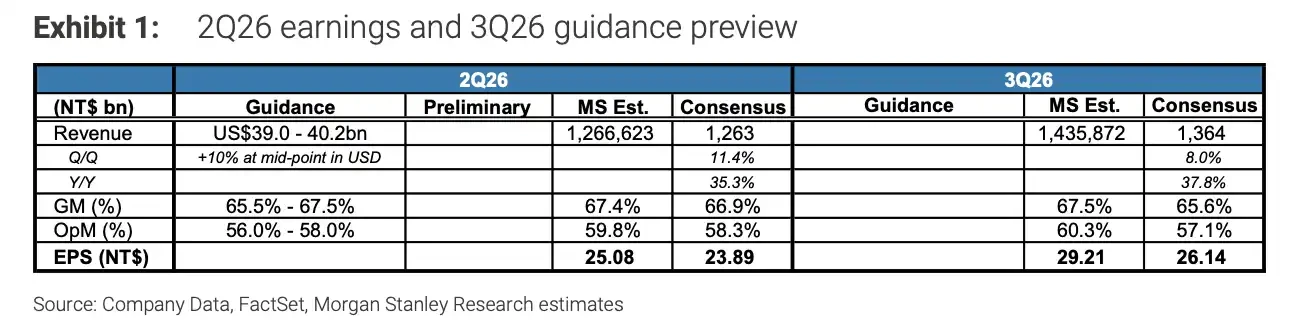
Over the past year, AI demand has consistently pushed up TSMC's revenue, margins, and capital expenditure. In Q1, the company delivered a strong performance: dollar revenue of $35.9 billion, gross margin of 66.2%, and operating margin of 58.1%. In New Taiwan dollar terms, revenue was NT$1.134103 trillion, net profit NT$572.480 billion, and EPS NT$22.08; revenue grew 35.1% YoY, net profit 58.3% YoY. Q2 guidance remains at high levels: dollar revenue between $39.0 billion and $40.2 billion, gross margin between 65.5% and 67.5%. This means the market is not only watching whether revenue hits the guidance, but more importantly whether gross margin can stay above 65%.
AI/HPC-Driven Revenue Structure and the Double-Edged Sword of CapEx
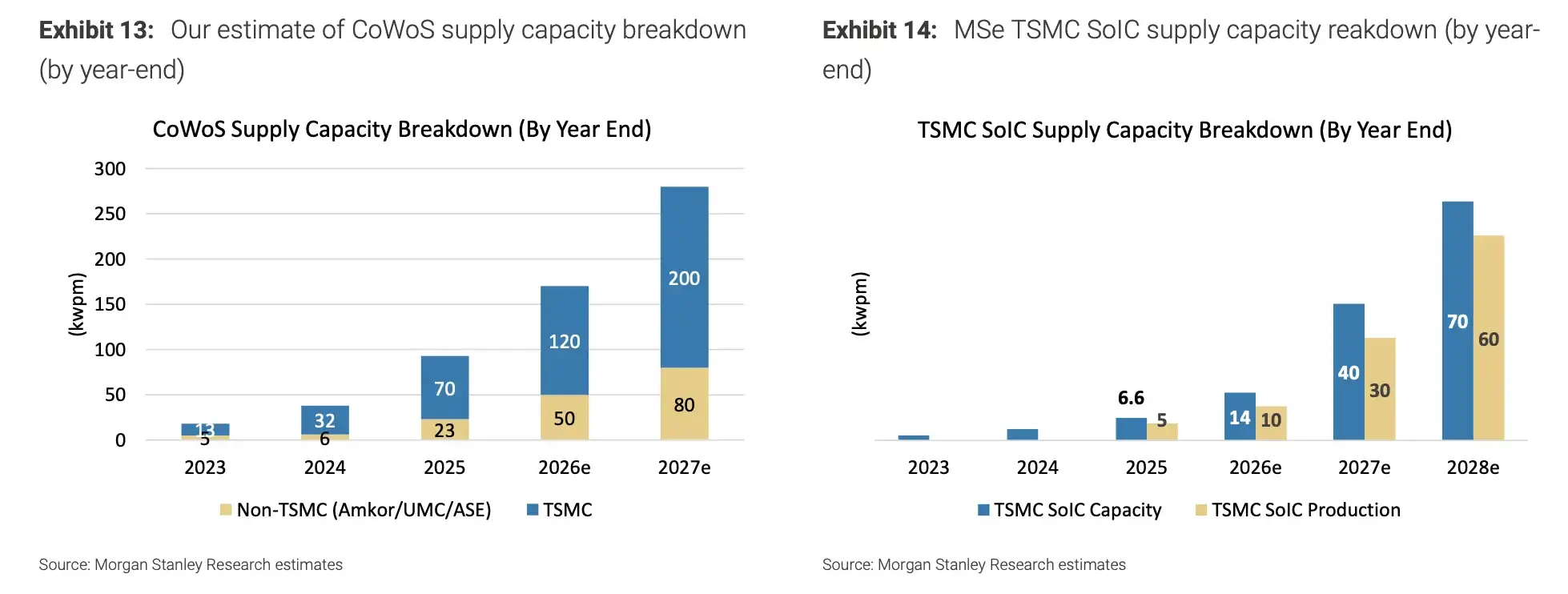
TSMC's strongest growth engine currently remains AI and high-performance computing. During the Q1 earnings call, management described AI demand as 'extremely robust' and raised the 2026 dollar revenue growth forecast to over 30%. The revenue structure reinforces this view: HPC contributed 61% of Q1 revenue, and advanced processes (7nm and below) accounted for 74% of wafer revenue. While this does not directly equal AI revenue share, it clearly shows that high-performance computing and advanced nodes have become the core of the revenue mix. AI chip demand also drives advanced packaging capacity (CoWoS, SoIC), which is another key for TSMC to maintain tight capacity and pricing power.
TSMC has guided 2026 full-year capital expenditure toward the high end of the $52 billion to $56 billion range. Higher CapEx helps secure future orders but also brings equipment depreciation, overseas fab construction costs (in the US, Japan, and Germany), and yield ramp pressures. This is a double-edged sword: when demand is strong, it widens the lead; when demand cools, it accelerates margin erosion. For the crypto mining industry, TSMC's capacity allocation directly affects the chip supply volume and pricing for manufacturers like Bitmain. The high CapEx signals management's strong confidence in long-term AI/HPC demand, indirectly supporting the supply outlook for mining chips.

2nm Ramp: A Pivotal Factor for Future Advanced Process Pricing and Margins
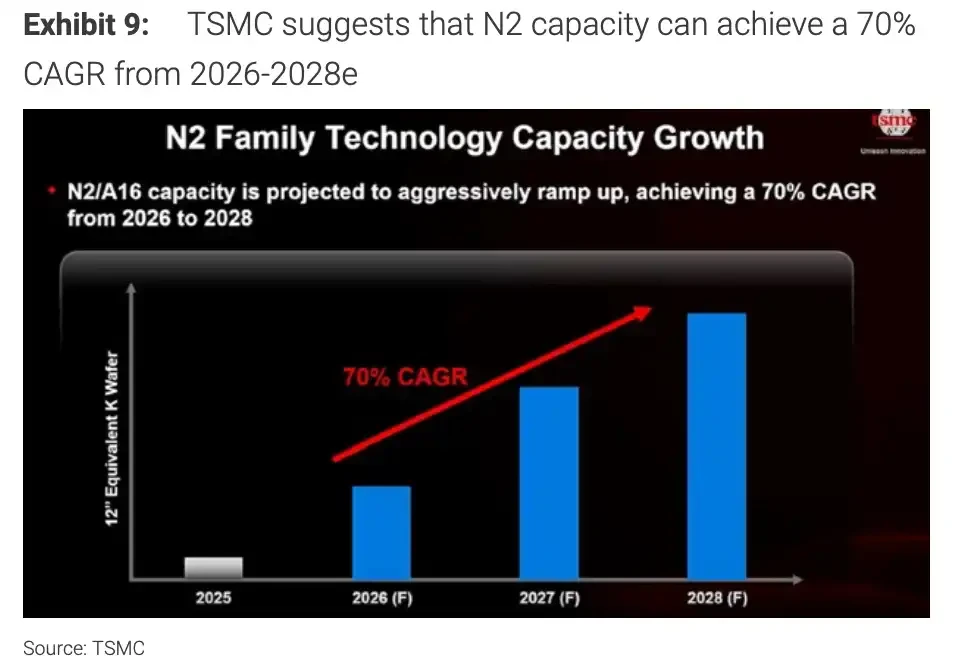
The 2nm process (N2) is a critical variable for TSMC in the coming years. Management has stated that N2 entered high-volume manufacturing in Q4 2025, with multi-phase ramps in Hsinchu and Kaohsiung, driven by demand from smartphones and HPC/AI. The market is focused on: the speed of supply expansion after mass production, the yield improvement plan, and whether initial client demand can cover the huge capital investment. TSMC expects N2/A16 capacity to grow at a CAGR of approximately 70% from 2026 to 2028. If the ramp goes smoothly, TSMC can maintain its pricing power for advanced processes during the AI demand peak. If yield or cost underperform, even with revenue growth, gross margin may come under pressure.

In the crypto domain, 2nm may eventually be used for next-generation mining ASICs, but current miners still rely primarily on mature advanced nodes like 7nm and 5nm. However, TSMC's massive investment in 2nm capacity means overall depreciation costs rise, which may indirectly push up foundry prices for all chips, including those for mining.
Market Reaction and Margin Pressure: Can the July 16 Conference Call Consolidate AI Hardware Confidence?
The July 16 earnings call will not only test the completion of Q2 guidance but also, more importantly, management's description of H2 AI/HPC demand, advanced packaging capacity, 2nm ramp progress, CapEx plans, and gross margin outlook. If TSMC maintains a strong demand assessment and gross margin stays within the 65.5%-67.5% range, market confidence in the AI hardware chain will continue to be supported. If management sends more cautious signals regarding customer orders, inventory, or cost pressure, investors will reassess the sustainability of high growth in the AI supply chain. Morgan Stanley expects TSMC Q2 gross margin to reach 67.4%, at the high end of guidance, but actual data remains to be seen.

TSMC's current strength rests on AI/HPC demand, tight advanced process supply, and high CapEx expansion. The risks also lie along the same chain: demand, pricing, yield, depreciation, and overseas execution—any weakness in one link will first test the nearly 66% gross margin. As a significant downstream consumer of advanced processes, the crypto mining industry's supply stability and cost trajectory will move in tandem with these factors.