Q2 Guidance: Revenue and Gross Margin at Elevated Range
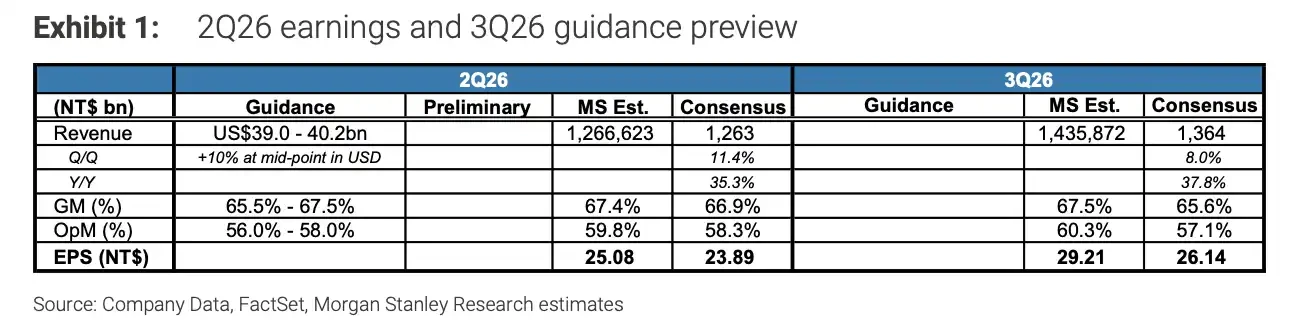
Taiwan Semiconductor Manufacturing Co. (TSMC) will hold its Q2 2026 earnings call at 2:00 PM Taiwan time on July 16, preceded by a quiet period from July 6 to 15. The company guided Q2 USD revenue in the range of $39.0 billion to $40.2 billion, with gross margin between 65.5% and 67.5% — both near historical highs. In Q1, TSMC delivered strong results: revenue of $35.9 billion, gross margin of 66.2%, operating margin of 58.1%, and net profit surging 58.3% year-over-year. The market's immediate focus will be whether actual Q2 metrics land within guidance, especially whether gross margin can hold above 66%.
Gross Margin in Focus: AI Demand vs. Rising Costs
Morgan Stanley estimates TSMC's Q2 gross margin will reach 67.4%, near the upper end of the company's guidance. This forecast is underpinned by robust AI/HPC demand, tight supply of advanced nodes, and high utilization rates. However, multiple headwinds threaten margins: equipment depreciation from advanced fab expansions, yield ramp costs, and higher operational expenses from overseas plants in the U.S., Japan, and Germany. Monthly revenue data already suggests demand remains strong: May 2026 revenue was NT$416.975 billion (+30.1% YoY), and cumulative Jan-May revenue rose 30.0% YoY. But revenue growth does not guarantee profit growth — the actual Q2 gross margin figure will provide the first reality check.
AI/HPC: Core Growth Engine and Key Earnings Call Topics
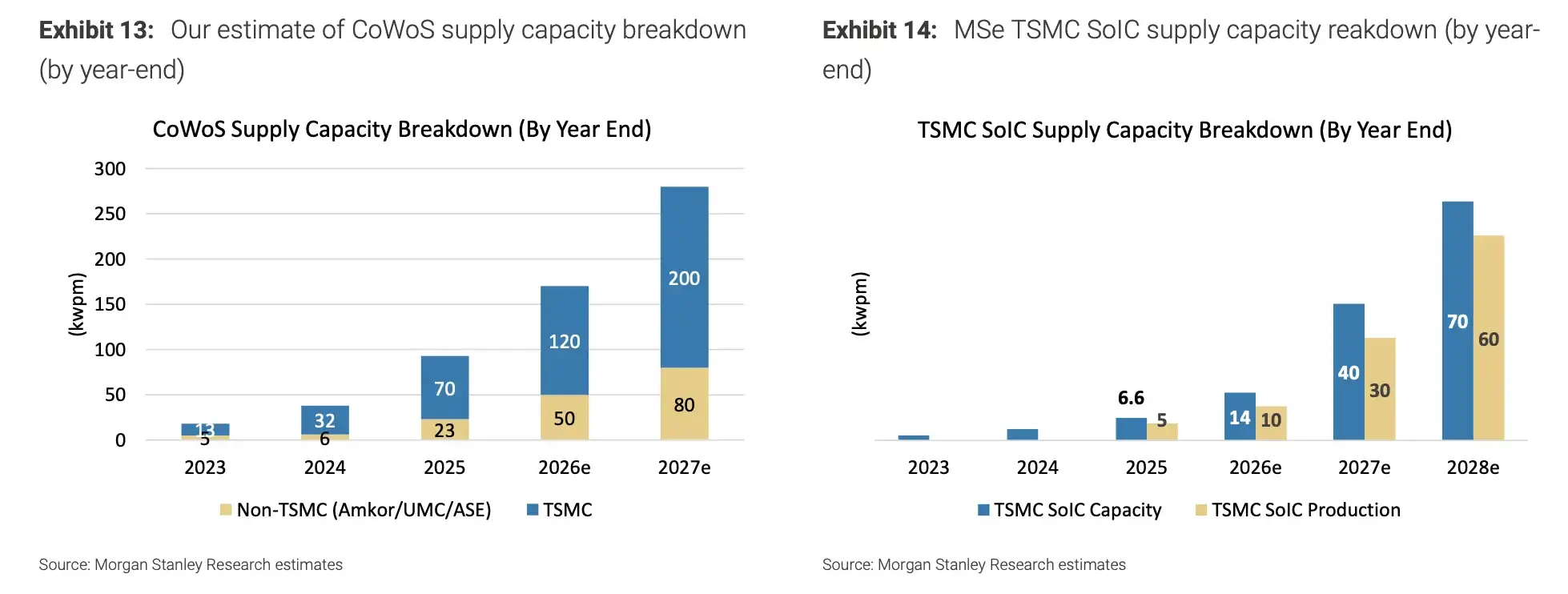
AI and HPC remain TSMC's strongest growth drivers. In the Q1 call, management described AI demand as "extremely robust" and raised its 2026 USD revenue growth outlook to over 30%. Q1 revenue composition shows HPC contributed 61% of total revenue, and 7nm-and-below advanced nodes accounted for 74% of wafer revenue. AI chips, with their larger die sizes and higher complexity, drive not only order value but also demand for advanced packaging technologies like CoWoS and SoIC. The July 16 call will be crucial for reading future trends — investors should pay close attention to management's comments on order cadence, customer inventory, and HPC demand in the second half of the year, as these forward-looking signals are more important than a single quarter's data.

2nm Ramp and CapEx: A Double-Edged Sword for Long-Term Competitiveness
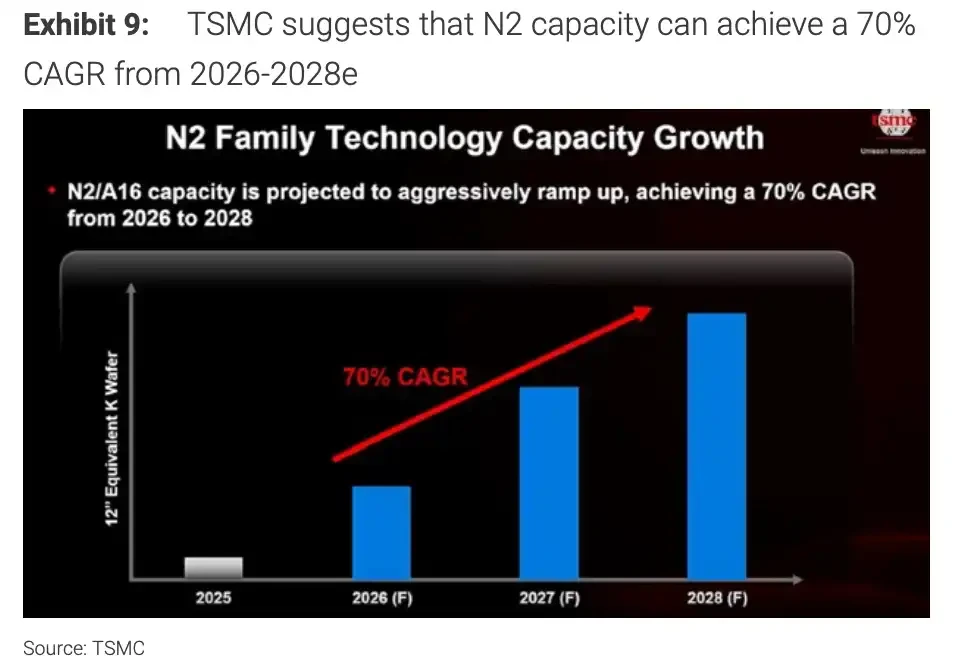
TSMC has guided full-year 2026 capital expenditure toward the high end of $52-56 billion, reflecting its aggressive bet to capture long-term AI/HPC capacity gaps. The N2 (2nm) process entered high-volume manufacturing in Q4 2025 and is expected to achieve a CAGR of ~70% in capacity from 2026 to 2028, driven by smartphone and HPC/AI customers. Higher CapEx enables TSMC to strengthen its competitive moat, but it also raises depreciation and cost absorption risks. If 2nm yield, equipment delivery, or cost pressures exceed expectations, even sustained revenue growth may not protect the ~66% gross margin — the very metric that underpins TSMC's premium valuation.