
TSMC is scheduled to hold its second-quarter 2026 earnings conference on July 16 at 14:00 Taiwan time, entering a quiet period from July 6 to 15. The stakes go beyond revenue growth—the market is focused on three key questions: whether AI/HPC demand continues to convert into high margins, how smoothly the 2nm advanced process is ramping, and whether the company can sustain a gross margin near 66%.
Q2 Earnings Focus: Gross Margin and AI Demand Validation
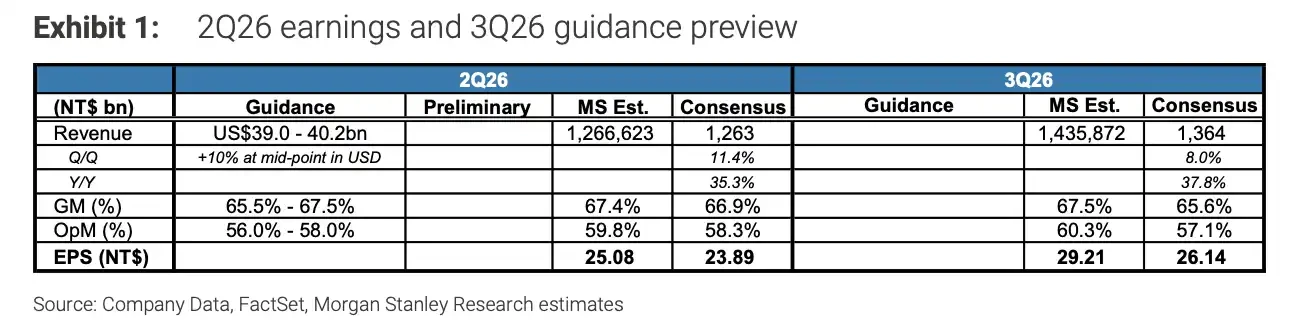
TSMC delivered a strong Q1: revenue of $35.9 billion, gross margin 66.2%, operating margin 58.1%; in NT$ terms, revenue reached NT$1.134 trillion, net profit NT$572.48 billion, EPS NT$22.08, representing 35.1% YoY revenue growth and 58.3% net profit growth. Q2 guidance remains optimistic: expected revenue of $39–$40.2 billion, gross margin 65.5%–67.5%. The first key test on July 16 is whether actual gross margin can stay above 65%.
Monthly revenue already signals strong demand: May 2026 revenue was NT$416.975 billion, up 30.1% YoY; cumulative January–May revenue reached NT$1.9618 trillion, up 30.0%. But revenue growth does not equal profit growth. Early-stage advanced process expansion requires heavy equipment investment, higher depreciation, and yield ramp-up costs. Ultimately, market reaction depends on actual Q2 gross margin and management's guidance for second-half margin. Morgan Stanley expects TSMC's Q2 gross margin at 67.4%, near the high end of guidance.
AI/HPC Drives Growth, but Cost Pressures Loom
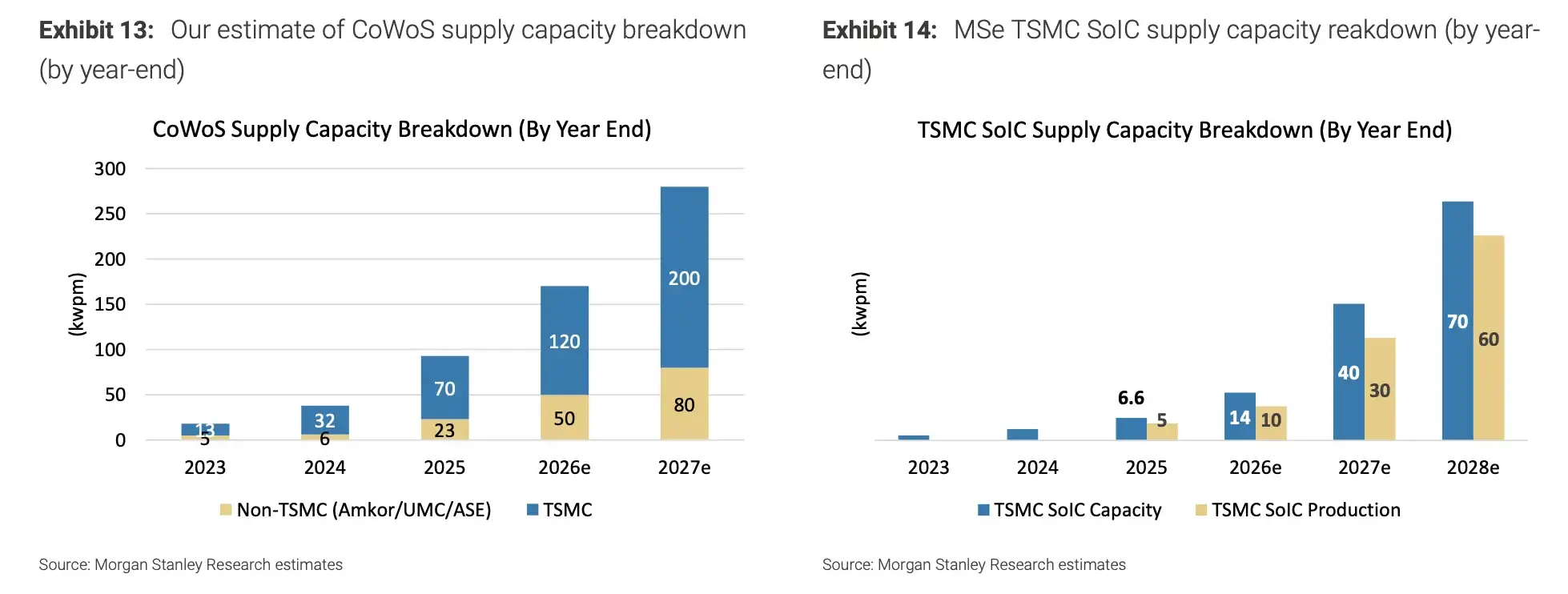
TSMC’s strongest growth driver remains AI and high-performance computing. On the Q1 call, management described AI-related demand as "extremely robust" and raised full-year 2026 USD revenue growth guidance to over 30%. The revenue structure confirms this: HPC contributed 61% of Q1 revenue, and 7nm and below advanced nodes accounted for 74% of wafer revenue. AI accelerators and cloud custom chips are larger and more complex, relying heavily on advanced process and packaging (CoWoS, SoIC), driving higher order value and capacity tightness.

However, TSMC does not typically disclose specific customer orders from Apple, NVIDIA, Qualcomm, etc. Investors rely on revenue mix, capex, monthly revenue, and management commentary to gauge real demand. Therefore, the July 16 conference call’s remarks on AI/HPC demand, customer inventory, and second-half order cadence will be more important than single-quarter data. Meanwhile, TSMC has directed full-year 2026 capex to the high end of $52–$56 billion—a double-edged sword that amplifies leadership when demand is strong but accelerates margin pressure if demand slows. Overseas fabs (USA, Japan, Germany) add operational costs and supply chain complexity.

2nm Ramp and Capex: A Double-Edged Sword for Long-Term Growth
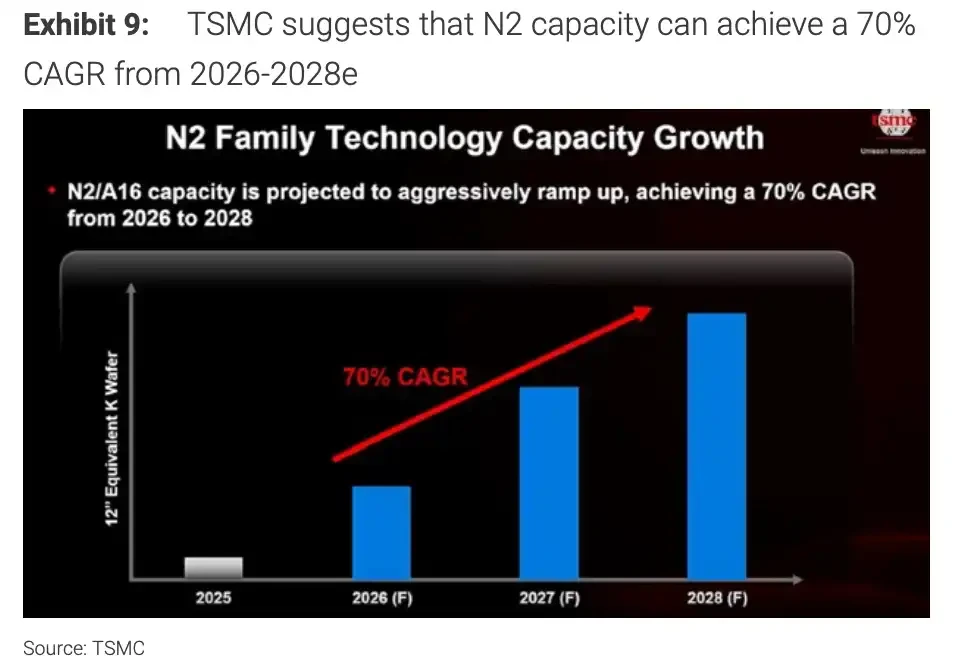
Beyond Q2 results, 2nm is the more critical variable for TSMC’s next few years. Management noted that N2 (2nm) entered high-volume production in Q4 2025 and is ramping in multiple phases at Hsinchu and Kaohsiung, driven by smartphone and HPC/AI demand. The market is no longer asking whether 2nm is in production, but how fast supply can expand, whether yield improves on schedule, and whether initial customer demand can absorb the huge capital outlay. TSMC expects N2/A16 capacity to ramp rapidly from 2026 to 2028, with a CAGR of approximately 70%.

If 2nm ramps smoothly, TSMC can maintain advanced process supply during the AI demand peak and sustain pricing power. If yield, equipment delivery, or cost pressures exceed expectations, margin may suffer even as revenue grows. The July 16 event is not just about whether TSMC meets Q2 guidance—it is about how management describes second-half AI/HPC demand, advanced packaging capacity, 2nm progress, capex plans, and gross margin outlook. If TSMC maintains a strong demand view and keeps gross margin within the 65.5%–67.5% range, confidence in the AI hardware chain will be reinforced. If management signals caution on orders, inventory, or cost, investors will reassess how long high growth in AI supply chains can persist.
Currently, TSMC’s strength comes from AI/HPC demand, advanced process tightness, and high capex expansion. The risks lie along the same chain: demand, pricing, yield, depreciation, and overseas execution. If any link underperforms, the ~66% gross margin will be the first to be tested.