
UBS says gold has rebounded about 17% so far in August, but the larger point is that the market logic behind the move changed along the way. In a precious metals report dated Aug. 27, the bank said investors are shifting from a traditional rates trade to a "debasement trade."
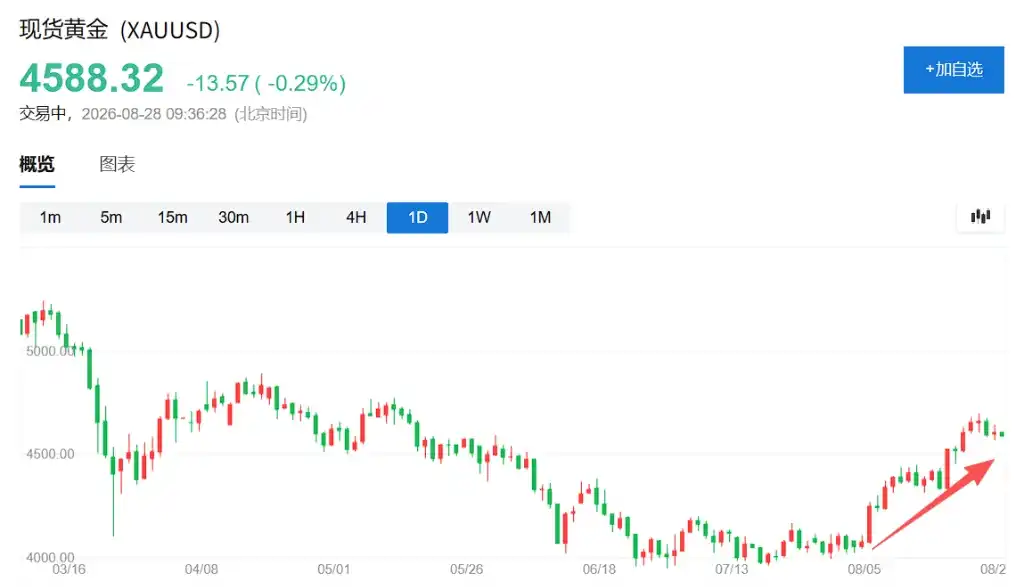
According to Zhuifeng Trading Desk, UBS framed the late-summer rally in gold as a two-act move. The first act was a technical rebound backed by improving fundamentals, with very light positioning, resilient physical demand, central bank purchases and softer U.S. economic data all acting as catalysts. The second act was different in character: after the U.S. Treasury announced that it would double the scale of long-dated Treasury buybacks, the market began to focus more heavily on fiscal sustainability, and gold’s usual negative relationship with interest rates started to loosen.
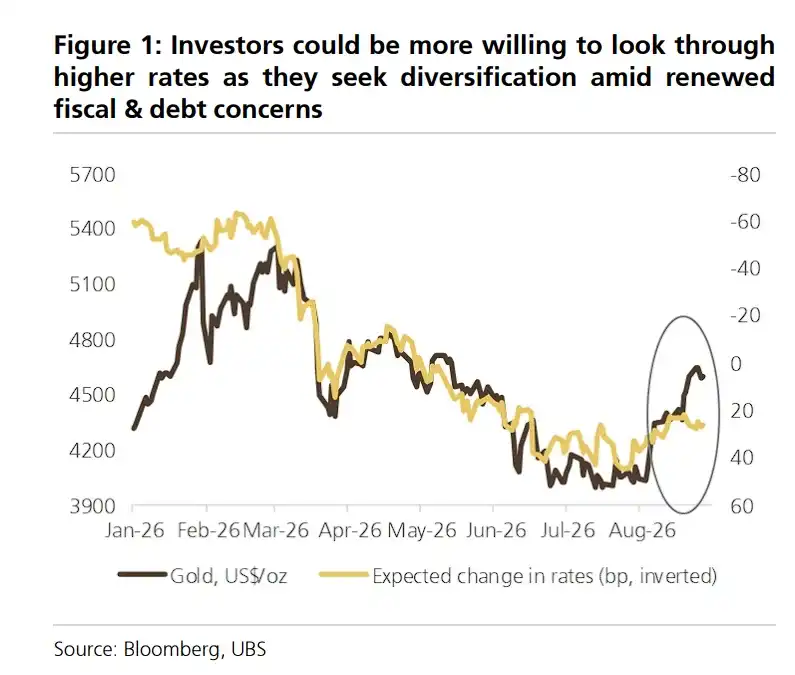
UBS argues that gold pricing has moved away from an "opportunity cost framework" — where higher real rates weigh on gold — and toward a "fiscal credibility framework." Under that view, gold can keep rising even if long-end real yields stay elevated, so long as the market sees high rates as a product of fiscal risk rather than economic strength.
The bank maintained its bullish call on gold and said upside risks to its medium- and long-term forecasts are rising. UBS cut its end-2026 gold target to $4,675 an ounce from $5,000, a 6% reduction, while leaving its 2027 and later forecasts unchanged. Its upside scenario still reaches as high as $6,500 an ounce. UBS also said the Federal Reserve’s hawkish stance is the biggest near-term downside risk, but added that any sell-off caused by renewed rate-hike expectations should be treated as a chance to add exposure, not as a reversal of the broader trend.
Act one: light positioning, demand and central bank buying built a floor
UBS said that before the August rebound began, net positioning in the gold market was extremely light. Persistent inflation pressure kept markets worried that the Fed could resume rate hikes, leaving investors unwilling to buy aggressively but also lacking conviction to build large short positions. Even after gold had pulled back about 30% from its high for the year, medium- and long-term investor sentiment remained broadly constructive, with many waiting for a better entry point.
UBS said repeated attempts to push gold below $4,000 an ounce failed, and that process gradually rebuilt confidence and helped establish a firm bottom. In the bank’s view, that floor was supported by stronger-than-expected demand resilience.
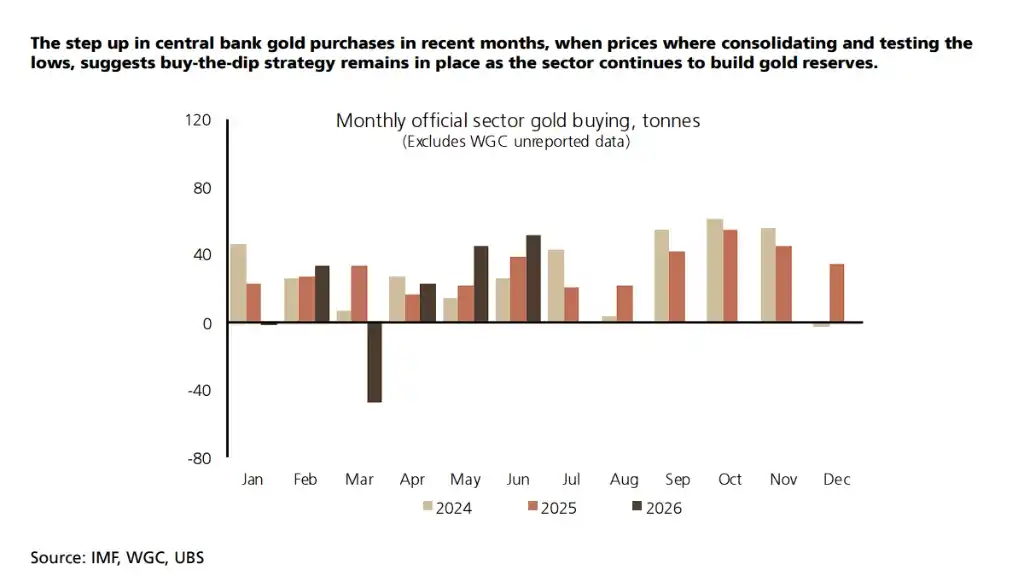
- Official buying on dips: UBS said official-sector buyers, meaning central banks, accelerated purchases during price declines and provided tangible support for the market floor. It cited the People’s Bank of China’s gold buying as increasing when prices fell, describing the pattern as clear dip-buying.
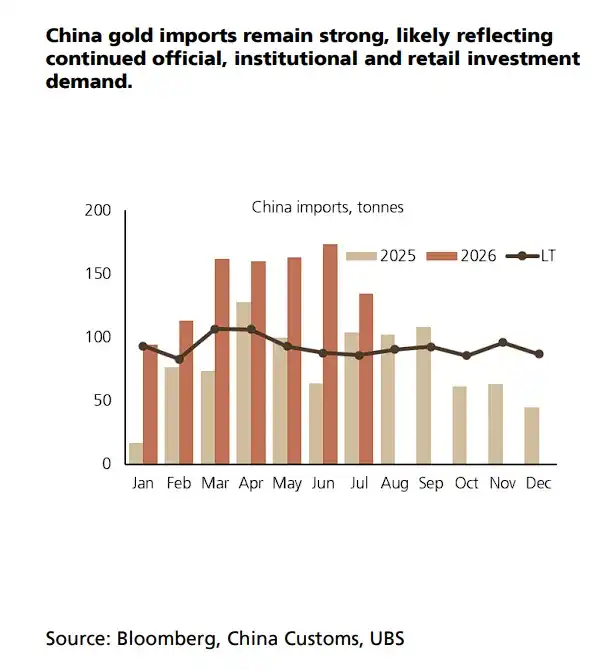
- Strong physical demand: China’s gold imports stayed above both year-ago levels and historical averages, reflecting support from official, institutional and retail investment demand. In India, imports were held back by regulatory obstacles, but seasonal demand patterns were beginning to show, and UBS expects the second half of the year and the festival season to offer stronger fundamental support.
- Softer U.S. data as the trigger: Weak U.S. economic data released in early August pushed the market to scale back expectations for Fed rate hikes, which UBS described as the direct trigger for the breakout in gold. The first phase of the move was driven by short covering, then fresh longs entered. Even so, thin summer liquidity kept market participation cautious and encouraged quicker profit-taking.
Act two: a Treasury move changed the narrative
UBS said the second leg higher started when gold stabilized near $4,400 an ounce and the U.S. Treasury announced that it would double the scale of long-dated Treasury buybacks.
The bank said the operation was not large relative to the overall U.S. Treasury market, and that its original purpose was simply liquidity management. Even so, the signal mattered far more than the size of the action itself. Investors read it as a sign that the Treasury was willing to step in when long-end rates came under pressure, bringing fiscal sustainability and debt credibility back to the center of the discussion.
In the traditional framework, higher real rates raise the opportunity cost of holding gold and tend to pressure prices. UBS says this time the key difference is not the level of rates, but why rates are rising. If higher long-end yields reflect fiscal risk and falling confidence in sovereign debt, rather than economic strength, investors are more willing to look through the higher carry cost and continue to hold gold.
A weaker U.S. dollar added another tailwind and reinforced gold’s role as an alternative to fiat currencies. UBS said the portfolio implication is the same whether the market describes the theme as de-dollarization, de-fiatization or a hedge against currency debasement: gold can serve as a diversification tool, a hard asset and a source of resilience across a broader set of macro scenarios.
What would make UBS more bullish
UBS said upside risks to its long-term gold view are increasing. The clearest bullish scenario, in its view, is one where fiscal and debt concerns become embedded in strategic asset-allocation decisions, leading to broader and more durable increases in gold holdings and pushing the rally beyond the bank’s baseline forecast in both magnitude and duration.
UBS listed three factors that would strengthen that outcome:
- continued evidence of central bank gold buying;
- ongoing resilience in physical demand across Asia;
- further weakness in the U.S. dollar.
Other bullish scenarios include continued soft economic data, an unexpected dovish shift by the Fed, or renewed market concern over the Fed’s independence.
The bank also pointed to a policy split. The Fed remains focused on controlling inflation, while the Treasury has already acted to ease pressure at the long end. Markets will closely watch comments from Fed Chair Kevin Warsh at Jackson Hole, as well as any follow-up statements from the Treasury. With little forward guidance available, each economic data release is likely to carry more weight for Fed expectations and gold price direction.
Near-term risk: a hawkish Fed could trigger a sharp pullback
UBS said gold is not immune to a hawkish Federal Reserve. If the Fed raises rates this year, or if it signals a much higher probability of doing so, gold could fall sharply as real yields rise and the dollar strengthens. Thin summer liquidity and the speed of August’s rally could amplify that pullback.
Still, UBS’s view is that such a decline should be seen as a buying opportunity rather than the start of a lasting bear market.
The bank added that a more important downside risk would come from economic growth fueled by artificial intelligence investment that exceeds expectations by a wide margin. In that case, the Fed would have ample room to raise rates aggressively to suppress inflation, creating a deeper and more lasting hit to gold.
UBS’s broader conclusion is that once investors begin to treat gold as a hedge against fiscal credibility risk and currency debasement, rather than only as an inflation hedge or rates trade, its strategic role in portfolios changes in a more fundamental way. The bank’s research also indicates that overall market allocation to gold remains low, while growth in assets under management leaves room for further diversification. If fiscal and debt sustainability become a more durable driver of strategic allocation, UBS says gold’s upside could exceed its current baseline forecast.