
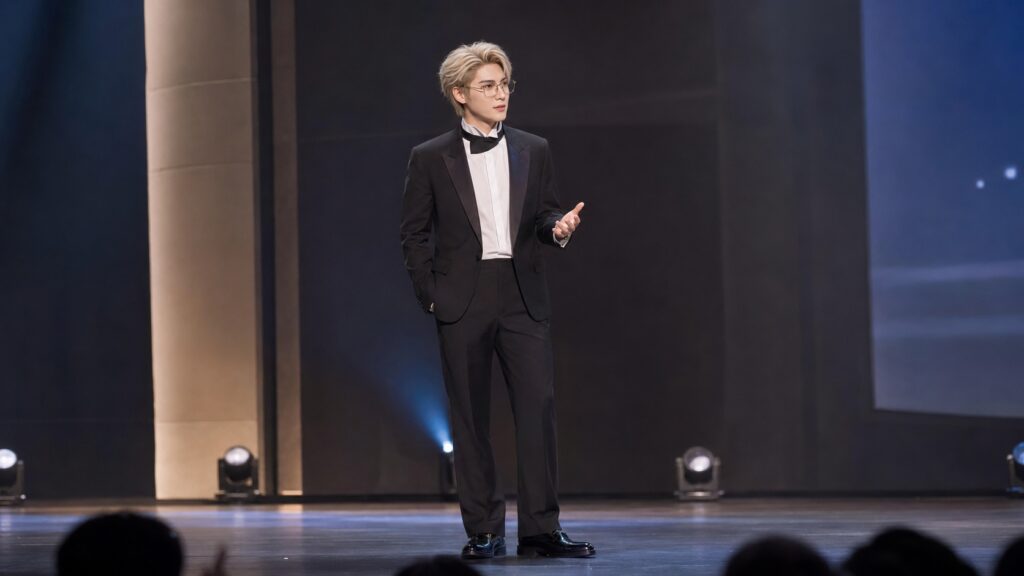
UBTECH unveiled its consumer humanoid robot lineup, the UWORLD U1 series, in Shenzhen on June 30, putting companionship at the center of the pitch. The company’s product description says the robot does not do housework, is sold only to adults, and has a single purpose: companionship.
The timing drew attention on its own. Five days earlier, Sony had announced that its aibo ERS-1000 robotic dog would be discontinued in Japan once domestic inventory runs out, while repair and subscription services would continue.
Three models in the UWORLD U1 lineup
UBTECH split the UWORLD U1 family into three versions. The U1 Lite, an upper-body model, is priced at RMB 119,800. The full-body U1 Pro is priced at RMB 169,800. The flagship U1 Ultra comes in male and female versions, priced at RMB 990,000 and RMB 880,000, respectively.
According to the specifications cited in the article, the male U1 Ultra stands 183 cm tall and weighs 42 kg. The female version is 168 cm tall and weighs 35.2 kg. That leaves a price gap of RMB 110,000, with a 15 cm height difference and a 6.8 kg weight difference between the two.
UBTECH’s spec sheet lists 88 degrees of freedom, coverage of 90% of basic human movements, and the ability to recognize more than 20 emotions with accuracy above 90%. The article also says the robot uses silicone skin with pores, veins, and fingerprint-like texture, and supports 3D facial reconstruction and voice cloning to reproduce a specific person’s appearance and voice.
Japanese media converted the price of the male U1 Ultra to JPY 23.76 million and attached a simple label: adults only.
13,361 preorders claimed by the company, 5,613 shown on JD.com
The article says the robot went on sale on JD.com on June 2 and passed 3,000 units within eight days. At the June 30 launch event, Chief Executive Zhou Jian said cumulative preorders across all channels had exceeded 13,361 units.
That figure came from the company itself, not from an independent audit. By July 8, the JD.com page showed 5,613 presale units. The article says that meant fewer than 200 additional units were added after the launch event.
The deposit structure also stood out. Buyers could place a RMB 3,000 deposit and receive a full refund without cause, with no penalty for cancellation. The piece says actual transaction volume will be easier to judge after deliveries begin on Sept. 16.
Sony’s aibo and SoftBank’s Pepper remain key reference points
On June 25, Sony posted a notice saying that aibo ERS-1000 would be discontinued in Japan once local inventory sells out, while repair and subscription services would remain in place.
aibo is presented in the article as an early pioneer in robotic pets. In May 1999, the first 3,000 units sold out online in 20 minutes at a price above $2,000. Over seven years, though, total sales reached only about 150,000 units, roughly one-tenth of Sony’s business-plan estimate, according to the article. In January 2006, Sony shut down its consumer robotics division along with aibo. The product returned in 2018, then reached another end point in 2026.
SoftBank’s Pepper is used as another benchmark. Its consumer version sold 1,000 units in 60 seconds when it launched in June 2015. Five years later, SoftBank ended production, with total output at about 27,000 units.
The article says discussion in Japan’s tech circles on the day of UBTECH’s event was not limited to specs. It also focused on the “uncanny valley,” the theory proposed by roboticist Masahiro Mori in 1970 that human likeness makes robots more appealing only up to a point, after which affinity can flip into discomfort. The piece argues that few companies have been willing to place a mass-market product that close to that edge.
Preorder momentum versus production reality
The article puts the preorder numbers next to UBTECH’s recent operating data. In 2025, the company sold 1,079 full-size humanoid robots and generated RMB 821 million in related revenue. Total revenue for the year was RMB 2.001 billion, while loss came to RMB 790 million. In 2024, shipment volume for the same category was 3 units.
By the end of 2025, annualized production capacity on that line had exceeded 6,000 units, with utilization below 20%. If measured against the company’s stated 13,361 preorders, that total would amount to more than twice annualized capacity.
The article adds that a single bionic robot head contains two to three thousand parts. Eyebrows, eyelashes, and skin texture still rely on manual work rather than a fully automated line. That manufacturing setup has fed scrutiny over eventual delivery capacity.
Share price swings and a heavily funded sector
UBTECH’s stock rose as much as 18% intraday on the launch date and climbed nearly 18% again on July 3. After questions mounted, the shares fell 10.01% in a single day on July 6, according to the article.
At the sector level, the piece says China’s embodied intelligence and robotics field recorded 288 financing deals in the first half of 2026, with disclosed funding above RMB 46 billion. The top 20 companies accounted for about RMB 33 billion of that total.
Against that backdrop, the article argues that the first scene to be scaled up is not the factory floor but the living room. UBTECH’s target audience is described as urban singles as well as fans of anime and otome games. Citing Japanese media quoting Chinese reports, the article says the intended buyers are urban single middle-class consumers aged 35 to 50. The business is framed as emotional consumption.
Companion apps removed, companion hardware moves toward delivery
The article also points to a July policy move in China, saying a group of AI companion apps was taken down on the grounds of declining birth rates, forcing millions of users to part with their virtual partners.
In that setting, software-based companionship was shut off while hardware-based companionship moved toward shipment. Ethical questions followed quickly. The article lists emotional dependency and the idea of a robot becoming a walking surveillance camera among the concerns. UBTECH’s response, as cited, includes setting up an ethics committee, processing data locally, and limiting purchases to adults.
Price, use case, and preorder quality remain central questions
On the facts available, UWORLD U1 is priced from RMB 119,800 to RMB 990,000, and UBTECH has clearly said the robot is not intended for cleaning, cooking, or other household chores. The company positions it as an in-home emotional companion.
As for the 13,361 preorder total, the article is explicit that this is a company-disclosed cross-channel figure that has not been independently verified. The 5,613 presale units shown on JD.com as of July 8, together with a fully refundable RMB 3,000 deposit, mean the final sales picture will have to wait for deliveries starting on Sept. 16.