BackUBTECH

UBTECH

Madison Huang
2026-08-23 07:30:12

Jensen Huang’s daughter Madison Huang appears at Beijing robot conference as Nvidia’s physical AI executive

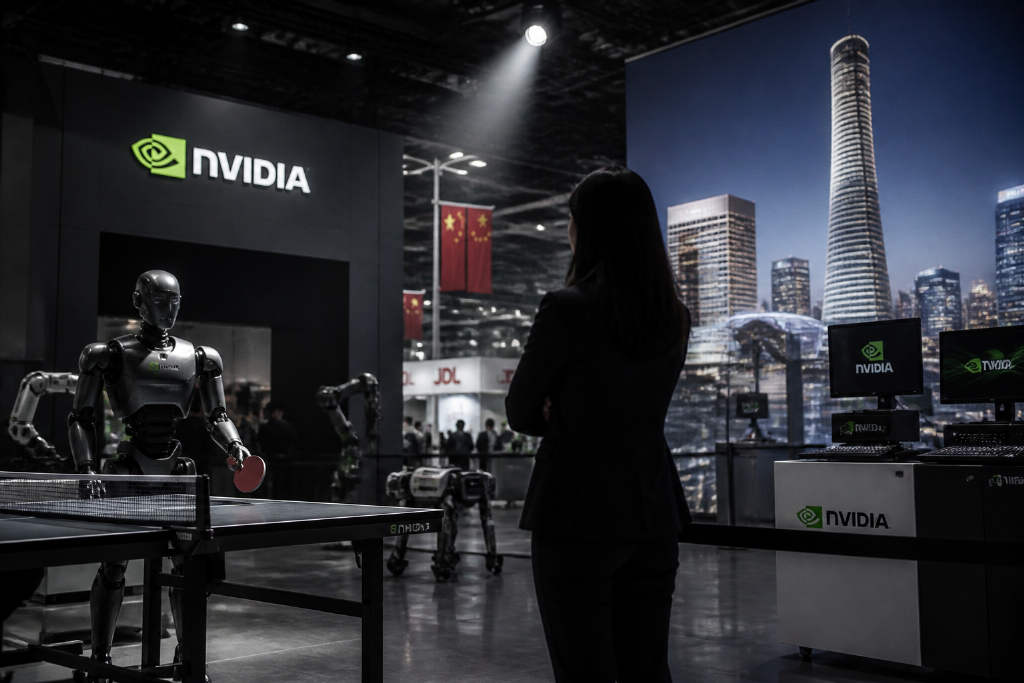
Madison Huang, daughter of Nvidia founder Jensen Huang, made a rare public appearance in Beijing during the opening of the 2026 World Robot Conference in Yizhuang, where she visited a string of robotics companies including Dobot, Lunewheel Intelligence, UBTECH, Kepler Robotics and JD’s exhibition area. Huang currently serves as senior director of product and technical marketing for Nvidia’s physical AI platform, with responsibilities spanning Omniverse, Cosmos, Isaac and the humanoid robot foundation model GR00T. The visit came at a moment of rising attention on China’s robotics sector. The conference gathered nearly 400 companies, showcased more than 3,000 exhibits and featured over 300 new product launches. On the same day, Unitree was listed on Shanghai’s STAR Market, with its share price at one point jumping more than 600% in debut trading, while a broader group of robotics companies was described as moving ahead with IPO plans. The report also traces Huang’s background before Nvidia. She studied at the Culinary Institute of America, worked in restaurants in New York and San Francisco, trained in pastry in Paris, studied wine in London, and later worked at LVMH before entering Nvidia as an intern in 2020. Nvidia disclosures cited in the report said her total compensation for fiscal 2026 was about $1.232 million.
490
Jensen Huang’s daughter Madison Huang appears at Beijing robot conference as Nvidia’s physical AI executive
Embodied AI
2026-08-23 05:19:00

Embodied AI’s valuation surge runs ahead of proven demand, technology, and pricing logic

A Late Post report cited by PANews paints a crowded and overheated embodied AI market in China, where capital has rushed into humanoid robots, dexterous hands, data collection, joint modules, and tactile sensors long before the sector has established durable industrial demand or a broadly accepted valuation framework. In the first half of 2026 alone, domestic embodied AI financing exceeded RMB 90 billion, and 22 companies were valued above RMB 10 billion, according to IT Juzi. Yet field observations described in the report show many robots still move too slowly for real factory deployment, while some revenue is tied to research, education, data collection loops, channel stocking, or related-party structures rather than large-scale end-user adoption. Unitree’s listing has become the market’s closest thing to a public benchmark. Morgan Stanley said more than 10,000 embodied robots were actually shipped in China last year, with Unitree accounting for 5,215 units. Its 2025 revenue reached RMB 1.699 billion, but the report notes that more than 70% of revenue as of last September came from research and education, and less than 10% came from industry applications. The broader question now is whether public markets will price Unitree as a high-growth embodied AI platform with future "brain" capabilities, or more like a strong engineering and hardware company. That answer may shape how long today’s private-market valuations can hold.

930
Embodied AI’s valuation surge runs ahead of proven demand, technology, and pricing logic
Embodied AI
2026-08-19 12:58:10

ITjuzi report says big-tech pedigrees are a major funding advantage in embodied AI

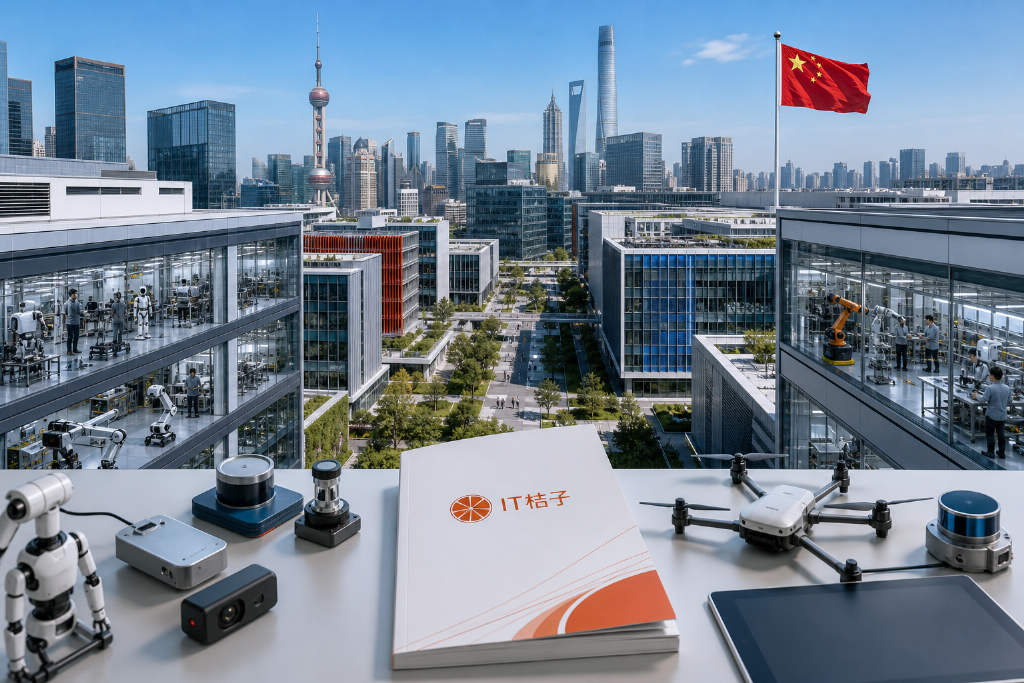
ITjuzi’s latest report on China’s embodied AI startup ecosystem found that founders with backgrounds at major technology companies are attracting a disproportionate share of capital in the sector. The study reviewed 1,155 entrepreneurs and said more than 300 of them had worked at Huawei, Microsoft, Baidu, Google, DJI, Alibaba, Tencent, ByteDance or Xiaomi. Those founders helped create 232 embodied AI companies, roughly 20% of the sector by count, yet they captured about half of all industry funding. The report compared nine major “big-tech camps” by company count, total funding and average funding per company. Huawei ranked first in both company count and total funding, with 26 companies raising a combined RMB 38.85 billion. Microsoft came second by total funding at RMB 33.92 billion, while its camp led in average funding per company at RMB 1.542 billion. Google-backed founders followed closely on that metric at RMB 1.509 billion per company. ITjuzi said the strongest funding outcomes were linked not simply to brand-name employers, but to teams combining hardware execution, supply-chain and mass-production experience with AI and model capabilities. The report also highlighted a growing divide between teams still in product validation and those that have already demonstrated delivery and manufacturing capacity.

380
ITjuzi report says big-tech pedigrees are a major funding advantage in embodied AI
Unitree
2026-08-19 04:30:46

Unitree opens on STAR Market at 1,100 yuan, briefly pushing valuation to 445 billion yuan

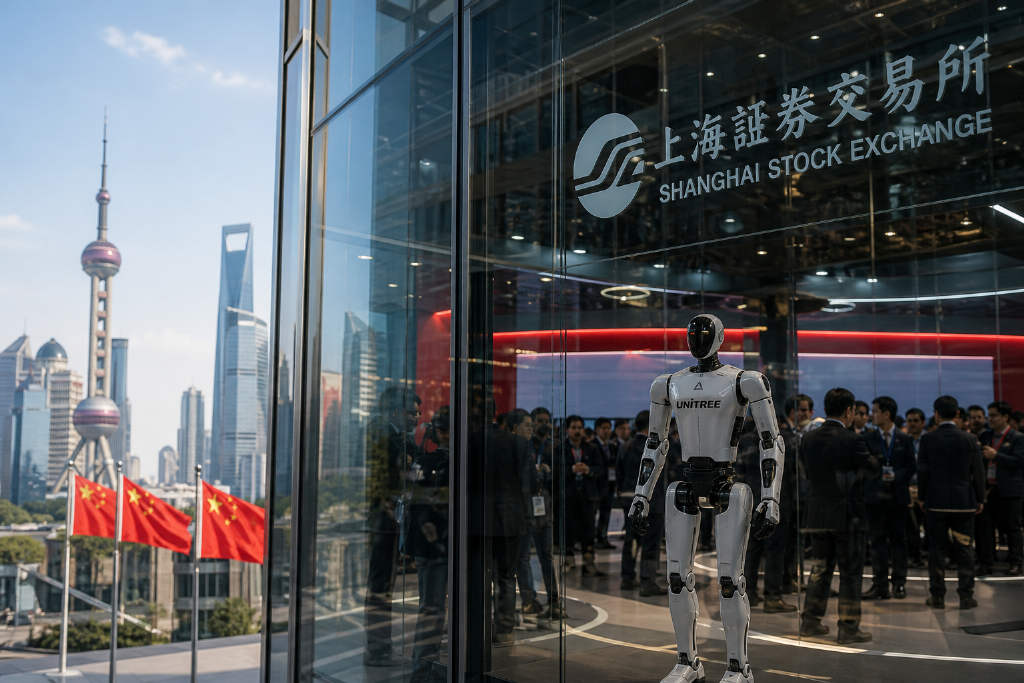
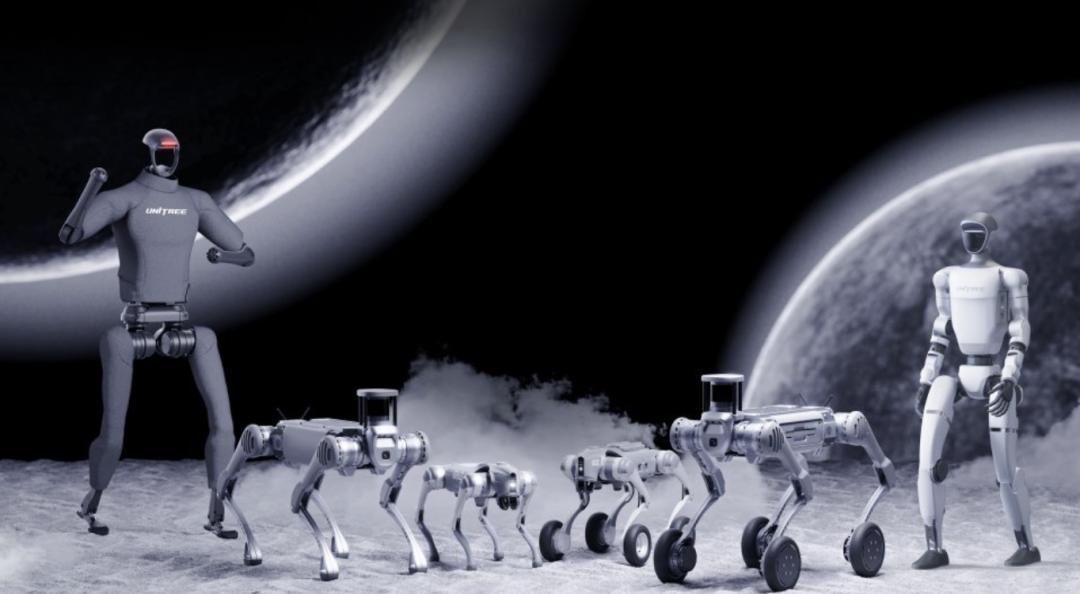
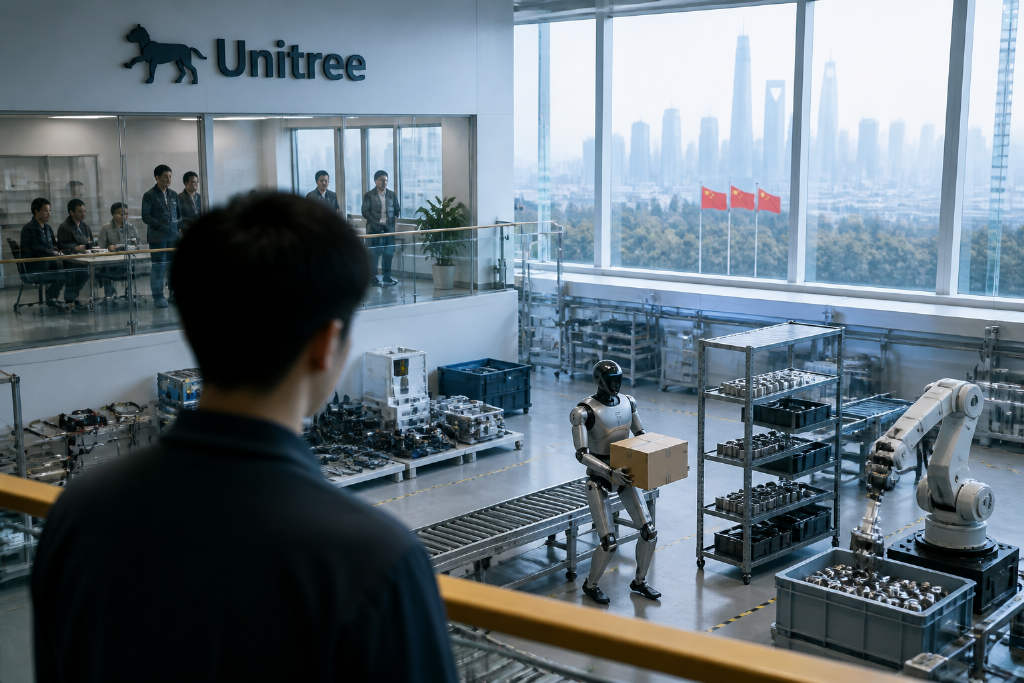
Unitree Technology made its debut on Shanghai’s STAR Market on Aug. 19, turning the long-discussed label of “A-share’s first humanoid robot stock” into a listed reality. The stock opened at 1,100 yuan, up 629.44% from its 150.80-yuan issue price, and its market capitalization briefly climbed to 445 billion yuan before pulling back. At the time of writing cited in the source article, the shares were trading around 892 yuan, valuing the company at roughly 361 billion yuan, with turnover reaching 55.25% and trading volume exceeding 15.3 billion yuan. The listing stood out not only for its first-day price action but also for its unusually tight float. Unitree’s post-listing unrestricted shares amounted to 30.0877 million, or 7.44% of total share capital. The online allotment rate was just 0.0181%, setting records on the STAR Market for both the lowest winning rate and the highest number of participating accounts. Strategic investors including the National Social Security Fund, DeepSeek, Tencent, PetroChina Kunlun Capital, China Southern Power Grid and China Telecom’s Tianyi Capital took part in the placement. The source article frames Unitree’s listing as both a wealth-creation event and a valuation test for China’s embodied AI and robotics sector. It also tracks founder Wang Xingxing’s holdings, compares Unitree with Figure AI, Boston Dynamics and Tesla’s Optimus, and lays out the company’s own responses on valuation, FCC restrictions, international competition and commercialization pace.

710
Unitree opens on STAR Market at 1,100 yuan, briefly pushing valuation to 445 billion yuan
Policy and Re
2026-08-19 04:30:00

Rising global bond yields and AI financing concerns drive a broad sell-off in U.S. tech stocks

U.S. stocks fell for a third straight session Tuesday as higher long-term bond yields put fresh pressure on richly valued technology names. The Nasdaq Composite dropped 1.33%, underperforming the Dow Jones Industrial Average and the S&P 500, while the 30-year U.S. Treasury yield briefly touched 5.338%, its highest level since 2007. The move was part of a wider global bond sell-off that also pushed long-dated yields higher in France, Germany, Japan and the U.K. Markets are increasingly focused on the growing debt burden tied to artificial intelligence expansion. According to figures cited in the report, AI-related bond issuance has reached $489 billion so far this year, well above an earlier full-year 2025 estimate of roughly $322 billion, while The Wall Street Journal reported that nine major technology companies have about $3 trillion in off-balance-sheet AI commitments. That backdrop hit semiconductors, memory, optical communications and AI cloud-service providers especially hard. Investors are also weighing fiscal deficits, oil-driven inflation risks tied to the Iran situation, and a heavy event calendar that includes U.S. tariffs on some Canadian products, a 20-year Treasury auction, Federal Reserve minutes and China’s one-year LPR decision.

930
Rising global bond yields and AI financing concerns drive a broad sell-off in U.S. tech stocks
Unitree
2026-08-14 02:23:28

Unitree’s IPO valuation faces scrutiny as industrial-use robot revenue stays below 3%

Unitree Technology’s Sci-Tech Innovation Board IPO has drawn intense retail demand and equally sharp valuation criticism. The company set its offering price at RMB 150.80 per share on Aug. 6, implying a market capitalization of RMB 60.993 billion and a price-to-earnings ratio of 219.23 times. On Aug. 10, the day of online subscription, 9.78 million retail investors participated, and the preliminary valid subscription multiple reached 8,288.82 times, resulting in a record-low winning rate for the STAR Market. At the same time, offshore and crypto-linked premarket pricing moved even higher: Hiive quotes reportedly touched $61.63 per share, while the UNITREE-USDC perpetual contract on Hyperliquid briefly traded near $90, implying a valuation of roughly $35.47 billion, or about RMB 239 billion, nearly four times the IPO market cap. Odaily’s original article argues that the valuation premium rests heavily on expectations for humanoid robots, even though Unitree’s own disclosures show most humanoid revenue still comes from research, education, and demonstration use cases rather than scaled industrial deployment. The report also points to slowing profit growth, revised risk disclosures, and cautious comments from analysts and investors as reasons the company’s valuation may face a tougher fundamental test over time.

420
Unitree’s IPO valuation faces scrutiny as industrial-use robot revenue stays below 3%
Taorun Semico
2026-08-13 07:42:11

Taorun Semiconductor files for IPO tutoring as early backer Xia Zuoquan edges closer to a fifth listed company

Taorun Semiconductor, a Chinese analog signal-chain chip company founded in 2015, has completed IPO tutoring registration with the Beijing Securities Regulatory Bureau, marking another step toward a public listing. The company had already completed relocation and a shareholding reform ahead of the filing. Backed early by Xia Zuoquan and his Zhengxuan Investment, Taorun has raised more than 1 billion yuan across 12 financing rounds since opening to outside capital in 2018, according to the report. The company is led by founder Guan Yi, a New York University graduate and former Broadcom APD employee with nearly two decades of chip design experience. The report said Taorun focuses on high-performance analog and mixed-signal chips and is among the few domestic companies with both short-reach and mid-to-long-reach optical communication DSP capabilities. It added that the company delivered key IP for core customers in 2020, was named a national-level specialized and sophisticated "Little Giant" enterprise in 2023, and saw multiple products enter mass production in 2025. Official data cited in the report said Taorun’s revenue posted annualized growth of more than 80% from 2022 to 2024, helped by demand for high-speed interconnect chips tied to AI infrastructure, and that the company has entered the supply chain of one of China’s top three telecom equipment vendors. If Taorun completes its IPO, it would become the fifth listed company backed by Xia after BYD, UBTECH, Yutai Microelectronics and Shangshui Intelligent.

960
Taorun Semiconductor files for IPO tutoring as early backer Xia Zuoquan edges closer to a fifth listed company
DeepSeek
2026-08-11 10:10:15

DeepSeek commits about $19.6 million to Unitree Robotics strategic IPO placement

Unitree Robotics opened its online subscription for a STAR Market listing on Aug. 10 at RMB 150.8 per share, implying an offering valuation of roughly RMB 60.9 billion. Days earlier, the company’s strategic placement list drew attention after it showed DeepSeek parent DeepSeek as an investor, taking 933,390 shares worth about RMB 141 million. Unitree chairman Wang Xingxing said the deal was not a routine financial investment and that the two sides had signed a strategic cooperation memorandum covering artificial general intelligence, robot hardware and AI large models. The disclosure came as China’s robotics funding market stays active, with more than RMB 46 billion raised in the sector in the first eight months of 2026 and 51 embodied-AI-related companies reportedly waiting to list in Hong Kong. The article argues that the partnership gives Unitree a clearer capital-markets narrative ahead of pricing, while what DeepSeek will get in practical deployment terms remains less certain because the memorandum remains broad and no implementation details have been disclosed.

1170
DeepSeek commits about $19.6 million to Unitree Robotics strategic IPO placement