
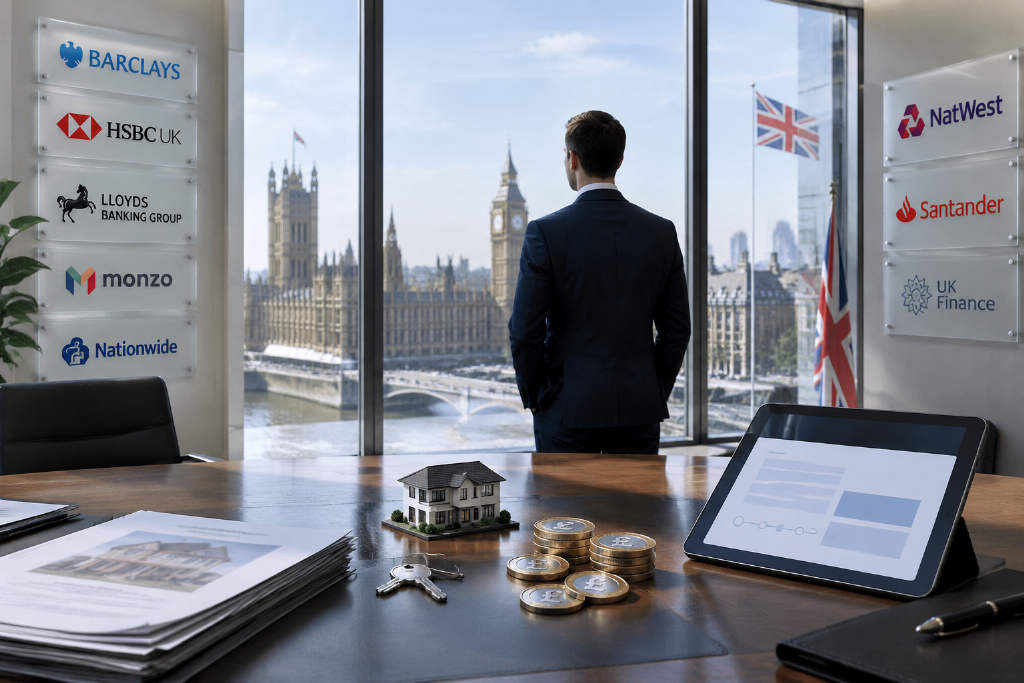
A UK banking initiative led by UK Finance has completed what the trade body called the first live customer transactions using tokenized sterling deposits. Announced on Thursday, the Great British Tokenised Deposit, or GBTD, project includes Barclays, HSBC UK, Lloyds Banking Group, Monzo, Nationwide, NatWest and Santander.
UK Finance describes tokenized deposits as digital versions of ordinary commercial bank money that keep the regulatory protections attached to a conventional deposit.
First live transactions covered remortgages and a marketplace purchase
The first batch included two remortgage completions and one marketplace purchase.
In the remortgage transactions, the money remained locked until each deal completed, then moved automatically. UK Finance said the structure can also allow borrowers to keep earning interest on that money until the closing date.
In the marketplace transaction, money from a buyer paying a private seller stayed locked in the buyer’s own account until the item changed hands.
Quant says the payments used real money on UK infrastructure
Quant built the shared GBTD platform. In a statement published by UK Finance alongside the results, Quant founder and CEO Gilbert Verdian said: 「These transactions are real money moving on UK infrastructure, not an experiment」.
Verdian said conditional payments can address issues ranging from failed completions to authorized push payment fraud.
Lucy Rigby, economic secretary to the Treasury, described the transactions as a critical milestone for payments innovation in the UK.
Project moves toward digital asset settlement tests
UK Finance launched the live pilot phase in September 2025 with six banks, and Monzo joined as the seventh participant in January.
The project has also been accepted into the Bank of England’s Synchronisation Lab, which explores atomic settlement in central bank money.
Some of the same banks are also working on similar payment rails elsewhere. In July, 17 banks, including HSBC and Lloyds, lined up to pilot live tokenized deposit payments on a blockchain-based ledger opened by Swift.
UK Finance said it expects more pilots over the next few months to test settling digital assets with tokenized customer money.
Banks in the project also plan to issue digital debt instruments whose coupons will be paid in tokenized deposits.