
Ukraine lost two of the three officials at the center of its wartime decision-making system within seven days in July 2026. First came the removal of the defense minister. Then, after six straight days of street protests in Kyiv and other major cities, the commander-in-chief of the armed forces was also pushed out.
Russian commentary cast the moves as a sign of internal collapse in Ukraine, while conspiracy theories and coup rumors spread at the same time. But the records of the two men at the center of the upheaval point to a different story: a fight over how Ukraine should use scarce resources, what victory should look like under wartime constraints, and where the country’s 2026 defense budget should go.
Two military leadership changes in one week
Ukraine’s war leadership revolves around three positions: the president, who sets the overall direction; the commander-in-chief, who runs front-line operations; and the defense minister, who oversees logistics and procurement. In mid-July, two of those three posts changed hands within a week.
- July 12: President Volodymyr Zelensky launched a government reshuffle.
- July 14: Parliament dissolved the cabinet of Yulia Svyrydenko.
- July 15: After a three-way meeting, Defense Minister Mykhailo Fedorov was removed and issued a farewell statement listing 22 achievements during his term.
- July 21: As protests entered their sixth day, Commander-in-Chief Oleksandr Syrskyi was dismissed and replaced by Joint Forces commander Mykhailo Drapatyi.
One detail stands out. Fedorov did not accept the next job prepared for him. Zelensky proposed that he take charge of integrating defense technology with government technology functions and continue work on drones and digital reform. Fedorov refused and insisted on returning as defense minister. The ministry is now being run by an acting minister, and a formal personnel vote is expected in parliament in mid-August.
So the crisis has not ended. The decisive call has only been delayed by about a month.
Fedorov’s rise from digital government to the defense ministry
Fedorov was born in 1991 in Zaporizhzhia Oblast. In 2013, at age 22, he founded a social media marketing company and built his career in digital advertising placement. In 2018, he joined Zelensky’s campaign team and helped the former comedian win the presidency through social media operations and targeted outreach.
In 2019, at age 28, Fedorov was appointed deputy prime minister and minister of digital transformation. The ministry was newly created. During his tenure, he led development of Diia, the national e-government app that brought ID cards, driver’s licenses and more than 70 public services onto smartphones, sharply simplifying administrative procedures. He also promoted the governing idea of a “state in a smartphone.”
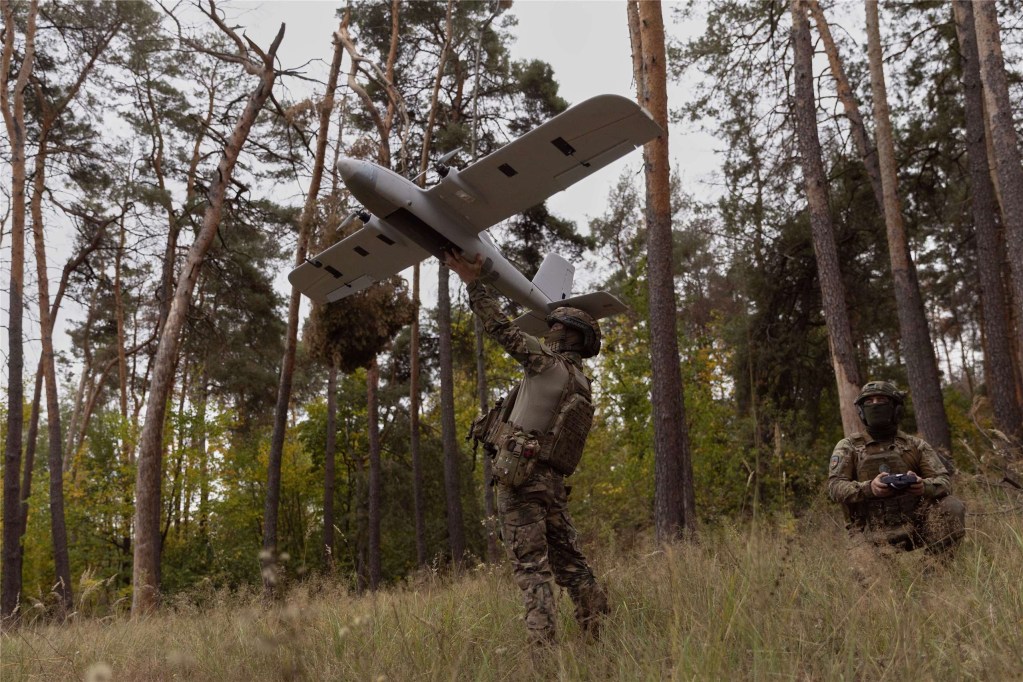
After the war broke out in 2022, the Ministry of Digital Transformation shifted heavily toward military technology. In July that year, faced with Russia’s artillery advantage, Fedorov launched the Army of Drones program. The program bypassed traditional defense procurement channels and bought complete civilian and industrial drones, as well as components, directly from civil suppliers and private companies.
Brave1 and the attempt to plug startups into wartime production
In 2023, Fedorov’s ministry led the creation of the Brave1 defense-tech innovation platform. Its logic resembled a startup accelerator. Ukrainian startups with workable proposals could receive funding, access to testing sites and even military orders through the platform.
As of June 2026, public data cited for Brave1 showed:
| Registered R&D projects | More than 3,600 |
| Projects with NATO codification | 300 |
| Defense innovation grants | $50 million |
| Additional investment brought into Ukraine’s defense industry | More than $65 million |
| Cumulative procurement orders handled by the platform | More than $235 million |
In July 2026, Airbus signed a cooperation agreement with Brave1, becoming the first major Western defense industrial group to establish a formal partnership with the platform. A wartime startup-matching mechanism built by the government had, in three years, connected with one of Europe’s aerospace giants.
His January 2026 appointment as defense minister
On Jan. 14, 2026, parliament approved Fedorov as defense minister with 277 votes. The nomination had failed to pass the previous day because attendance was too low, and it took a second vote to secure approval. At 35, and with no military background, he became the youngest defense minister in Ukrainian history.
He then tried to bring Brave1’s operating model into the defense ministry itself. Once front-line units had procurement budgets, they could go directly to Brave1 Market, order specific FPV drones or unmanned ground vehicles based on tactical needs, and receive direct delivery from manufacturers. That cut waiting times from months to as little as one or two days.
The importance of the system was not convenience. It was iteration speed. If Russian forces changed electronic warfare frequencies, Ukrainian units could switch to adapted models within days rather than wait through standard procurement timelines.
In the 22 achievements listed in Fedorov’s farewell statement, the article says the following had been verified: helping secure a Starlink cutoff for Russian forces in February 2026; raising Ukraine’s interception rate against Russian drones to 91%; and loosening government profit caps so domestic drone manufacturers could keep a 25% gross margin.
The last item may sound technical, but in the article’s framing it was a basic condition for the survival of defense startups.
Syrskyi’s case for the traditional battlefield
Syrskyi was born in 1965 into a military family in Vladimir Oblast in the Soviet Union and is of Russian descent. In 1982, he entered the Moscow Higher Military Command School, a key institution for training Soviet Army infantry officers. Many of its alumni later became senior Russian commanders. After graduating in 1986, he was assigned to artillery units.
When the Soviet Union dissolved, Syrskyi was stationed in Ukraine. He chose to stay, took Ukrainian citizenship and moved up through the Ukrainian military. On the eve of the Donbas war in 2014, he was already serving as first deputy head of the Joint Center at the defense ministry, representing the military in NATO cooperation projects and pushing reforms aligned with NATO standards.
After the full-scale war began in 2022, Syrskyi, then army commander, directed the defense of Kyiv. He concentrated elite units defensively and focused attacks on Russian reinforcement and supply lines. Ukraine held the capital, and Syrskyi was awarded the title Hero of Ukraine.
In September that year, he led the Kharkiv counteroffensive, exploiting the weakness of Russian positions in the north and launching a fast-moving attack toward Izium and Kupiansk. Ukraine retook thousands of square kilometers within a week.
In February 2024, he replaced Valerii Zaluzhnyi as commander-in-chief. The same year, he planned the Kursk operation, concentrating Ukraine’s most capable airborne assault and mechanized units in a cross-border campaign. Early gains gave way to retreat, however, after Russian reinforcements arrived and U.S. military aid was interrupted. By early 2025, Ukraine had to abandon the territory it had taken and absorb the cost.
That background helps explain the position Syrskyi took in the dispute. His argument was rooted in four decades of military training and in his experience with two successful defensive campaigns, not in a narrow bureaucratic instinct.
A $120 billion budget and one core question
Ukraine’s total defense and security budget for 2026 is about $120 billion. Roughly $60 billion comes from the state budget and European Union loans, while another $60 billion depends on security assistance from international partners. About 80% of the total is directed toward three main categories: drones, air defense systems and missiles, and artillery ammunition.
The problem is simple. Those categories draw from the same pool of money.
Fedorov’s argument was that Ukraine cannot beat Russia in a classic war of attrition given disparities in population, industrial capacity and tolerance for losses. His answer was an asymmetric path: more spending on drones, AI algorithms and domestic military technology; sea and aerial drones to strike the Black Sea Fleet; and long-range drones with a reach of around 1,000 kilometers to disable oil refineries inside Russia and wear down the enemy’s war machine at a strategic level.
Syrskyi’s case ran the other way. If front-line positions do not have enough infantry to hold the line, and if artillery shells and air defense missiles do not keep coming, the line will break. Once positions are lost, advanced systems in the rear will not matter much. Under that view, core budget resources should tilt toward heavy ammunition and pay for forces at the front.
The split had surfaced before. During the creation of Ukraine’s unmanned systems forces, Fedorov had wanted a highly independent new branch with budget priority and autonomous tactical command authority. Syrskyi insisted it should remain a supporting arm for conventional infantry and artillery and opposed deep cuts to procurement and salary budgets for traditional branches. At that point, Zelensky managed to hold the two positions together in a temporary compromise.
By 2026, the issue had become harder to postpone. NATO’s military aid package for that year, worth €70 billion, had entered the allocation stage. In his farewell statement, Fedorov said some people were “blocking reform” and disclosed that he had been given an ultimatum: abandon the core reforms or resign.
Trench warfare versus drones is really a debate about adaptation
The article argues that the importance of this clash lies in the way it exposes a problem every country will eventually face.
For Ukraine, positional warfare has not lost its importance. Territory that cannot be held is territory already lost. Drones cannot seize cities, and they cannot replace artillery fire in winter. On that reasoning, Syrskyi’s line has clear legitimacy: if the front collapses, everything prepared behind it loses value.
But an army that relies only on positional warfare risks being pinned in place. For Ukraine, a pure war of attrition is a losing equation. With a weaker population base and a smaller industrial system, fighting point by point leads to steady blood loss. That is where Fedorov’s line begins: if direct battlefield superiority is out of reach, Ukraine must be able to strike the enemy’s logistics and war-sustaining infrastructure.
The scale of Ukraine’s drone push
Ukraine produced more than 4 million drones in 2025. The target for 2026 is 7 million. In the first half of 2026, signed drone contracts reached 333.6 billion hryvnias, or about $7.6 billion, more than double the level of the same period a year earlier.
In June alone, deliveries approached 500,000 units, and 95% were domestically made. Output on that scale could not have come from any one traditional defense manufacturer. It depended on the large number of small firms and startups that emerged in wartime.
Those companies survived and produced because of three mechanisms described in the article: Brave1’s funding links, a 25% profit margin considered sustainable, and a procurement marketplace that allowed front-line units to place orders directly.
What has helped Ukraine hold on, the article says, is not courage alone. It is also an institutional setup that lets young people and small companies turn ideas into battlefield equipment quickly.
The article’s comparison with Taiwan
The piece then draws a comparison with Taiwan. Its main point is not that drones have proved more important than artillery. Rather, it argues that six days of protests in Ukraine showed, in unusually direct form, the kind of victory many people wanted their country to pursue. Protesters were not just calling for one minister to be reinstated. They were also urging the state to choose a path that does not rely mainly on sacrificing lives to hold positions.
Taiwan is working through a similar issue on a different timeline. On May 8, 2026, Taiwan’s legislature passed the National Defense Special Act on third reading, cutting the executive branch’s proposed eight-year cap of NT$1.25 trillion to NT$780 billion, a reduction of about 37.6%, or roughly NT$470 billion. The version that passed excluded commercial purchases and commissioned manufacturing programs, which meant planned procurement of 210,000 drones, about 1,300 uncrewed boats and related AI command systems was left out.
Before that vote, the bill had already been delayed for more than 200 days after being sent for review on Aug. 19, 2025.
On May 20, Defense Minister Wellington Koo said follow-up measures would be planned through three channels: supplementary budgets, annual budget inclusion, or another special act. President Lai Ching-te described the remedial work as “mending the fold after losing the sheep.”
Separately, a NT$44.2 billion budget under the Ministry of Economic Affairs’ 2026 uncrewed vehicle industry development program was fully frozen through a caucus proposal in the legislature and cannot be used unless approved in a plenary session.
The comparison, the article says, is not about deciding who is right. Budget review is a normal democratic process, and one reason for the cuts was concern over the anti-jamming capability of domestically made systems, which is a technical question that needs to be addressed directly. The more revealing contrast is time. Ukraine’s strategic dispute reached a provisional political resolution within seven days through personnel changes and set a parliamentary vote in August as the next decision point. Taiwan’s drone budget, by contrast, has spent years moving through review, cuts, freezes and renewed proposals.
For war preparation, time is always the scarcest resource. Ukraine’s battlefield experience, as presented in the article, suggests that rapid equipment replacement depends not only on technology itself but also on whether budgets are released in time, whether manufacturers can secure a reasonable profit, and whether front-line units can order directly. None of those three mechanisms, the article says, has been fully settled in Taiwan.