
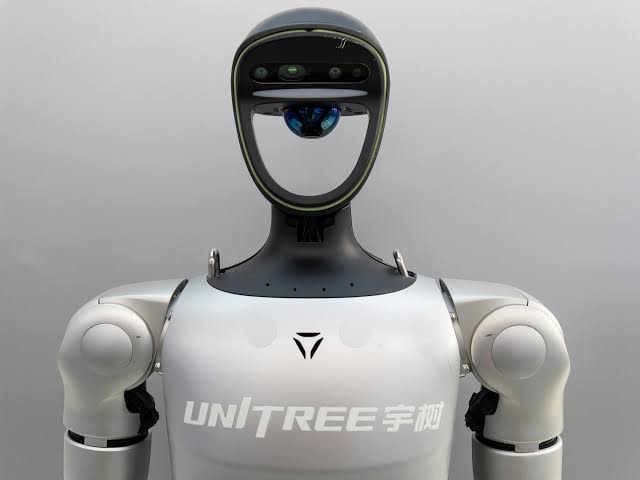
Rising expectations around Unitree Technology’s public listing are becoming a fresh catalyst for the robotics sector, according to a CoinW Research report published by PANews. The report says Unitree, a prominent Chinese embodied AI company, has drawn market attention not only because of its IPO process, but because its commercialization progress is prompting investors to re-examine whether robotics is moving from concept-stage excitement into a real industrial cycle.
CoinW argues that as large AI models, core components and manufacturing capacity continue to mature, robotics is entering a new phase in which application rollouts matter more than technical demonstrations. In that transition, value across the supply chain is spreading beyond finished robots to execution systems, sensing and control, and precision manufacturing. The report identifies ball screws, reducers and motors as the parts of the chain that are closest to current mass-production logic, while vision, force control and embodied AI models represent the next layer of growth.
From an investment perspective, the note says Unitree’s expected listing does not mean every robotics-related asset will benefit. It says the names worth watching are those with technical barriers, supply-chain coordination and proven commercialization capability. Whether robotics can sustain a broader re-rating, the report adds, still depends on orders, shipment volumes and actual application scenarios.
Why the market is focused on Unitree
As of August 2026, Unitree has entered what the report describes as a key stage in its listing process, making it one of the most closely watched companies in China’s embodied AI field. CoinW says the company submitted its listing application in March 2026 and received registration approval in June 2026. That, in its view, has shifted the debate from whether a robotics company can list at all to whether the robotics industry is nearing scalable commercialization.
The report notes that Unitree had already raised its profile through its humanoid robot products. During the 2025 Spring Festival Gala, its robots appeared in the “YangBOT” performance and drew broad attention. In the 2026 gala, Unitree robots again demonstrated motion-control capabilities, which the report says further expanded public awareness of embodied AI. Even so, CoinW says the main factor behind valuation reconstruction in capital markets is still the advance of the listing process and proof of commercialization ability.
Over the past few years, most AI investment has centered on large models, computing power and software ecosystems, the report says. As AI reaches into the physical world, robotics is emerging as one of the main routes for commercial deployment. CoinW contrasts embodied AI with purely software-based AI agents, saying robots can map AI capability into real environments and then build new growth curves through hardware scale, data accumulation and repeatable deployment scenarios. The note also says AI agents still face cost, user-habit and penetration challenges, while humanoid robots, because they interact in a way closer to humans and can adapt to existing environments, may become an important carrier for AI in the real world.
CoinW does not frame embodied AI as a simple combination of a large model and hardware. Instead, it breaks the stack into the robot body, execution systems, motion-control systems and task-level intelligence systems such as VLA, or vision-language-action models. These, the report says, correspond to movement capability, motion coordination and environmental understanding. As expectations around Unitree’s listing rise, the market may shift from looking at a single finished-robot company to tracking core components, intelligent control, sensing systems and AI infrastructure across the wider chain. In CoinW’s view, Unitree’s IPO is both a corporate financing milestone and a possible trigger for a broader valuation reset in robotics.
What stands out about Unitree
One of Unitree’s main strengths, according to the report, is the breadth of its product lineup. The company has built a portfolio spanning quadruped robots, humanoid robots, robotic arms and core components.
In quadrupeds, Unitree has launched the Go2 and B2 series for consumer, research and education, and industrial inspection scenarios. CoinW describes this as one of the earliest areas where the company achieved commercial rollout. In humanoids, Unitree has introduced the H1 and G1 products and continues to explore general-purpose robot use cases. The company has also moved into the Z1 robotic arm, motors and joint modules, gradually extending its research and development capability from robot bodies to key components.
The report says this multi-product structure differentiates Unitree from companies known mainly for technical showcases. Its competitive edge is not limited to complete-robot development, but also includes motion control, hardware components and accumulated commercialization capability. CoinW describes Unitree as an increasingly representative company within the embodied AI supply chain.
Pricing is another part of the investment case. The report says the robotics industry has long struggled with high costs and limited scenarios, and that one of Unitree’s strategies has been to lower the threshold for adoption through relatively low prices. CoinW says the company tends to standardize products and push scale, aiming to broaden its user base and gather more application feedback and developer ecosystem input. The note compares this logic to the early consumer-electronics industry: gain penetration through pricing, then expand applications through ecosystem building. For an industry still in an early commercialization phase, lowering cost and increasing shipments remain key conditions for maturity, the report says.
CoinW also highlights Unitree’s commercialization capability as stronger than that of many peers. Based on figures disclosed in the prospectus, the company’s revenue rose rapidly in recent years, reaching RMB 159 million in 2023 and RMB 392 million in 2024, before climbing to RMB 1.708 billion in 2025. The report says this points to fast growth in product sales and market demand.
At the same time, it cautions that a robotics company’s financial profile has to be judged alongside revenue mix, product types, gross margin, research spending and cash flow. The market had previously expected an even larger revenue scale for Unitree, largely because of its industry profile and product exposure. CoinW says the prospectus reflects recognized revenue under a specific accounting standard, so the numbers may differ from broader market assumptions because of differences in statistical scope. Still, compared with robotics firms that rely mainly on demonstrations, Unitree already has product sales and scaled delivery capability, which the report identifies as a core advantage over many early embodied AI companies. Investors will be watching the revenue contribution of different products, expansion into commercial scenarios and the company’s ability to sustain profitability.
How the robotics thesis is changing
CoinW says the robotics industry is moving from the demonstration stage into a phase of commercial exploration as AI models improve, hardware matures and the supply chain deepens. But it also stresses that different parts of the stack are moving at different speeds. A robot that can move and a robot that can autonomously complete complex tasks are not at the same stage of development.
Motion control has improved quickly in recent years, the report says, helped by simulation training, reinforcement learning and motion-control algorithms. Robots are now noticeably better at walking, running and balancing. Manipulation and task execution remain harder. Once a robot enters a real environment, it needs not only to move but also to grasp, assemble and use tools in complex settings, all of which depend heavily on real-world data. CoinW says teleoperation data collection is still expensive, and the gap between simulation training and real environments has not been closed. As a result, generalization in complex operational scenarios still needs work.
Because of that, the report expects commercialization to follow a gradual path. In the near term, scenarios with higher error tolerance such as education and research, exhibitions, data collection and inspection are more likely to scale. Flexible manufacturing and home services, which require much stronger reliability and intelligence, still need continued technical progress.
CoinW also points to a maturing hardware chain as a factor lowering barriers to industrialization. Motors, reducers, sensors and controllers have increasingly moved toward domestic substitution and scaled supply in recent years, which has improved manufacturing cost and delivery capability. Lower hardware cost does not mean robotics will spread overnight, the report says, but it does provide a base for higher shipments and faster product iteration.
Behind the attention on Unitree is a broader change in how investors look at the sector. CoinW says the focus is moving away from technical demonstrations and toward product delivery, cost control, supply-chain capability and commercialization proof. In that framework, the eventual winners will need not only technical strength, but also the ability to sustain mass production and close a commercial loop.
Which parts of the supply chain the report highlights
The report describes robotics as a complex system integrating mechanics, electrical engineering, artificial intelligence and manufacturing capability. In that context, Unitree’s listing expectations matter not only for complete robots, but for how the market values the wider chain. As the sector shifts from demonstrations to commercialization, capital may spread from finished-robot makers to upstream segments with high value-add, technical barriers and supply-chain advantages.
Core components: from motion to intelligent execution
CoinW says the key difference between humanoid robots and traditional industrial robots is the need for both high-degree-of-freedom movement and complex task execution. That is pushing value from traditional mechanical parts toward intelligent execution systems. Joint execution systems are basic but critical, and parts such as ball screws, reducers and frameless torque motors determine motion precision, payload capacity and stability. The report says those areas are likely to benefit early if robotics moves into scaled production. As robots progress from basic movement to complex operation, dexterous hands, tactile sensing and force-control systems should gain in importance as well.
Sensing and control: the intelligence core
If execution systems determine whether a robot can move, sensing and control systems determine whether it can understand and finish a task, the report says. Humanoid robots need to gather environmental information through vision, depth perception, tactile sensing and force-control systems, then combine that data with motion-control algorithms for real-time response. Multi-camera vision and depth sensing are used for environmental understanding. Six-axis force sensors, tactile sensors and joint torque feedback help with fine manipulation. Domain controllers and motion-control systems handle millisecond-level execution, while embodied AI models and VLA models push robots from fixed programs toward autonomous task execution.
At the current commercialization stage, CoinW says execution systems and structural parts are still easier to verify. Sensing, force control and the embodied AI “brain” remain in the technology-iteration stage and fit more naturally into a longer-term growth view.
Lightweight materials and precision manufacturing
The report says large-scale commercialization will also depend on reducing cost, cutting weight and improving reliability. In humanoid robots, excessive body weight raises energy consumption and adds stress to joints. Inadequate structural precision can undermine long-term operational stability. For that reason, CoinW identifies lightweight materials and precision manufacturing as core foundations for moving from prototypes to mass production.
Chinese robotics names mapped in the report
From a trading perspective, CoinW says the opportunity tied to Unitree’s expected listing lies not only in the company itself, but in the possibility that it becomes a catalyst for repricing the robotics sector. Because Unitree is not yet publicly listed, secondary-market capital is more likely to look for mapped beneficiaries across the supply chain. When robotics-related trading broadens, the report says, the market usually expands beyond complete-robot makers into core components, execution systems, sensing and control, materials, manufacturing and industrial automation.
| Segment | Company | Market | Ticker | Robotics relevance | Trading logic |
|---|---|---|---|---|---|
| Complete robots / sector catalyst | Unitree | China | Pre-IPO | High | A representative embodied AI company in China covering quadrupeds, humanoids and robot components. If its listing progresses, it may become a key catalyst for valuation reconstruction in robotics |
| Complete robots / sector catalyst | UBTECH | Hong Kong | 9880.HK | High | One of China’s representative humanoid robot companies, already generating commercial sales and positioned to benefit from the humanoid robotics trend |
| Complete robots / sector catalyst | Tesla | U.S. | TSLA | Medium-high | The Optimus project represents the “AI + robotics” route, combining AI algorithms, manufacturing capability and data advantages in commercial exploration |
| Reducers / core joints | Leader Harmonious Drive | China | 688017.SH | High | Core supplier of harmonic reducers, a key component in humanoid robot joints |
| Reducers / core joints | Zhongda Leader | China | 002896.SZ | High | Has exposure to reducers, motors and robot joint modules, benefiting from higher robotics demand |
| Reducers / core joints | Shuanghuan Driveline | China | 002472.SZ | Medium-high | Precision gear manufacturer with positions in robot reducers and transmission systems |
| Reducers / core joints | Harmonic Drive Systems | Japan | 6324.T | High | Global leader in harmonic reducers and a key supplier for humanoid robot joints |
| Ball screws / motion execution | Hengli Hydraulics | China | 601100.SH | Medium-high | Hydraulics and precision transmission company with exposure to ball screws and other robotics parts |
| Ball screws / motion execution | Wuzhou Xinchun | China | 603667.SH | Medium-high | Has positions in ball screws, bearings and other transmission components for robotics |
| Ball screws / motion execution | Tuopu Group | China | 601689.SH | Medium-high | Auto-parts leader with exposure to robot actuators and structural components |
| Ball screws / motion execution | Sanhua Intelligent Controls | China | 002050.SZ | Medium | Uses precision manufacturing capability to develop actuator-related robotics products |
| Motors and motion control | MOONS’ | China | 603728.SH | High | Supplier of miniature motors and motion-control products, a core part of robot execution systems |
| Motors and motion control | Leisai Intelligent | China | 002979.SZ | Medium-high | Motion-control company covering drivers, controllers and other robotics applications |
| Motors and motion control | Kinco | China | 688160.SH | Medium-high | Industrial automation and motion-control company |
| Motors and motion control | Yaskawa Electric | Japan | 6506.T | High | Global leader in servo motors and motion control, and a core industrial robotics company |
| Sensing / robot vision | Orbbec | China | 688322.SH | High | 3D vision company providing environmental recognition capability for robots |
| Sensing / robot vision | RoboSense | Hong Kong | 2498.HK | High | Lidar company with exposure to robotics sensing applications |
| Sensing / robot vision | Hesai Technology | U.S./Hong Kong | HSAI / 2525.HK | Medium-high | Lidar company covering autonomous driving and robotics sensing scenarios |
| Control systems / industrial automation | Inovance | China | 300124.SZ | Medium-high | Industrial automation leader covering control systems, servos and robotics applications |
| Control systems / industrial automation | Estun | China | 002747.SZ | High | Representative Chinese industrial robot company covering robot bodies and control systems |
| Control systems / industrial automation | FANUC | Japan | 6954.T | High | Global industrial robotics leader and a major name in manufacturing automation |
| Dexterous hands / precision structural parts | Zhaowei Machinery & Electronics | China | 003021.SZ | Medium-high | Micro-transmission and precision component company with exposure to robot dexterous hands |
| Dexterous hands / precision structural parts | Everwin Precision | China | 300115.SZ | Medium | Precision structural-part manufacturer that may benefit from robotics lightweighting and component demand |
| Materials and manufacturing capability | Kingfa | China | 600143.SH | Low-medium | Modified-materials company with theme exposure to lightweight robotics materials |
| Materials and manufacturing capability | Wote Advanced Materials | China | 002886.SZ | Medium | Specialty engineering plastics company tied to PEEK and other lightweight material opportunities |
Source: CoinW Research
The report also lays out a timeline for how trading interest may evolve. In the near term, it says “Unitree-related” names and core component suppliers usually receive the most attention after a robotics catalyst appears. Capital tends to move first into names with high relevance to the main industry narrative and strong market recognition. Over the medium term, CoinW expects the market to move from thematic trading toward industrial validation, focusing on robot shipments, orders and supply-chain scaling. It says reducers, motors and actuators may offer stronger earnings elasticity because of their relatively high value content.
Over a longer horizon, CoinW says sensing and control should become more important. The sector’s end goal is to move from robots that can simply move to robots that can understand environments and complete tasks autonomously. In that shift, vision systems, sensors and control systems may become the next focal points. As production scales, lightweight materials and precision manufacturing should also matter more for cutting cost and improving reliability.
How the report maps global robotics opportunities
CoinW says the U.S., Japan, South Korea and China are following different development paths. In the U.S., AI models and computing power are driving robot intelligence. In Japan and South Korea, industrial manufacturing depth and precision components are supporting commercial rollout. China’s edge, the report says, lies in a complete manufacturing system that can accelerate industrialization from components to finished robots.
For the U.S., the report centers on the “AI + robotics” logic. Tesla’s Optimus humanoid robot is one of the highest-profile projects in the market. CoinW says Tesla’s advantage is not just hardware, but also the data accumulated from autonomous driving, its AI algorithms and its manufacturing system. If humanoid robots eventually enter factory settings, the report says, Tesla could become an important example of AI and manufacturing integration.
NVIDIA, by contrast, is presented as the computing infrastructure behind robotics. Robots rely on GPUs, edge computing and AI software platforms for training, simulation and real-time control, CoinW says, making NVIDIA more like a computing infrastructure provider for the sector.
In Japan, the report highlights Fanuc as one of the world’s leading industrial robotics companies with deep experience in automotive and electronics manufacturing. Yaskawa Electric is identified as a major name in servo motors and motion control. Harmonic Drive Systems, which makes harmonic reducers, is described as a direct beneficiary of rising demand for high-precision joint control in robotics.
In South Korea, CoinW says the industry is more focused on commercial applications. Doosan Robotics is cited as a representative collaborative robot company serving manufacturing and logistics, using human-machine cooperation to improve production automation. Compared with humanoid robots, which are still in exploration, collaborative robots already have a more mature commercial path, the report says. Hyundai Motor Group is also expanding in robotics and holds a majority stake in Boston Dynamics, broadening its footprint in intelligent robotics and automation technologies. Backed by auto manufacturing and smart-factory infrastructure, South Korean firms have an advantage in commercialization and industrial deployment, according to the note.
In China, CoinW says the main strength lies in the completeness of the manufacturing chain, with solid supply capability from components and structural parts to finished systems. Unitree is cited as a representative embodied AI company whose lightweight design, low-cost positioning and rapid iteration have drawn market attention. If it advances toward listing, the report says, it could become an important valuation reference point for China’s robotics industry. UBTECH, already publicly traded in Hong Kong, is presented as another representative listed robotics company in China with exposure to humanoids, service robots and intelligent manufacturing solutions.
| Segment | Company | Ticker | Market | Robotics linkage |
|---|---|---|---|---|
| AI computing infrastructure | NVIDIA | NVDA | U.S. | Provides GPUs, AI computing platforms and a robot development ecosystem, forming core infrastructure for robot intelligence |
| Humanoid robots | Tesla | TSLA | U.S. | Optimus is a representative project combining AI algorithms, data and manufacturing in commercial exploration |
| Collaborative robots | Doosan Robotics | 454910.KS | South Korea | Representative collaborative robot company with commercial sales already in place |
| Robotics ecosystem | Hyundai Motor | 005380.KS | South Korea | Has positions in robotics, autonomous driving and intelligent manufacturing, and also has Boston Dynamics-related exposure |
| Industrial robots | Fanuc | 6954.T | Japan | Global leader in industrial robots and a long-term manufacturing automation supplier |
| Motion control | Yaskawa Electric | 6506.T | Japan | Leading company in servo motors and motion control |
| Precision reducers | Harmonic Drive Systems | 6324.T | Japan | Core supplier of harmonic reducers, benefiting from demand for robot joints |
| Humanoid robots | UBTECH | 9880.HK | China | Representative listed Chinese robotics company with exposure to humanoids and intelligent manufacturing |
| Humanoid robots | Unitree | Upcoming listing | China | Representative Chinese embodied AI company whose listing expectations may act as a sector catalyst |
Source: CoinW Research
The report says expectations around Unitree’s IPO should be viewed as a catalyst for re-evaluating China’s robotics sector rather than a single-company story. As the industry moves from proof of concept toward commercial rollout, the market focus may gradually shift from technical promise to order growth, cost reduction and the ability to deploy at scale.
Upcoming catalysts and risk factors
Looking ahead, CoinW says Unitree’s listing process could remain an important catalyst for robotics, but the trading logic may move from expectation-driven positioning to fundamental validation. Before listing, the main focus is likely to stay on IPO progress, valuation and mapped opportunities across the supply chain.
The report also stresses that Unitree has relatively strong in-house research capability and vertical integration. For that reason, its listing does not mean every robotics concept stock will benefit directly. CoinW says the more relevant areas are core components and precision manufacturing segments with real technical synergy or order linkage. During the listing stage itself, attention is likely to shift to valuation, pricing and capital-market feedback. High-profile technology companies often show a pattern in which expectations are priced in early and then diverge after the event, the report says. That means mapped names may reflect IPO expectations in advance, while post-listing performance will still need to be confirmed by orders, shipments and earnings.
Over the longer term, CoinW says the robotics sector will still come back to commercialization capability. The market will be watching actual robot shipments, order growth, supply-chain expansion and implementation across real scenarios. The report lists Unitree’s future operating data, the World Robot Conference, industrial expos, and technical progress from Tesla Optimus, Figure, UBTECH and Xiaopeng Robotics as potential industry catalysts.