
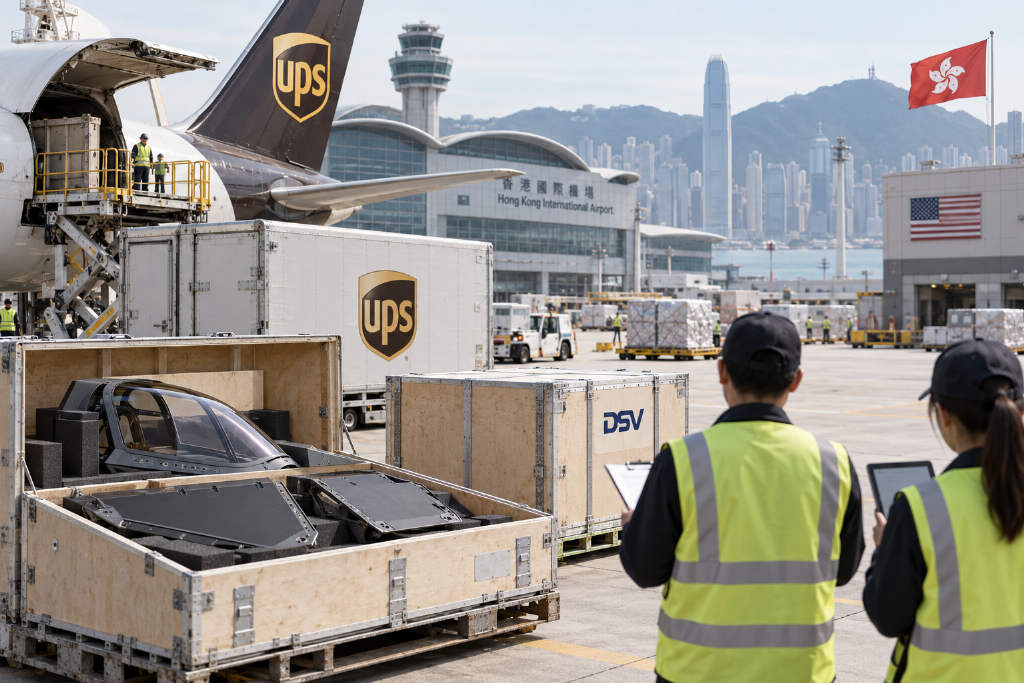
A shipment of parts tied to the F-35 stealth fighter was mistakenly routed to Hong Kong after a logistics error involving UPS, according to Bloomberg. The case has drawn scrutiny from U.S. authorities because the cargo included sensitive components subject to export-control rules.
Route change led to the mistaken transfer
The report said the shipment contained a canopy and weapons bay doors coated with radar-absorbing material. The parts were originally supposed to move to San Francisco through U.S. defense partners in South Korea and Taiwan. After shipping delays, the route was changed by personnel, and the cargo was then sent to Hong Kong by mistake.
At the center of the incident was a breakdown in logistics handling and information flow. Freight forwarder DSV A/S had sent an email warning under the U.S. International Traffic in Arms Regulations, or ITAR, stating that the sensitive shipment could not pass through certain countries. A UPS employee failed to catch that message in time. The report added that the two sides may have been using different IT systems, which may have contributed to the communication gap and the compliance failure.
Officials assess the technical risk
The misrouted parts included a canopy and weapons bay doors, both coated with radar-absorbing material linked to the aircraft’s stealth performance. The U.S. Department of Defense downplayed the practical value of the items, classifying them as unserviceable parts awaiting repair.
Even so, a U.S. Government Accountability Office, or GAO, official said the transfer of sensitive equipment into the hands of a competitor remains a major event. Agencies involved in the review assessed that access to physical parts could allow outside actors to conduct reverse engineering and develop technologies designed to counter U.S. military systems.
Government review expands to the supply chain
The incident has prompted investigations by the U.S. Department of Defense and the State Department, including the Directorate of Defense Trade Controls. Members of Congress have also called for a full review of the global military supply chain to prevent similar failures.
The fallout also reached the corporate side. UPS, which has been expanding its defense logistics business in recent years, saw its shares edge down by less than 1% in New York trading after the news. Lockheed Martin, the developer of the F-35, said it is working with logistics partners on preventive measures and tighter oversight.
The case has highlighted the risks that can emerge in cross-border defense supply chains when information management and regulatory compliance break down.