
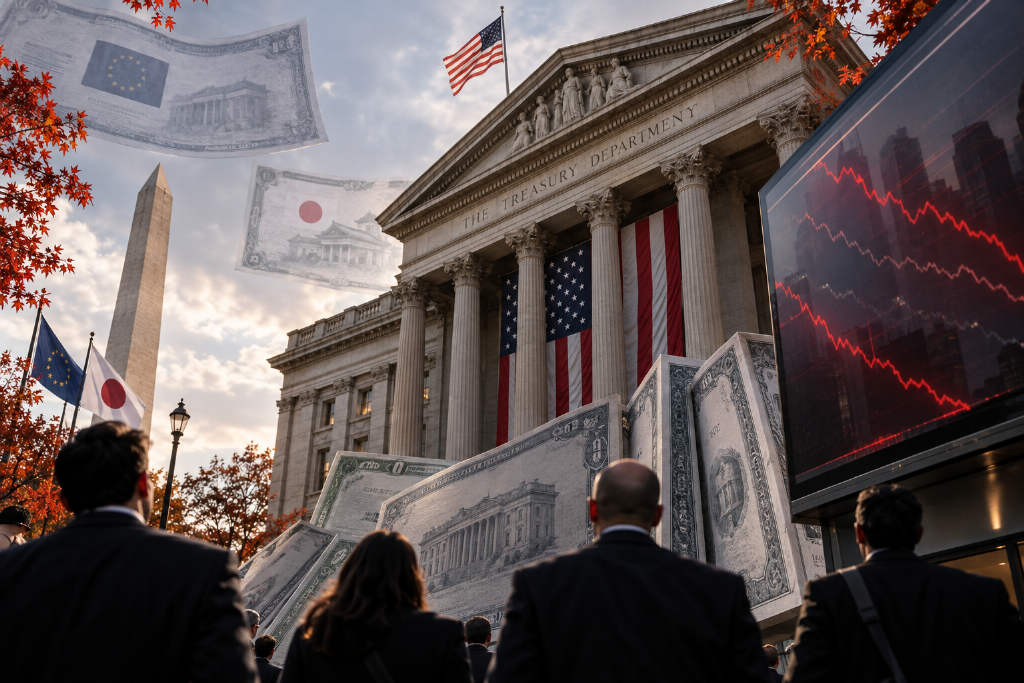
The global bond sell-off extended on Oct. 1, sending US Treasury yields to their highest levels in more than two decades.
According to CNBC, citing LSEG data, the yield on the US 10-year Treasury rose 4 basis points to 5.3338%, moving above levels last seen in April 2002. The 30-year yield added 3 basis points to 5.6702%, the highest since July 2002, while the 2-year yield rose 2 basis points to 4.91%.
The 10-year Treasury yield is a key reference point for mortgage, auto-loan and credit-card rates.
ChainNews had reported on Sept. 24 that US Treasury yields had only just reached their highest level since 2007.
Yields in Germany and Japan also hit multi-year highs
Government borrowing costs rose across major markets on Oct. 1, extending a trend that has been in place for months.
Japan’s 10-year government bond yield reached 3.126%, a 30-year high. Germany’s 10-year bond yield rose 4 basis points to 3.6179%, the highest since 2008. France’s and Italy’s 10-year yields rose 11 basis points and 10 basis points, respectively, to 4.9501% and 4.7171%. The UK 10-year yield climbed to 5.483%.
CNBC said investors were concerned that governments had been slow to address fiscal deficits, while inflation remained high and interest rates continued to rise.
Last week, the Institute of International Finance said major economies are facing “large long-term deficits and rising interest expenses, challenges that in the past were associated with emerging-market sovereigns in debt distress.”
Oil moves are feeding into the bond market
CNBC reported that the war involving the US and Israel against Iran was disrupting crude exports from the Middle East, increasing oil-price volatility and making bond moves more closely tied to oil.
On Oct. 1, international crude prices moved higher, with Brent crude returning to $100 a barrel.
Nomi Prins, founder of Prinsights Global, said on CNBC that swings in long-dated yields were partly driven by oil prices and inflation. She said US Treasury yields could ease if oil prices fall sharply or if tensions in the Middle East are resolved. She also said sovereign wealth funds and central banks, which are major long-term holders of US Treasuries, are unlikely to step in aggressively to buy bonds as yields rise.