
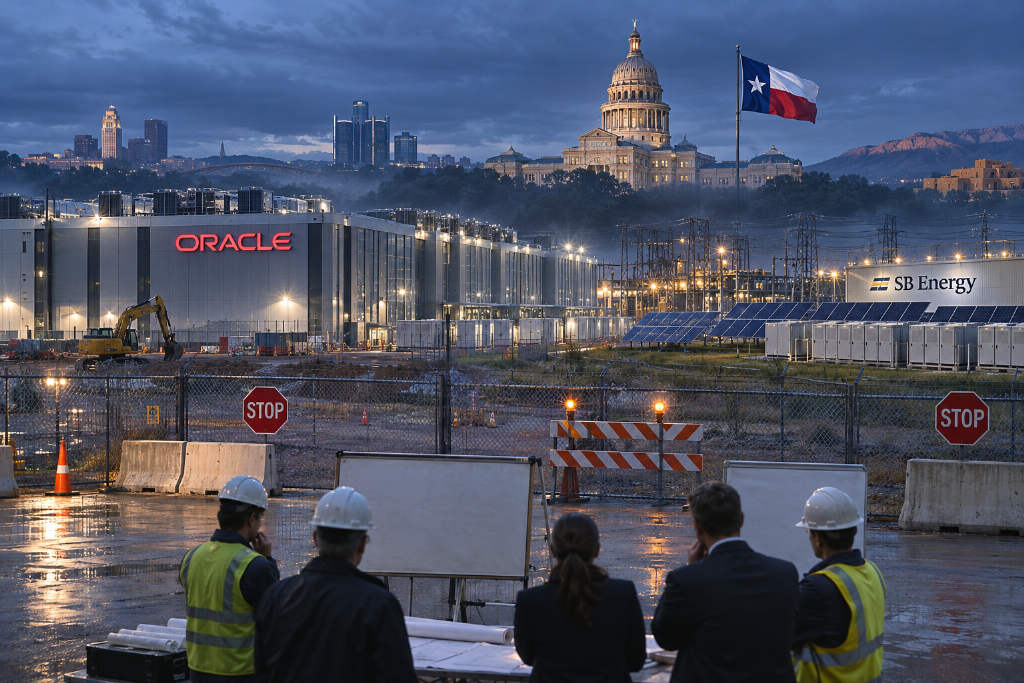
AI data centers have become an unexpected policy issue in the wake of the US midterm elections. The Information reported on Nov. 4 that 34 of the 36 governors who have either won or are currently leading support at least one measure to restrict data centers, and governors in 12 states favor pausing new construction.
The states involved include Texas, Ohio, Michigan and New Mexico. Those are also home to Stargate, the project backed by OpenAI and Oracle, as well as large campus plans tied to SB Energy, a SoftBank-owned company. That leaves some of the biggest AI infrastructure investments facing a policy headwind tied to election outcomes.
34 governors support restrictions, 12 states back construction pauses
According to The Information, the states where governors support pausing data center construction are Alaska, Georgia, Kansas, Maine, Michigan, New Hampshire, New Mexico, New York, Ohio, Oregon, Texas and Wisconsin.
Among the elected candidates who support a pause or halt, 11 are Democrats and one is a Republican. The report also said the push for restrictions is not limited to one party. Of the 36 governors who have won or are leading, 11 Republican winners support at least one restrictive measure.
Support across the 36 governors breaks down as follows:
- Protections for household electricity use: 34
- Water-use or environmental protections: 27
- Ending or cutting tax incentives: 15
- Pausing or halting construction: 12
Stargate and SB Energy plans sit in key states
The report said some of the proposed restrictions hit directly at major buildout plans. Stargate, the OpenAI-Oracle project, has large data centers in Texas, Michigan and New Mexico. SB Energy plans to build an 8 GW campus in Ohio for OpenAI.
Data from commercial real estate services firm CBRE also shows that the Atlanta metro area in Georgia has overtaken Northern Virginia as the most active data center construction market. Georgia is also one of the 12 states where governors support a pause.
Charles Hua, founder and executive director of the energy-focused nonprofit Power Lines, said Ohio, Texas and Georgia are the fastest-growing markets for data center development and power demand, and described the election results in those states as dramatic. He also said it remains unclear how each state would implement a moratorium, including its duration, strictness and enforcement path.
Three risks for the AI data center buildout
Higher costs and more complex procedures
If regulation tightens, costs for data centers and the broader AI sector could rise, while administrative procedures could become more complicated. That would make it harder for investors to judge whether large technology companies can earn returns on their AI spending on schedule.
Financing delays could spread through the chain
If NeoCloud and other data center developers cannot turn borrowed money into revenue in time, delays could trigger knock-on effects. Developers would have to pay interest on buildings that are not yet generating rent. Lenders would wait longer to recover loans. AI companies could fail to receive the computing capacity they had previously agreed to buy.
The report added that if deadlines are missed, tenants may have the right to terminate leases, and some deals could fall apart entirely.
Performance and default concerns
The report also said SB Energy warned in its IPO filing that permitting delays could lead to a default situation at OpenAI’s Ohio campus. That suggests policy uncertainty is already being treated as a real operating risk.
Public pressure is building, with more than 500 local bans or moratoriums
Public opinion is part of the pressure behind the restrictions. A Pew Research Center poll from August found that about 60% of US adults are uneasy about new data centers in their area. More than half said data centers harm the environment, half said they raise household energy costs, and fewer than one in four said they benefit local jobs or tax revenue.
Pushback at the local level is also growing. According to The Information’s ban tracker, local moratoriums or bans on data centers have topped 500. At the start of the year, only about 40 towns had such bans in place. The main concerns are electricity bills, water use, noise and environmental pollution.
Florida stands out as an exception
The policy direction is not one-way. The report said candidates calling for a pause in data center operations lost in nine states. In Florida, Republican candidate Byron Donalds opposed a statewide moratorium and won after receiving support worth several million dollars in campaign funding from a super PAC linked to OpenAI co-founder Greg Brockman.
For investors, the duration and scope of any state-level moratorium remain central questions. Power infrastructure, tax subsidies and financing conditions are also key variables.



