

U.S. stocks finished mixed after July CPI data matched expectations and did not trigger fresh inflation anxiety. The Dow Jones Industrial Average slipped 0.04%, marking a third straight daily decline. The S&P 500 added 0.26% and moved closer to its record high, while the Nasdaq Composite rose 0.54%. AI hardware, storage, optical communications and newer cloud computing names led the session.
July CPI lands in line with estimates
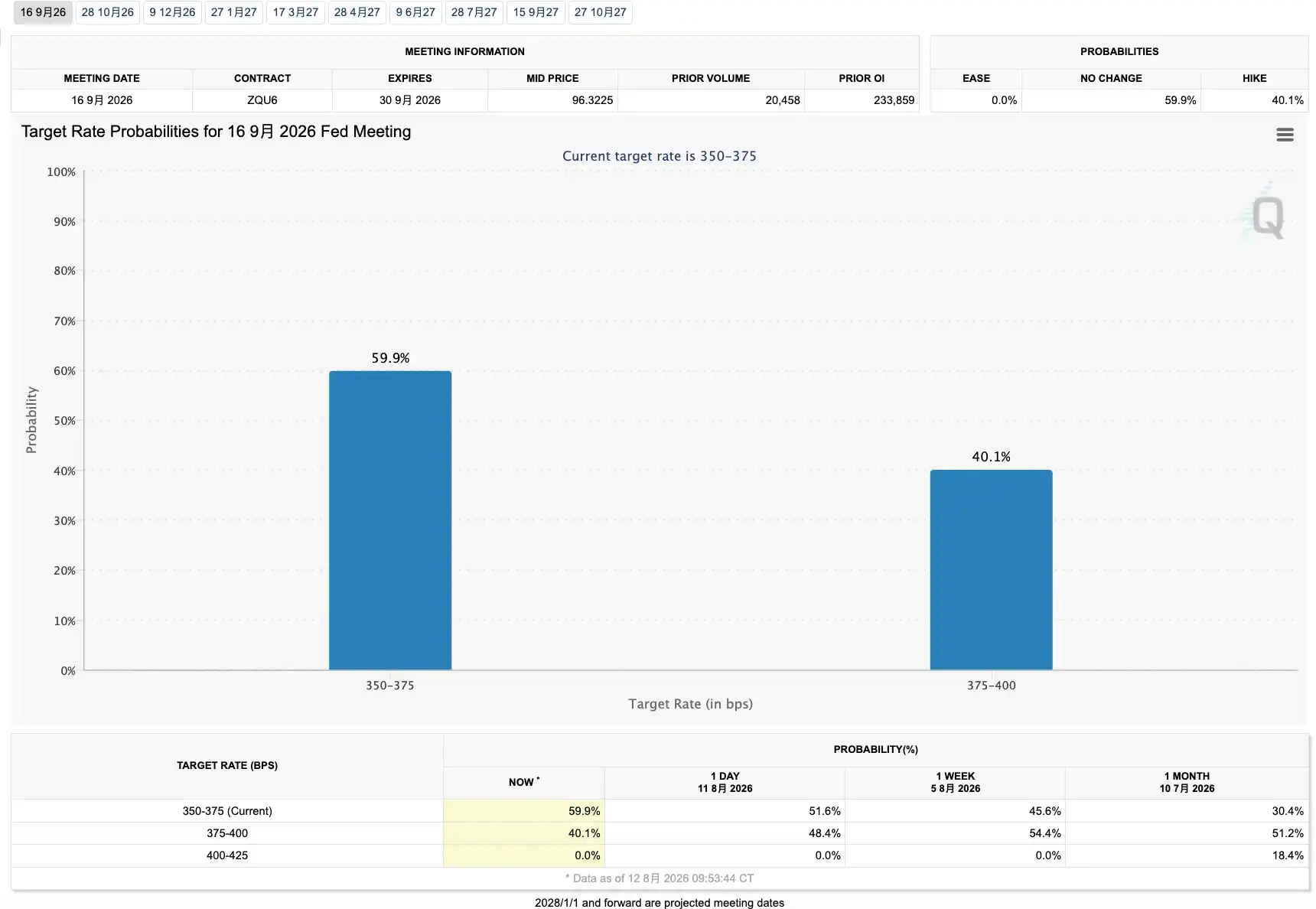
U.S. July CPI rose 0.1% month over month and 3.4% year over year. Core CPI increased 0.2% on the month and 2.5% from a year earlier. All four readings were in line with expectations, and the annual core figure marked the slowest pace since March 2021. Combined with last week’s soft nonfarm payrolls report, the data pushed money markets to lower the implied probability of a September rate hike to 40%, while the chance of no change rose to about 60%.
Goldman Sachs expects the Federal Reserve to most likely stay on hold for the rest of the year. Morgan Stanley’s Ellen Zentner said a September pause remains the base case unless incoming data changes materially. CICC said U.S. inflation may have entered a new phase, with the driver shifting from supply shocks such as tariffs and oil prices to demand expansion tied to AI investment, which could make inflation last longer.
Gold and silver stay firm while oil pulls back
Gold extended its strength and held above $4,400, with gains of more than 9% so far in August. Silver outperformed, rising about 14% in August and advancing for the eighth time in 11 trading sessions, with spot prices near $66. Citi reiterated a strongly bullish view on silver and said it could rise to $90 an ounce over the next six to 12 months, assuming tensions around the strait ease and the Fed turns more dovish, allowing investment demand to offset weak industrial silver demand.
Oil finally paused after a strong run. WTI crude briefly fell below $81, while Brent dipped under $87. WTI had climbed about 11% over the previous five trading days. The market is waiting for tangible progress on the reopening of the Strait of Hormuz. The International Energy Agency warned that if the U.S.-Iran conflict continues, the global oil supply shortfall could reach 1.8 million barrels per day this quarter, more than double its previous estimate, and that the 2026 deficit could be the largest in five years.
Donald Trump said the U.S. has “complete control” over the Strait of Hormuz, but shipping data showed average daily traffic at only a little more than 10 vessels, far below the prewar level of 130. The report said Iran has been creating a “fear factor” through sporadic attacks and remains the practical force shaping transit routes. War-risk insurance premiums have climbed to 10% of vessel value, pushing the cost of passage for a large tanker to several million dollars. eToro’s Bret Kenwell said oil above $100 would force the Fed to reassess its policy path.
Fiscal pressure remains in focus
The U.S. fiscal picture remains strained. Treasury Department data showed the federal budget deficit reached $432.3 billion in July, up about 48% from a year earlier. It was the largest monthly deficit since March 2021 and a record for the month. The deficit for the first 10 months of the current fiscal year was close to $1.8 trillion. The Congressional Budget Office expects the fiscal 2026 deficit to widen to $2.1 trillion.
Interest expense remains a key source of pressure beneath elevated long-term yields. So far this fiscal year, the U.S. has paid $1.17 trillion in interest on $39.9 trillion of debt, with net interest expense reaching $931 billion. Maya MacGuineas, president of CRFB, said deficits above $2 trillion are “not normal” when the economy is not in recession.
Money rotates into AI infrastructure
The report said capital clearly rotated out of traditional software and some members of the Mag 7 and into cloud compute, semiconductors, storage and optical communications. Goldman Sachs data showed hedge funds continued to be net sellers of software stocks, while long-only investors bought the dip, though price action ultimately sided with the former.
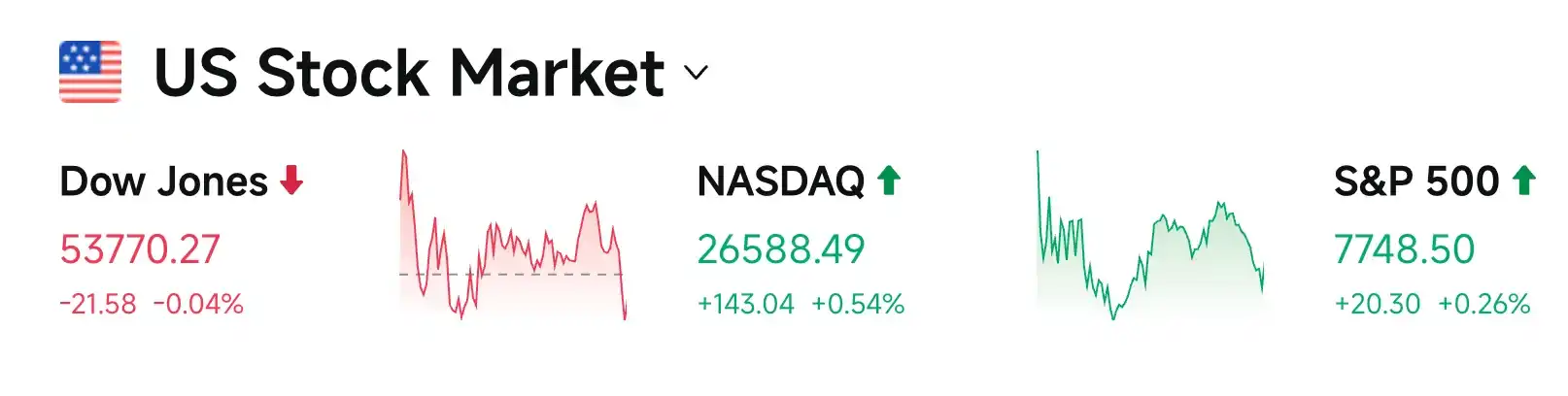
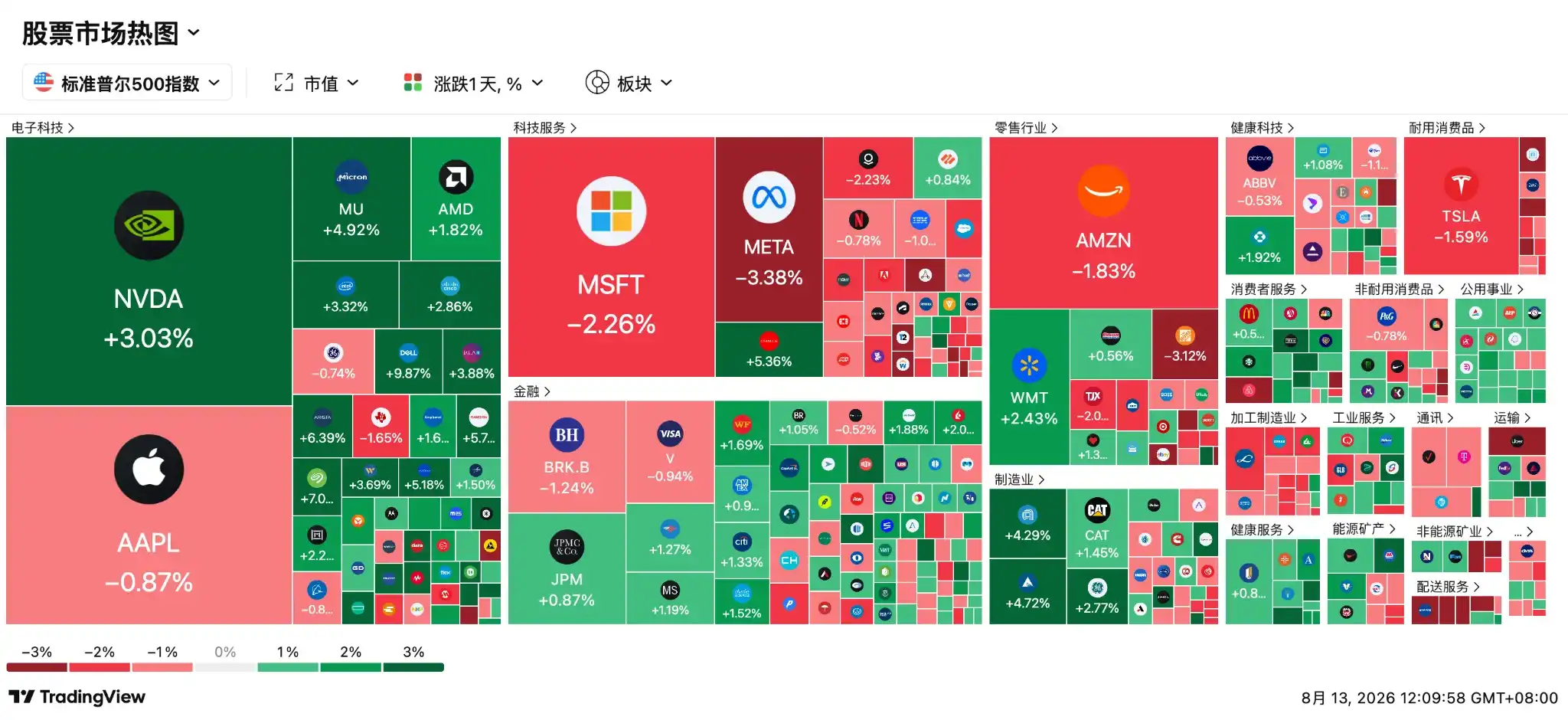
By contrast, the AI supply chain surged. The Philadelphia Semiconductor Index rose 2.49%. SK Hynix gained 9.01%, Seagate rose 7.03%, Sandisk added 5.76%, Micron advanced 4.92% and Western Digital climbed 3.69%. In optical communications, Lumentum rose 13.63%, Coherent gained 8.24%, Credo added 8.26% and Corning advanced 5.18%.
Cloud compute was the day’s hottest group. NEBIUS surged 34.14%, CoreWeave climbed 19.28%, IREN rose 9.86% and the Roundhill Neocloud ETF gained 17.26%. CoreWeave’s backlog reached $104 billion, while Nebius AI cloud sales rose 514% year over year, supporting the view that AI infrastructure demand is translating into contracts and revenue.
Morgan Stanley’s Michelle Weaver said enterprise AI adoption is starting to produce measurable returns, but the real bottlenecks are shifting to compute, power, labor and policy. About 25% of S&P 500 constituents can now quantify returns on AI investment, up from 14% a year ago.
Model competition shifts toward execution and cost
DeepSeek V4 Pro went live on the evening of Aug. 12, with the version switched to DeepSeek-V4-Pro-0813. At the same time, SpaceX AI released Grok 4.6. The report said the contest is no longer only about which model chats better. The focus is moving toward agent execution, complex coding, knowledge work, vision tasks and token costs.
Grok 4.6 starts at $2 per million input tokens and $6 per million output tokens. SpaceX AI said that pricing is about half that of other frontier models. The pressure on OpenAI, Anthropic and Google, according to the report, is that as model capability becomes commoditized more quickly, moats may shift from the model itself to compute capacity, ecosystem strength and commercialization.
Individual movers across AI, cloud and opticals
- NEBIUS rose 34.14% after second-quarter revenue jumped 454% year over year, AI cloud sales increased 514%, and the company signed four contracts with average value above $1 billion. Roughly 24% short interest amplified the post-earnings squeeze as the stock moved from about $193 to $247.
- CoreWeave gained 19.28% after second-quarter revenue more than doubled, backlog reached $104 billion and the company raised its full-year capital expenditure outlook.
- Cerebras Systems climbed 11.63%, though it dropped more than 17% in after-hours trading at one point. Core Q2 revenue rose 103%, cloud services revenue increased 287%, and core hardware revenue fell 23%. The company also announced a “disaggregated inference” solution with AMD and AWS that aims to lift throughput by 5x, and it raised full-year guidance.
- Cloud names were broadly higher, with IREN up 9.86%, Applied Digital up 4.92%, HUT 8 up 2.24% and the Neocloud ETF up 17.26%.
- Super Micro Computer jumped 19.02%. Fourth-quarter revenue nearly doubled to $11.12 billion, net income surged 503% year over year, gross margin recovered to 17.5% from 9.5% a year earlier, and guidance for the next fiscal year was well above consensus.
- Lumentum rose 13.63%. Fourth-quarter revenue increased 109% year over year, non-GAAP EPS climbed 267%, and guidance for next quarter topped Wall Street expectations by 8% on revenue and 16% on earnings.
- Coherent gained 8.24% but fell about 3% after hours. Q4 revenue rose 34% to $2.05 billion, gross margin improved to 40.2%, and next-quarter guidance beat expectations, though elevated valuation led to profit-taking.
- Optical communications shares also advanced, including Credo Technology up 8.26%, Corning up 5.18%, AAOI up 2.79% and Marvell Technology up 2.25%.
- Storage stocks rose across the board. The Roundhill storage ETF (DRAM) gained 7.68%, SK Hynix rose 9.01%, Seagate gained 7.03%, Western Digital added 3.69%, Sandisk rose 5.76% and Micron closed up 4.92%. Sandisk is set to hold its first 2026 investor day after its separation, while Micron faces a new patent infringement lawsuit filed by Netlist.
- SpaceX gained 9.65%, bringing its market value to $1.93 trillion. Elon Musk’s SpaceX AI officially released Grok 4.6, highlighting complex coding and long-duration agent tasks with API pricing set at half that of comparable frontier models.
Mega-cap tech performance diverges
NVIDIA rose 3.03% to its highest close since June, lifting its market capitalization to $5.42 trillion. Cisco reported Q4 revenue and EPS above expectations and said hyperscale cloud AI orders reached $4 billion, but the stock swung from an 8% after-hours gain to a 6% decline.
Apple fell 0.87%. A research note cited in the report said bill-of-materials costs for the iPhone 18 Pro Max may rise by $300 because of higher component prices. Separately, there was a report that Apple may pay several hundred million dollars to publishers for news content to improve an AI version of Siri expected later this year. Google slipped 0.18% after announcing a reorganization at DeepMind, moving some teams into the enterprise structure to speed Gemini commercialization. Memory shortages also pushed the newly launched Pixel 11 lineup to raise prices by $100. Meta fell 3.38%, Microsoft lost 2.26%, Amazon dropped 1.83% and Tesla declined 1.59%.
What markets are watching next
On Aug. 13, the focus turns to U.S. July PPI. The report said PPI will show whether corporate cost pressure is still being passed on to end consumers. A hot reading could revive concern about sticky inflation even after a mild CPI print. If PPI also cools, the trade around easing inflation and lighter policy pressure could strengthen.
Sandisk’s investor day is also on the calendar, with attention on NAND supply and demand, enterprise SSDs, capital expenditure, the high-bandwidth flash roadmap and long-term margin targets. Because storage shares have recently been under pressure, management commentary could affect sentiment in Micron, Western Digital, SK Hynix and related A-share storage names. JD.com’s second-quarter earnings call, as well as results from SMIC and Hua Hong Semiconductor, are also due.
On Aug. 14, the SEC deadline for quarterly 13F filings will reveal long U.S. equity holdings held by hedge funds and other institutions as of June 30. The market will be watching whether large investors added exposure to AI, optical communications, power, energy, gold and financial stocks. The report also noted that 13F data comes with about a six-week lag and covers only long positions, so it does not fully reflect hedge fund risk exposure.
Applied Materials will report after the U.S. close the same day, with attention on DRAM, advanced packaging, wafer-fab equipment demand and order trends in China. The report also said Bill Gates will visit South Korea and discuss SMR cooperation with SK Group and HD Hyundai. Markets are watching the intersection of nuclear energy, small modular reactors and AI data center power demand. If those talks move forward, that could strengthen the AI power infrastructure trade.