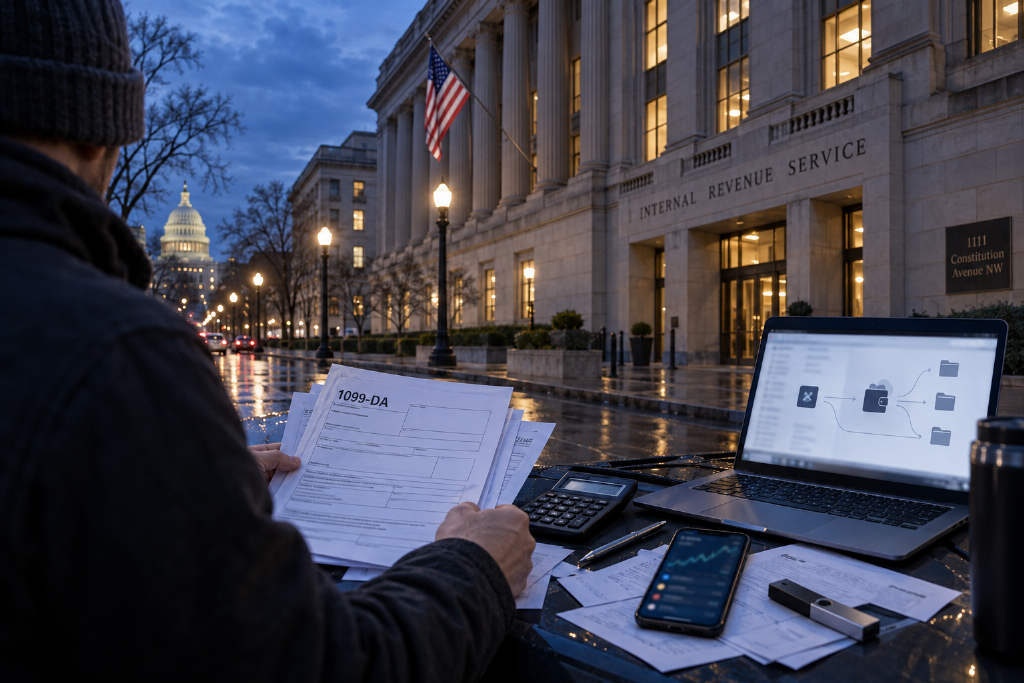
U.S. crypto brokers are entering the first filing season under new Internal Revenue Service reporting rules, but the rollout still leaves a major burden on taxpayers. In 2025, brokers generally only need to report proceeds from certain digital asset sales, not cost basis, which means investors must still work out their actual gains or losses on their own.
A survey conducted in August by Awaken Tax of 1,000 U.S. crypto investors points to ongoing friction in the process. Among respondents who had already filed taxes or requested an extension, 21% said they were still waiting for the information they needed from exchanges. Another roughly 20% said the 1099-DA forms they received were incomplete or that they could not verify the accuracy of the data.
Tax professionals said tracking cost basis becomes harder when assets move across multiple trading platforms and wallets, or when users trade frequently. They also noted that some users found mismatches between their 1099-DA forms and their actual transaction records. Starting in 2026, brokers will generally need to report cost basis for eligible digital assets, though assets transferred in from other exchanges or wallets may still fall outside that requirement.
U.S. cryptocurrency brokers are reporting proceeds from certain digital asset sales to the Internal Revenue Service for the first time this year under new rules, according to BlockBeats on Sept. 25. But in 2025, brokers generally only need to report proceeds, not cost basis, leaving taxpayers to calculate their real gains and losses themselves.
An August survey by Awaken Tax of 1,000 U.S. crypto investors showed that 21% of respondents who had already filed taxes or requested filing extensions were still waiting for the information they needed from exchanges. Another roughly 20% said the information on their 1099-DA forms was incomplete or that they could not confirm its accuracy.
Tax professionals said cost basis tracking becomes more difficult when users move assets across multiple trading platforms and wallets, or trade actively. They added that some users found discrepancies between their 1099-DA forms and their actual transaction records.
Beginning in 2026, brokers will generally be required to report cost basis for eligible digital assets, though assets transferred in from other exchanges or wallets may still remain outside that requirement.
This article was originally published by Bit.Fan. For more cryptocurrency news and market insights, visit www.bit.fan. Disclaimer:
The market information, project data, and third-party content displayed on this platform are for industry information sharing only and do not constitute any form of investment advice or return commitment.
Cryptocurrency trading carries high risks. Users should fully assess their risk tolerance and make independent decisions. All profits, losses, and legal responsibilities are borne by the users themselves.