
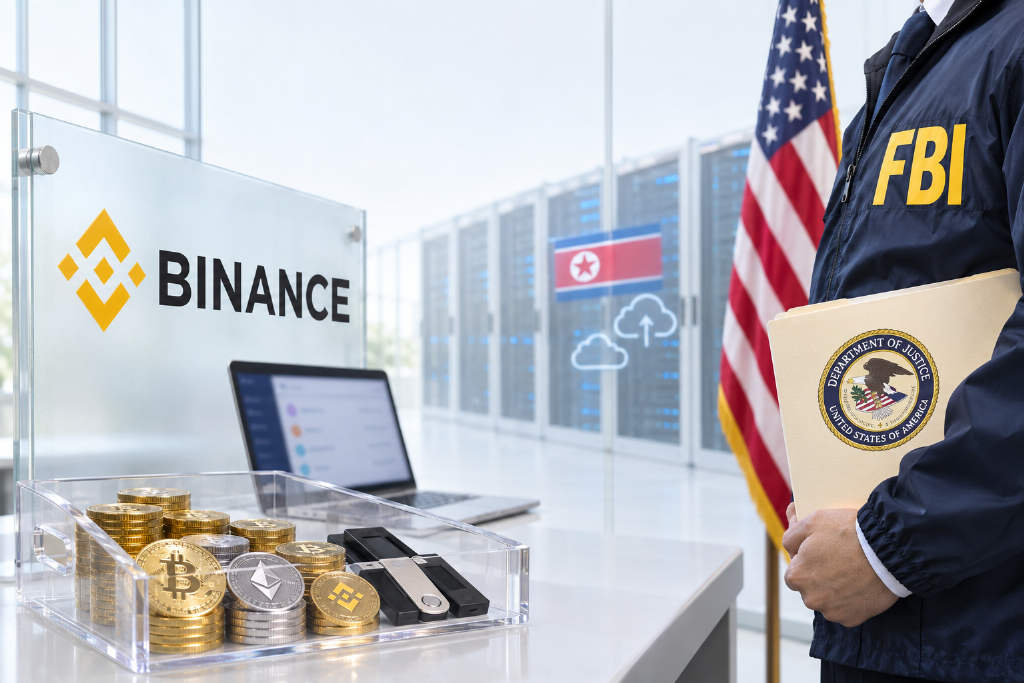
The US Department of Justice said on November 12 that it had obtained court authorization to seize and restrain more than $1.2 billion tied to the Binance hack. In a separate operation, authorities seized cloud infrastructure used by the North Korean FaceStealer fraud network.
The Federal Bureau of Investigation (FBI) attributes the October 29 theft of more than $6 billion in virtual assets from a Binance hot wallet to TraderTraitor, a group it says is linked to the North Korean military.
More than $2.7 billion has been frozen so far, the Justice Department said. Its National Security Cyber Section, Computer Crime and Intellectual Property Section, and the US Attorney’s Office for the District of Columbia worked with law enforcement partners and virtual asset service providers. The court-authorized seizure and restraint covers more than $1.2 billion of the frozen funds. Efforts to trace, freeze and confiscate assets continue.
Officials say roughly half of the stolen funds were intercepted
M. Scott Proctor, principal deputy assistant attorney general for national security, said North Korea steals cryptocurrency to finance its government and illicit weapons programs. He said the division would use its available tools to seize illicit proceeds and return them to victims.
Criminal Division Assistant Attorney General A. Tysen Duva said the Computer Crime and Intellectual Property Section acted before the money could move beyond the reach of law enforcement, intercepting roughly half of the stolen funds early in the case. Jeanine Ferris Pirro, the US attorney for the District of Columbia, cited the more than $1.2 billion subject to seizure as a response to North Korea.
BlockTempo reported that the more than $2.7 billion frozen represented roughly 45% of the scale of the theft. Exchanges, stablecoin issuers and blockchain analytics firms helped intercept funds within dozens of hours of the attack, it said. The publication distinguished freezing from court-authorized seizure and restraint, which it said establishes a legal basis for eventual forfeiture and return. It cautioned that the $1.2 billion should not be treated as money already recovered and reported that more than $3 billion remained unfrozen and moving on-chain.
FaceStealer used video calls and deepfakes
The second operation involved the US Attorney’s Office for the Central District of California. The FBI says FaceStealer stole more than $400 million in crypto assets over the past 18 months.
According to the FBI, the attackers sent video meeting invitations from accounts stolen from previous victims. Once a target joined, they played prerecorded footage of someone the target knew. Over the past year, the scheme also used artificial intelligence to generate deepfake images of prominent people in the crypto industry.
The FBI seized more than 900 webcam videos of victims under a federal search warrant. The footage could be used in subsequent fraud attempts.
During a meeting, an attacker would claim not to hear the target and send a supposed repair link or ask the person to run a command. The purported fix installed malware. The attackers sought both crypto assets and access to other systems available to the victim.
In several cases, the Justice Department said, cryptocurrency theft and the hijacking of communication accounts occurred months or even more than a year after the initial intrusion. During that time, attackers examined contacts, social platforms and messaging applications, then used victims’ personal and professional relationships to identify further targets.
Open-source maintainers targeted
BlockTempo listed several names associated with the organizations involved: Sapphire Sleet, UNC1069, Dangerous Password, CryptoCore, APT38, BlueNoroff and Stardust Chollima. The Justice Department said the attackers have recently shifted toward open-source software developers and maintainers, seeking access to their devices and code repository accounts. BlockTempo described the shift as pointing to software supply-chain attacks.
The FBI released a report on the FaceStealer operation and preventive measures on the same day, along with a dedicated resource page. Patrick Grandy, assistant director of the FBI’s Los Angeles field office, said the scheme exploits trust in video platforms and personal relationships and can deceive even experienced, security-conscious computer users.
Assistant US Attorney Khaldoun Shobaki of the Central District of California and the FBI’s Los Angeles field office led the operation.
Tracking the remaining funds
TraderTraitor continues to move assets through cross-chain bridges, mixers and exchanges, the Justice Department said. The previous week, the FBI joined the US Secret Service and the Internal Revenue Service’s Criminal Investigation division in issuing a cyber alert asking virtual asset service providers to block transactions involving specified addresses.
BlockTempo previously reported that the FBI identified roughly 600 laundering addresses in early November. Subsequent tracking by blockchain analysts showed funds being split across multiple chains and tokens, the publication said.
BlockTempo said the court-authorized seizure list and FBI address list would affect exchanges’ blocking and compliance work. It also identified mixer outflows and cross-chain bridge inflows as areas for compliance teams to monitor.
The publication said FaceStealer could target exchange teams in Taiwan and open-source project maintainers. It advised treating requests to install software or run commands during meetings as warning signs and using hardware keys for maintainer accounts. BlockTempo also identified two developments to watch: whether North Korea accelerates the use of paths such as memecoins to move funds, and whether US authorities act against overseas exchanges that provide laundering channels.



