
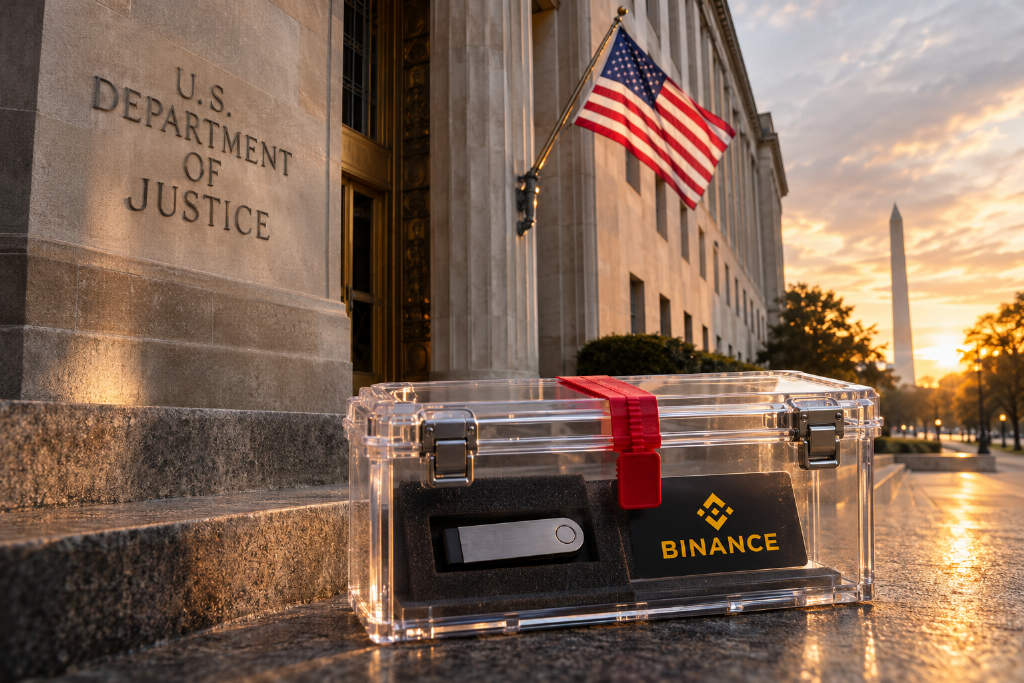
The US Justice Department said on November 12 that it had obtained court authorization to seize or freeze more than $1.2 billion in crypto assets stolen from Binance. The Federal Bureau of Investigation (FBI) also seized cloud equipment used in FaceStealer, a North Korean hacking scheme that has stolen more than $400 million over the past 18 months.
The department said both operations targeted North Korea's theft of cryptocurrency to fund its regime. M. Scott Proctor, principal deputy assistant attorney general for national security, said: 「The North Korean government uses stolen cryptocurrency to fund its rogue regime and illegal weapons programs.」 He said the national security division would use every tool at its disposal to seize and return North Korea's illicit proceeds.
More than $2.7 billion frozen after Binance theft
According to the Justice Department, North Korean military personnel whom the FBI calls TraderTraitor stole more than $6 billion in virtual assets from Binance on or around October 29.
After the theft, the department's National Security Cyber Section, the Criminal Division's Computer Crime and Intellectual Property Section, the US Attorney's Office in Washington and other law enforcement agencies worked with virtual asset service providers to intercept the stolen funds. Government and private-sector efforts have frozen more than $2.7 billion so far. Of that amount, the department has obtained court authorization to seize or freeze more than $1.2 billion.
A. Tysen Duva, assistant attorney general for the Criminal Division, said the division and its law enforcement partners 「immediately froze billions of dollars' worth of stolen Binance assets」 before the funds moved beyond their reach, quickly intercepting roughly half the amount taken in the unprecedented hack.
TraderTraitor continues to launder funds through cross-chain bridges, mixers and exchanges, the department said. Tracing, freezing and forfeiture efforts remain underway.
Binance said on X on November 12, US time, that it had replenished the assets affected by the hack and published a new proof-of-reserves snapshot. Once the zero-knowledge proof is generated, users will be able to verify for themselves that assets are backed at least 1:1, the exchange said.
How FaceStealer uses deepfake video calls
The Justice Department said the North Korean hackers behind FaceStealer are also known by public designations including Sapphire Sleet, BlueNoroff and APT38. They send video meeting invitations from accounts stolen from earlier victims. Once a target joins, the hackers secretly record the target's camera feed while playing a prerecorded video of a previous victim known to the target, making it appear that an acquaintance is on the call.
The hackers also use superintelligence (SI) technology to create deepfake videos of prominent people in crypto and Web3 to gain a target's trust. They then fabricate a technical problem during the meeting, such as claiming they cannot hear the target, and send a supposed 「fix」 link or command that installs malware on the target's computer.
Once inside, the hackers can steal cryptocurrency or use the target's access privileges to enter other systems. In some cases, the department said, they wait several months to more than a year after the intrusion before stealing coins or taking over communications accounts. They also read victims' contact lists and information from social and messaging apps, then attempt to defraud colleagues and friends.
Open-source developers targeted; FBI seizes over 900 videos
FaceStealer primarily targets people working in crypto and Web3, but has increasingly targeted developers and maintainers of open-source software, the Justice Department said. The hackers seek access to their computers and code repository accounts, apparently to carry out software supply-chain attacks.
The FBI seized more than 900 videos of FaceStealer victims under a search warrant. Patrick Grandy, assistant director of the FBI's Los Angeles field office, said: 「If you can't imagine how you might fall for it, your imagination isn't good enough.」
The FBI also released a technical report that day explaining how FaceStealer operates, offering prevention advice and outlining steps for victims. It set up fbi.gov/facestealer as a central information page.



