
The United States and Japan are taking the unusual step of working together to support the yen, prompting markets to reassess a global capital-flow model that has long relied on low-yield yen funding. Strategists cited in the report said that if the policy direction holds, the yen carry trade may be approaching a turning point, with broader implications for asset allocation worldwide.
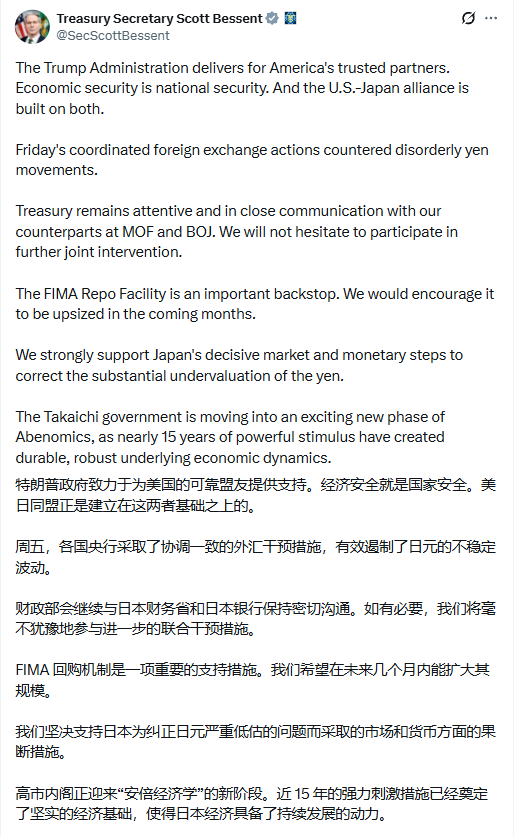
U.S. Treasury Secretary Bessent and President Donald Trump both confirmed over the weekend that Washington is actively involved in efforts to back the Japanese currency. Bessent said the United States would not hesitate to join further coordinated intervention to correct what he described as a severe undervaluation of the yen. Trump, for his part, said the move reflected the U.S.-Japan alliance and said Washington should also see tangible financial gains from the joint action.
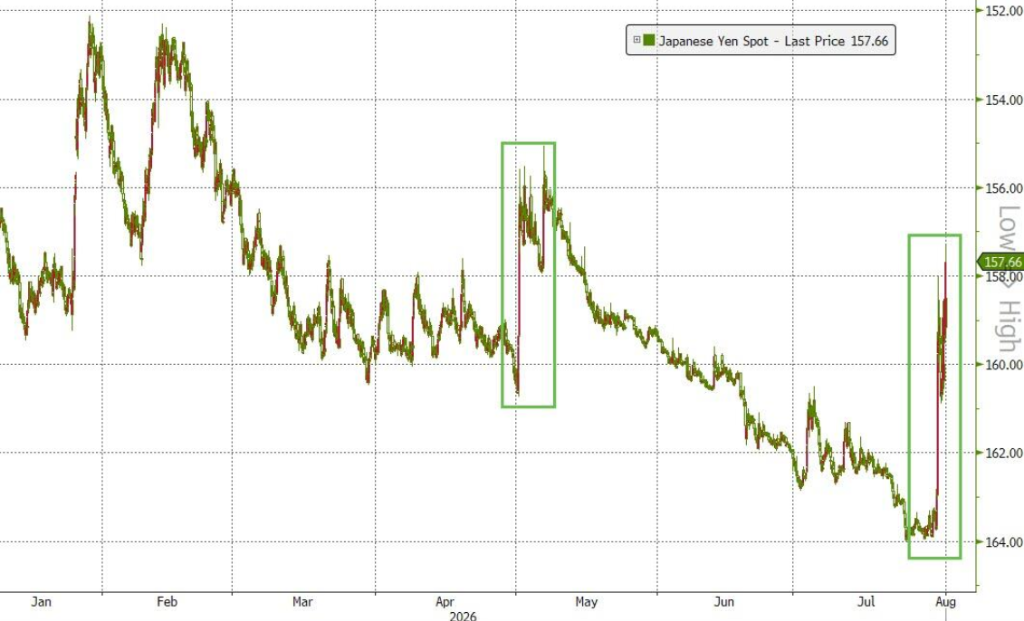
Financial markets reacted quickly. With direct official buying, verbal support from senior officials, and window guidance to dealing banks, the yen rose to 157.40 against the dollar late in New York trading, its strongest level since early May. Just two days earlier, it had been trading near its weakest level since 1986.
Officials signal rare coordination as intervention details emerge
According to Bloomberg, Japan’s Ministry of Finance and the U.S. Treasury are supporting the yen with a level of cooperation not seen in decades.
In a post on X, Bessent said the Treasury was watching conditions closely and remained in close contact with Japan’s Ministry of Finance and the Bank of Japan. He also said the FIMA repo facility is an important backstop and that the United States encourages an expansion of the facility over the coming months.
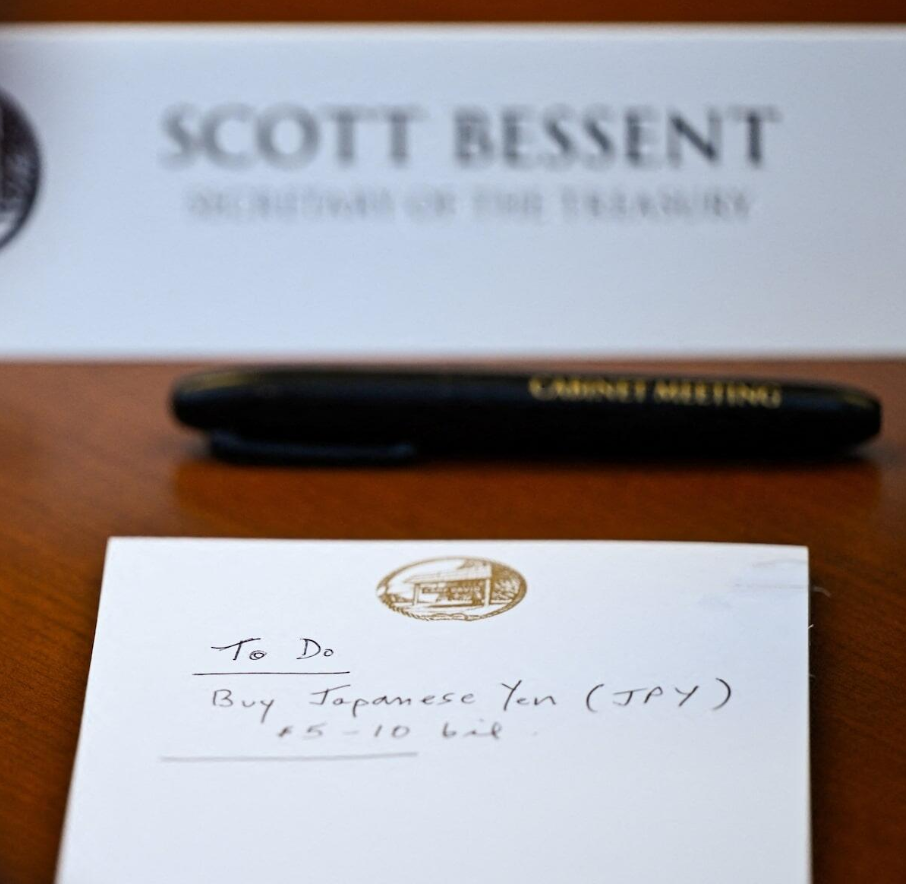
More details of the intervention have started to surface. Reuters reported that during a Cabinet meeting at Camp David, a note on Bessent’s pad included a to-do item reading “buy $5 billion to $10 billion yen.” Bloomberg, citing people familiar with the matter, said Japanese Finance Minister Satsuki Katayama could announce concrete steps for coordinated U.S.-Japan foreign-exchange intervention as early as Monday in an effort to curb excessive yen weakness.
At the political level, Trump told reporters aboard Air Force One that the United States stands ready to help Japan and described that support as a sign of friendship between the two countries. Asked what the United States would gain, Trump compared the situation with last year’s currency swap agreement with Argentina, saying Washington ultimately made $25 billion from that deal and expecting a financial benefit from this intervention as well.
Markets reassess the yen carry trade and pressure on long-dated Treasuries
The report says the yen’s rebound goes beyond a standard intervention story and reaches into the structure of the global financial system.
Since the 1980s, Japan has sat at the center of the global yen carry trade, exporting savings and helping suppress yields in a financial order built on cheap leverage and central-bank engineering. Analysts cited in the piece say that as quantitative easing recedes and the carry trade nears its end, that older structure is starting to break down. In that view, market rates would increasingly be set by capital markets themselves rather than by central banks acting alone.
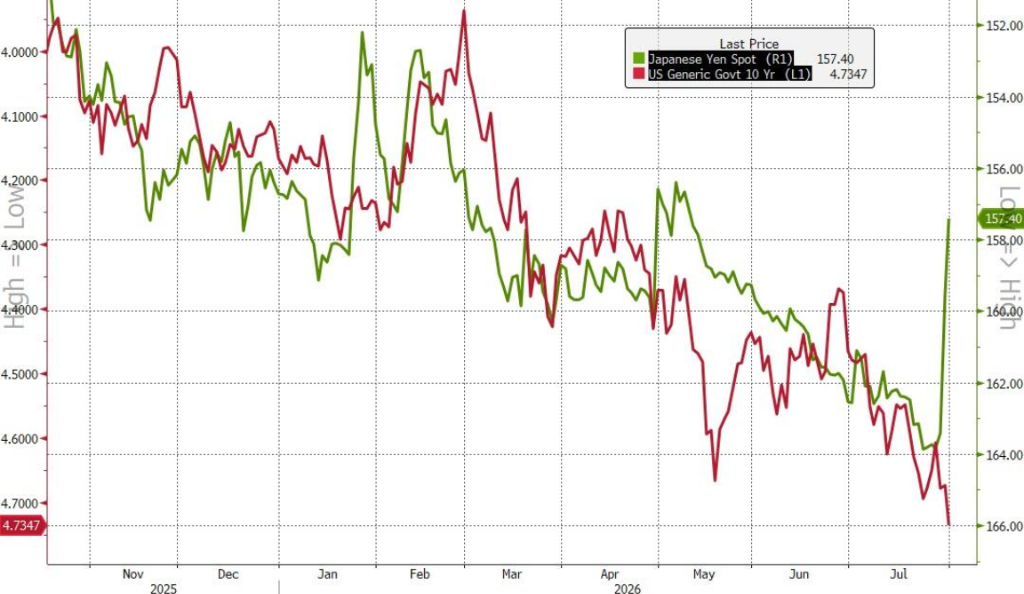
James Thorne, chief market strategist at Wellington Altus, said Bessent’s recent actions suggest the U.S. Treasury understands that moves at the long end of the Treasury curve are being driven by capital flows. If Tokyo has to defend the yen, Japan’s Ministry of Finance may need to sell U.S. Treasuries. If the largest foreign holder of U.S. government debt turns into a seller, the long end of the curve would have to be repriced, he said.
Report points to reserve liquidation and tighter credit, not only inflation fears
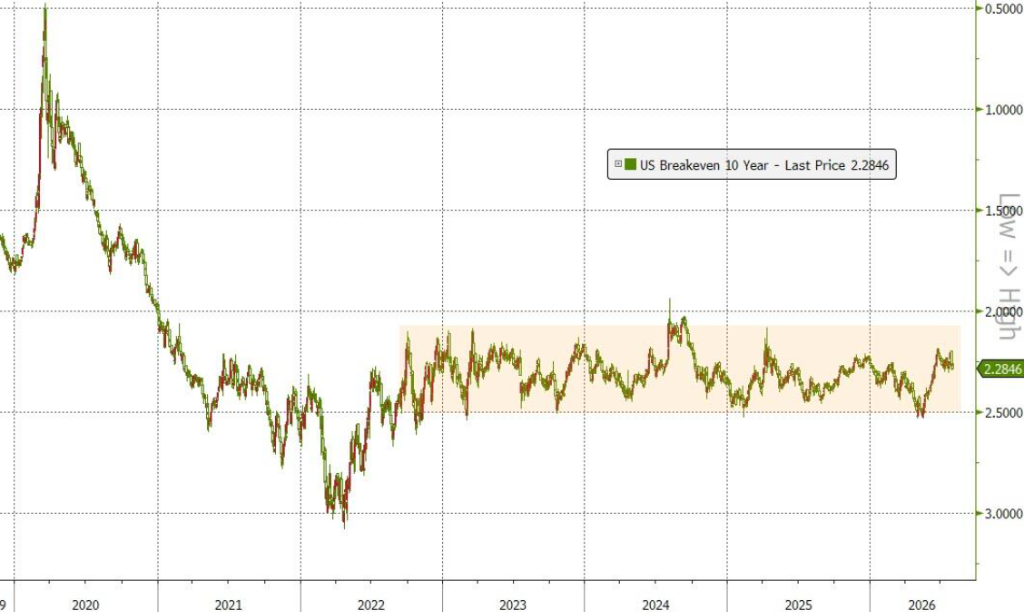
Wall Street has broadly framed the rise in long-dated Treasury yields as an inflation-risk story. The analysis cited in the report disputes that reading, saying market data does not strongly support it. Breakeven inflation remains anchored, and credit markets have not priced in a new inflation mechanism, according to the piece.
Instead, the report says the deeper driver may be Japan’s potential use of foreign-exchange reserves and a wider global adjustment process that markets have yet to fully recognize. It also points to a shift in the capital role of large technology companies. Firms that once absorbed duration are now issuing debt at scale to fund artificial intelligence infrastructure, data centers, and chips, moving from providers of savings to consumers of credit.
Those forces are tightening global credit conditions. The report argues that in a world economy that has depended on carry trades for years, managing that deleveraging process will require considerable precision, and central banks may need to cut rates to facilitate a global liquidity adjustment rather than treat the move only as an inflation warning.
Talk of a new Plaza Accord and “Bretton Woods 2.0” returns
The analysis cited in the report says the latest foreign-exchange moves look like more than a technical intervention and may carry the early signs of a new “Plaza Accord” and “Bretton Woods 2.0.”
That view holds that the United States is trying to break out of long stagnation through supply-side economics, deregulation, and productive investment. The report also says a Federal Reserve led by Warsh would fit that world more naturally because economic growth would no longer be treated as a policy error.
Japan, meanwhile, could also be headed for a restructuring of its economic model and geopolitical role. Whether the latest coordinated action proves to be a short-term effort to stabilize the exchange rate or the start of a longer phase of international policy coordination, the move has already pushed markets to revisit the yen carry trade model that has persisted for decades and the new shifts that could follow in global capital flows.