
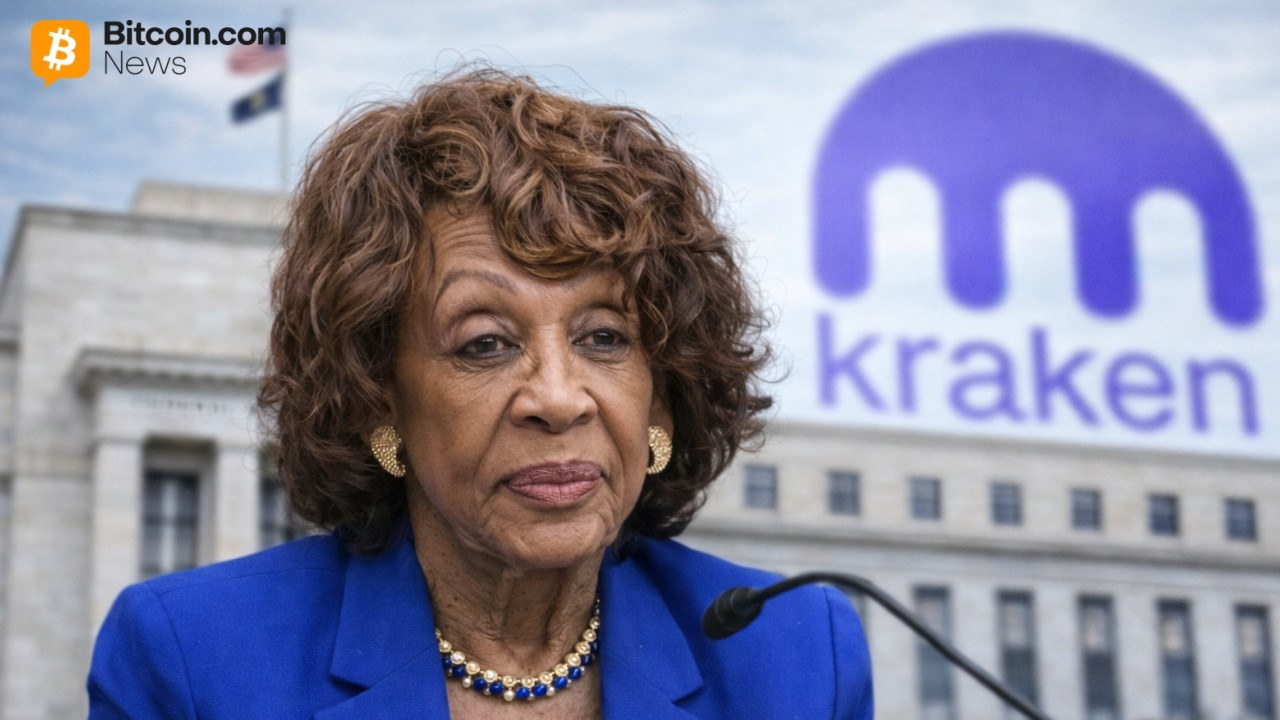
Rep. Maxine Waters, the ranking member of the House Financial Services Committee, sent a letter on March 26 to Kansas City Fed President and CEO Jeff Schmid seeking details on how Kraken Financial received approval for a limited purpose Federal Reserve account. Her request puts fresh attention on how crypto firms are being considered for access to core US payment infrastructure, and whether those decisions are being made under clear and consistent standards.
The issue centers on how Kraken’s approval fits within existing Federal Reserve frameworks. According to the report, the Kansas City Fed granted the account to Payward Financial, which operates as Kraken Financial, for an initial term of one year with conditions tied to its risk profile, though those conditions have not been publicly disclosed. In the letter, Waters asked the Fed to clarify the terms of the approval and provide more information on the process and considerations behind it.
Questions Focus on What Services Kraken Can Actually Use
Waters’ letter asks for specific answers about the scope of Kraken’s access. She wants to know whether the account allows the firm to use FedACH, Check Services, FedCash, or Fedwire Securities Services, and whether any of those capabilities differ from what is normally available to holders of master accounts.
She also asked about balance and liquidity limits. The questions include whether Kraken can incur daylight overdrafts, hold unlimited overnight balances, or earn interest on those balances. These details go to the heart of how a crypto-linked institution would operate once connected to the Federal Reserve’s payment rails.
Review Extends to Oversight and Internal Communications
Beyond the operational terms, Waters is asking whether the Kansas City Fed imposed any examination standards, reporting requirements, or risk controls beyond Wyoming’s Special Purpose Depository Institution, or SPDI, regime. She also asked whether any such conditions were coordinated with the Federal Reserve Board or other Reserve Banks.
The letter also seeks disclosure of internal and external communications related to the approval. Waters asked whether any federal or state officials influenced, reviewed, or otherwise took part in the decision-making process. That broadens the inquiry beyond Kraken alone and into how the Fed handles crypto-related access requests more generally.
Written Response Requested by April 10
Waters said the answers are “critical” to ensuring that Federal Reserve account access approvals are carried out consistently with the law, impartially, and in a way that preserves a safe and efficient payment system. She asked for a written response by April 10, 2026, saying the matter is of critical importance to the development and oversight of the US financial system.
The report also notes that Kraken Financial has secured direct access to the Federal Reserve payment system, with the Fed confirming the approval while applying initial restrictions. The current debate is no longer just about whether a crypto firm can enter the system. It is about the exact terms of that entry, the controls attached to it, and who is accountable for the decision.