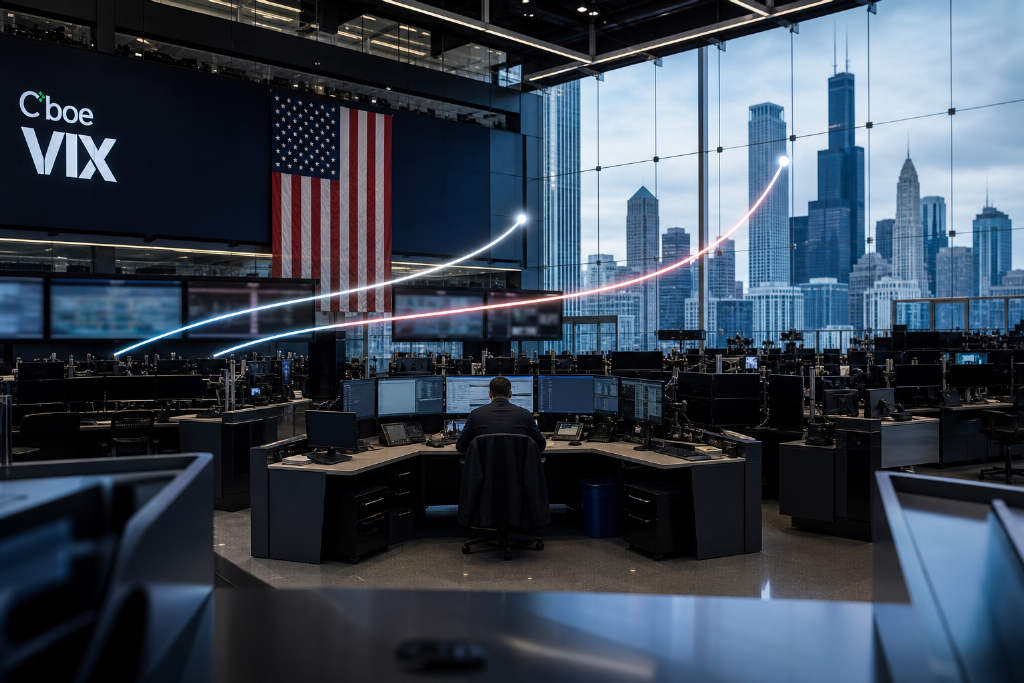
Traders in the equity derivatives market are preparing for a possible rise in volatility around the November U.S. midterm elections, even as this week’s main market focus remains on Nvidia’s upcoming earnings and Federal Reserve Chair Waller’s remarks at the Jackson Hole gathering. In the VIX-linked futures market, pricing suggests stronger demand for protection against swings in the S&P 500 around the election window. September VIX futures are trading near 17.4, while October contracts have climbed to 19 and November contracts to 19.7, showing an upward-sloping term structure. Matthew Thompson, co-portfolio manager at Little Harbor Advisors, said the market is entering a period when the election can begin to affect the VIX, adding that this upward bend is already visible in the futures curve. Research from analysts at Cboe Global Markets also points to a historical pattern: since 1945, 80% of midterm election years have posted realized volatility above the prior year, with an average increase of 3.5 volatility points. In years when the White House and Congress were controlled by the same party, realized volatility rose by an average of 6 points.
BlockBeats reported on Aug. 25 that traders in the equity derivatives market are starting to position for a possible increase in volatility around the November U.S. midterm elections, even though Nvidia’s upcoming earnings report and Federal Reserve Chair Waller’s speech at the Jackson Hole conference remain the main events on investors’ radar this week.
Volatility traders who closely watch the futures market tied to the VIX, often referred to as the market’s fear gauge, said there are signs that demand is increasing for hedges against swings in the S&P 500 before and after the election. September VIX futures are currently trading at about 17.4. October contracts have risen to 19, and November contracts have moved higher to 19.7.
An upward bend is showing up in the VIX term structure
Matthew Thompson, co-portfolio manager at Little Harbor Advisors, said: 「The U.S. election is coming up, and you’re starting to enter a window where the election will have an impact on the VIX. You can already see that upward bend in the term structure of VIX futures.」
Historical data points to higher volatility in midterm years
A study by analysts at Cboe Global Markets found that since 1945, 80% of midterm election years have seen realized volatility come in above the previous year, with an average increase of 3.5 volatility points. In years when the White House and Congress were both controlled by the same party, realized volatility increased by an average of 6 volatility points.
This article was originally published by Bit.Fan. For more cryptocurrency news and market insights, visit www.bit.fan. Disclaimer:
The market information, project data, and third-party content displayed on this platform are for industry information sharing only and do not constitute any form of investment advice or return commitment.
Cryptocurrency trading carries high risks. Users should fully assess their risk tolerance and make independent decisions. All profits, losses, and legal responsibilities are borne by the users themselves.