
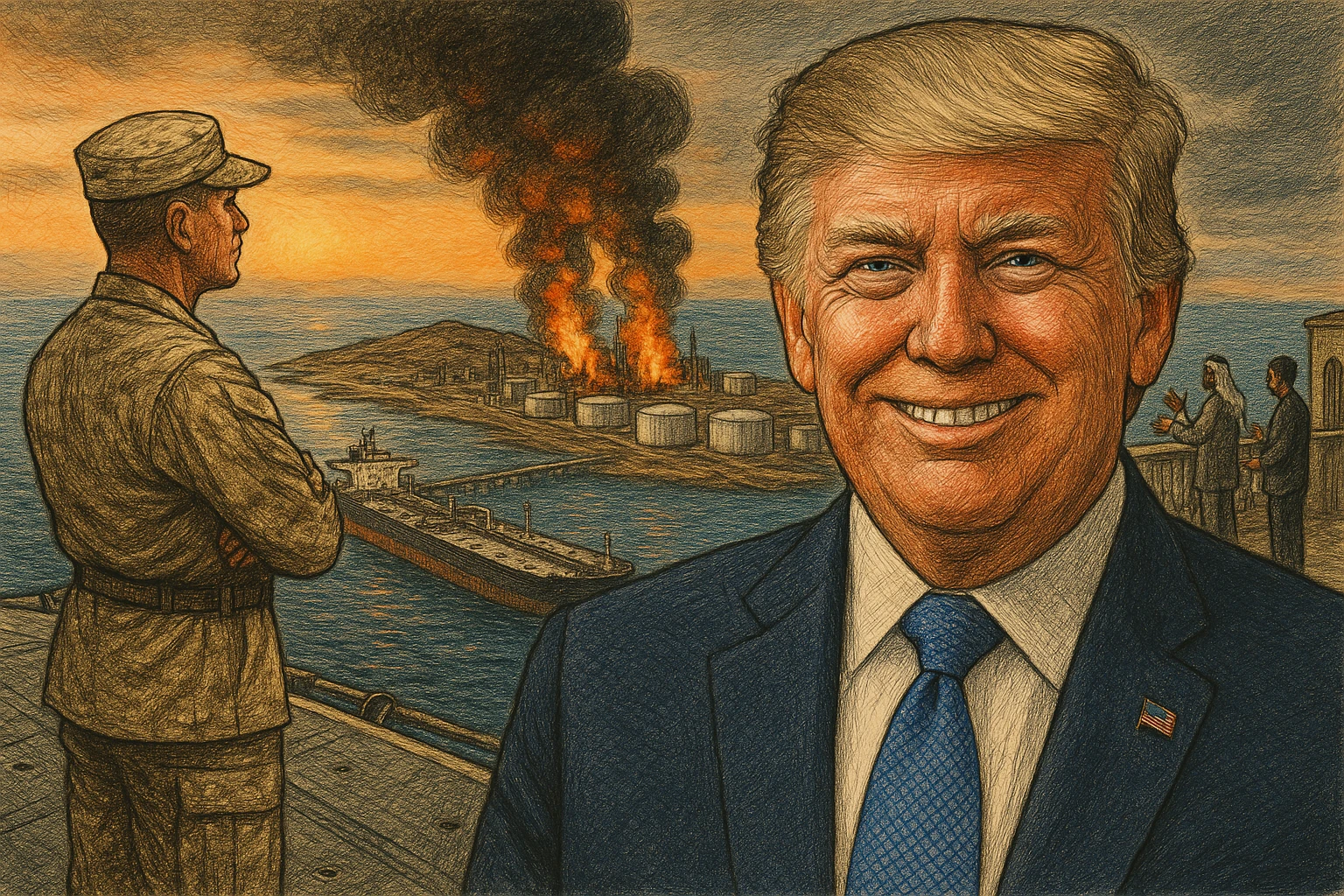
The US military launched precision strikes on March 13, 2026, targeting military installations on Kharg Island, Iran's crucial oil export hub in the Persian Gulf. President Donald Trump later stated that all military facilities on the island were destroyed, emphasizing that no oil infrastructure was hit. The move has sent shockwaves through global energy markets, with Iran's strong warnings adding to the uncertainty.
Kharg Island is the linchpin of Iran's crude oil export system, capable of docking Very Large Crude Carriers (VLCCs) holding up to 2 million barrels of oil. It handles the vast majority of Iran's oil exports. Any substantial damage to this facility would severely cut Iran's daily oil exports, directly disrupting global crude supply chains.
Iran Draws Red Line, Threatens Retaliation Against Gulf Producers
Tehran reacted swiftly, declaring Kharg Island a "red line" and warning that if the facility comes under full attack, Iran will retaliate against the energy infrastructure of neighboring Gulf states. The warning targets major oil producers such as the UAE, Saudi Arabia, and Kuwait, which also have extensive oil export facilities. Any escalation could create a chain reaction affecting global energy supply.
According to reports from Bloomberg and CNBC, US military officials acknowledge that the current conflict may last for weeks, with no quick resolution in sight.
Gulf States Lobby Washington to Avoid Energy Facility Strikes
The Wall Street Journal reported that Gulf nations have been actively lobbying Washington to avoid striking Iranian energy facilities. The US has indicated to these countries that it will try to steer clear of oil infrastructure, while also pressuring Israel to show similar restraint to prevent the conflict from spiraling out of control.
Analysts suggest the US strikes were designed to maintain a distance between "military targets" and "energy facilities," showcasing military strength while trying to calm international oil markets. Yet Iran's tough stance keeps the market on edge.
Oil Prices Rise, Crypto Market Also Feels the Heat
Geopolitical tensions in the Middle East have pushed oil prices higher. If Iran retaliates against Gulf energy facilities or the US expands its strikes, the impact on crude supply could far exceed current expectations.
The crypto market is also under pressure. According to Bloomberg, the US-Iran conflict has limited impact on Bitcoin, which is range-bound between $60,000 and $70,000, with Hyperliquid contracts emerging as a hedging tool. Binance Research noted that oil prices hitting $110 may have peaked, and the three buffer mechanisms in oil supply have yet to kick in, suggesting selling pressure in crypto may have bottomed. Bitcoin briefly dipped to $66,000, while multiple Fed officials warned that the Iran war makes rate cuts even more distant.