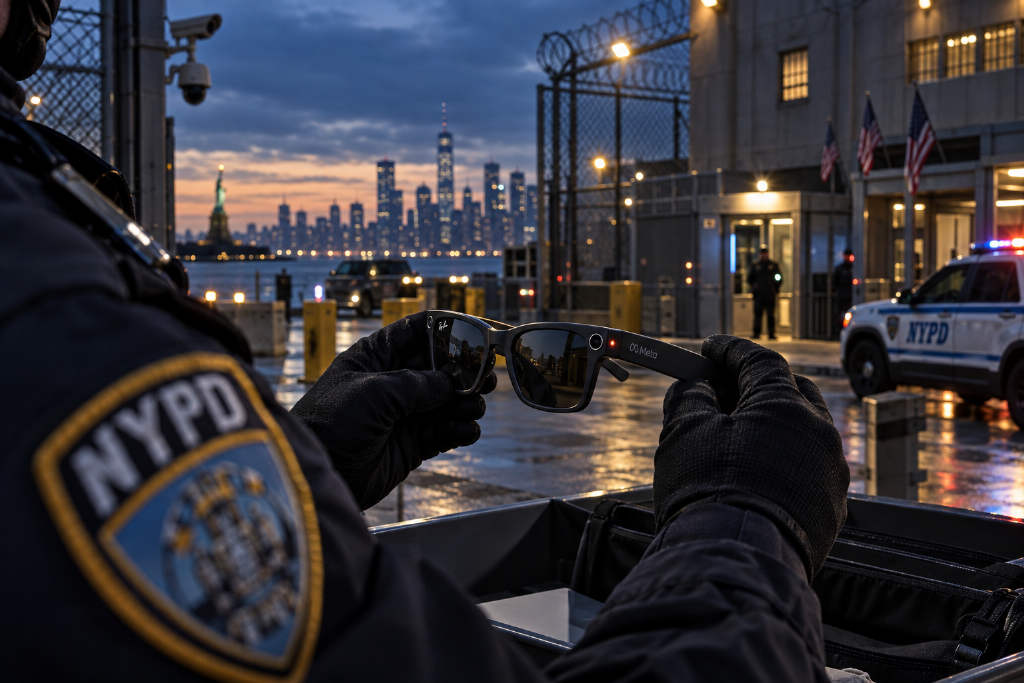
Police agencies across the U.S. are warning one another that Meta’s camera-equipped glasses are being used to record inside jails and police facilities, according to more than a dozen previously unreported memos obtained through freedom of information requests and reported by the Guardian.
NYPD circulated an early warning in January
The first of the memos was circulated in January by the New York Police Department’s counterterrorism bureau, which works with the FBI. It described Ray-Ban Meta glasses as a “security and counterintelligence” threat and told officers to inspect all eyewear allowed into inmate cells.
The memo said covert recording inside a facility could expose “cell layouts, camera placements, or officer patrol/site protection routines.”
It cited two videos. One, posted to TikTok in July 2025, showed the inside of a South Carolina detention center that was under federal investigation at the time over unsafe conditions. The footage included cells, washing and eating facilities, and detainees who appeared unaware they were being filmed.
In the video, the wearer said, “Everyone here is trying to figure out what’s going on with my glasses, why my light is blinking. People don’t know about Meta glasses.”
Warnings spread across other agencies
The documents were obtained by Property of the People, a transparency nonprofit. Its executive director, Ryan Shapiro, argued that the objections from law enforcement are self-serving. “These agencies surveil the public incessantly, but the moment we can watch them back, it’s deemed a security threat,” he told the Guardian. “When only the government is allowed to hold the camera, that’s not security. It’s impunity.”
Similar memos were issued by the Department of Homeland Security’s joint counterterrorism assessment team and fusion centers in New York, Maine, Virginia, Tennessee, and San Diego.
A Maine memo circulated in June said some glasses “can leverage AI software including facial recognition,” which it said could lead to the doxing of officers.
Federal agencies have also started restricting use by their own staff. Immigration and Customs Enforcement told employees in August that smart glasses count as body-worn cameras and cannot be worn in federal workspaces because they could “unintentionally capture, record or transmit sensitive information.”
Meta points to the recording indicator light
Meta told the newspaper that the glasses “are designed to be noticed,” pointing to a light that blinks while recording.
According to the report, that light is the only visible feature that clearly sets them apart from ordinary Ray-Bans, and the South Carolina video suggests it does not always prevent unnoticed filming.
Separate privacy criticism remains
The report said Meta has also faced criticism this year from the other direction, including over covert filming of women, contractors reviewing intimate footage, and plans to add facial recognition.