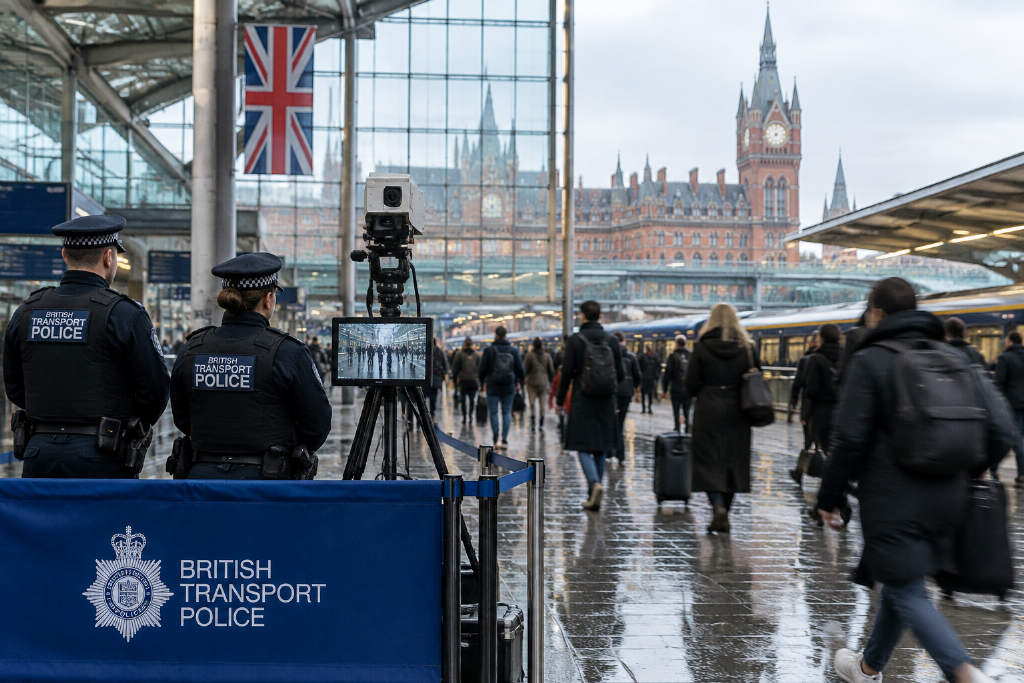
British Trans2026-09-30 09:42:03London station facial recognition trial scanned 500,000 faces and led to no arrests from alertsBritish Transport Police ran a live facial recognition trial at London rail stations from February to July, deploying the system 18 times, scanning more than 500,000 faces, and spending £320,786 on equipment rental and police staffing. The system generated only one alert during that six-month period, and that alert was a false positive, meaning no wanted person was arrested as a direct result of the trial. The figures were obtained by Liberty Investigates through freedom of information requests and published with The Guardian on Sept. 29. BTP later extended the trial by four months in August and expanded it to London Underground stations, with the first Tube deployment taking place at Victoria station on Aug. 11. BTP told The Guardian that the extended phase has since produced three confirmed matches, but the individuals identified were found to be complying with Sexual Harm Prevention Orders or other court-imposed conditions. The trial has drawn criticism over proportionality, cost, and effectiveness. Former UK Biometrics and Surveillance Camera Commissioner Fraser Sampson said the results appeared limited when judged by whether police actually caught anyone. At the same time, UK police forces continue to widen use of live facial recognition, while lawmakers and rights bodies are calling for stronger legal safeguards around AI and surveillance.320
Anthropic2026-09-13 12:53:57Anthropic says Claude was used in Taiwan-focused military modeling and surveillance casesAnthropic’s latest threat intelligence report details several cases in which Claude was allegedly used by actors linked to Chinese defense, security, and propaganda-related workstreams. The most sensitive case, labeled GTG-17002, involved a China-based actor who used Claude’s chat, coding, and AI agent tools to help build an electronic warfare and suppression of enemy air defenses software stack with about 16 modules. Anthropic said the project advanced through 12 versions and, during development, changed its default simulation setting to Taiwan, covering 12 targets including command bunkers, early-warning radar sites, Patriot and Sky Bow missile positions, major air bases, and regional operational command centers. The company said the account has been banned and findings from the investigation were folded into new safeguards. Anthropic added that charted mentions of weapons systems reflect research focus in conversations, not proof that the actor successfully obtained those capabilities, and the report does not claim any real-world attack on Taiwan facilities occurred. The report also describes other China-linked cases involving anti-torpedo weapons proposals, directed-energy intelligence collection, and monitoring of Taiwanese religious groups, political figures, dissidents, and overseas communities, while acknowledging that some requests initially bypassed Claude’s safeguards after prompts were reworked.890
Anthropic2026-09-11 09:47:31Anthropic says Claude was used in cyberattack automation and a mass surveillance system in MaliAnthropic said in a Thursday report that operators using Russian and Chinese languages employed Claude in cyber-related activity, including attack automation and vulnerability research. According to the company, a Russian-speaking operator identified as "JackPoterz" used customized AI-driven workflows to automate much of the attack chain and targeted more than 20 organizations, including government ministries, intelligence bodies, embassies and diplomatic missions in Ukraine and Europe. Anthropic also said Chinese-speaking operators used Claude as an engineering and orchestration layer for vulnerability research, with one workflow generating more than a dozen possible zero-day findings in network-appliance firmware within a month. In a separate case, the company said a likely Bamako-based independent consultant working with Mali’s state intelligence service used Claude as the primary engineering workforce to help build a domestic surveillance platform covering roughly 25 million SIM cards across the country’s three national mobile operators.840
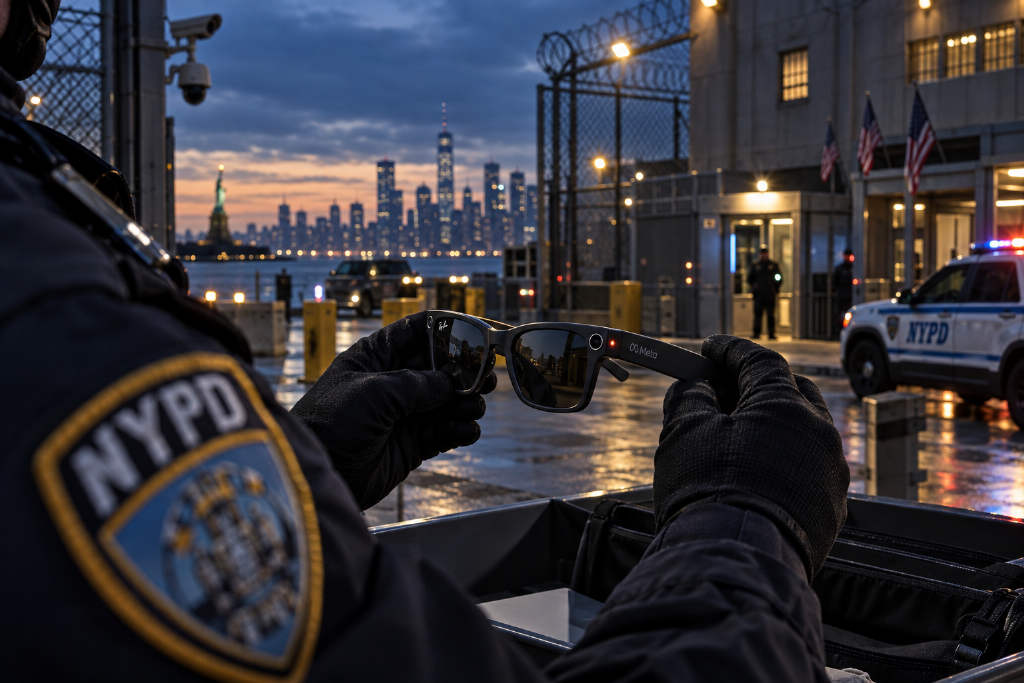
Meta2026-09-08 15:28:43U.S. police agencies warn Meta smart glasses are being used to film inside jails and police facilitiesPolice departments and federal agencies across the United States are circulating internal warnings over Meta’s camera-equipped smart glasses, after a series of memos obtained through public records requests raised concerns about covert recording inside secure facilities. According to the Guardian, which reviewed more than a dozen previously unreported documents, the New York Police Department’s counterterrorism bureau sent an early warning in January, describing Ray-Ban Meta glasses as a “security and counterintelligence” threat and telling officers to inspect eyewear brought into inmate cells. The memo said hidden recordings could reveal cell layouts, camera positions, and officer patrol or site protection routines. Other notices came from the Department of Homeland Security’s joint counterterrorism assessment team and fusion centers in New York, Maine, Virginia, Tennessee, and San Diego. One Maine memo said some smart glasses can use AI software, including facial recognition, which could expose officers’ identities. Meta told the Guardian the glasses are built to be noticeable because a light blinks during recording, though the report said that indicator does not always appear to prevent covert filming. The company is also facing separate criticism tied to privacy, including covert filming of women, contractor review of intimate footage, and plans involving facial recognition.340
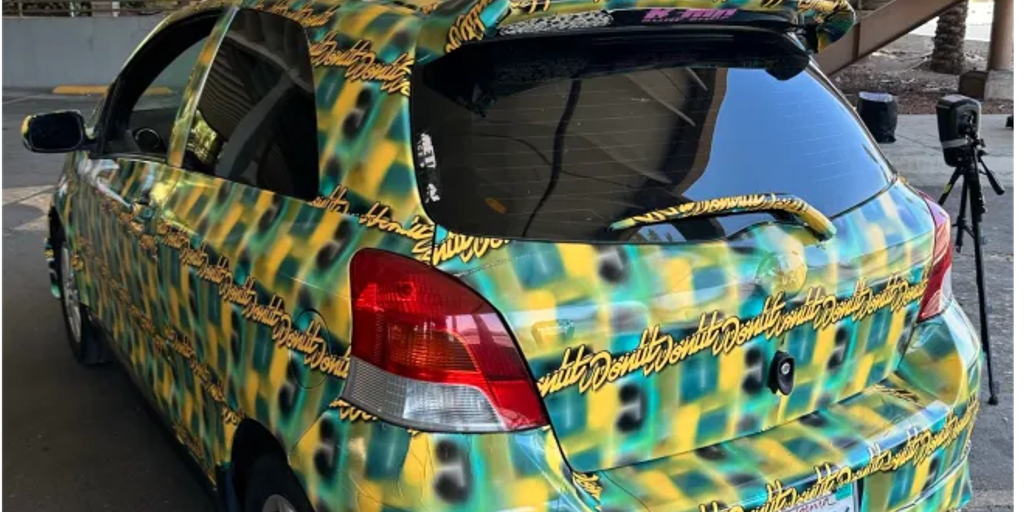
AI2026-08-12 21:33:05AI-Generated Patterns Shown to Evade Flock Camera Detection in Def Con DemoSecurity researcher Bill Swearingen says he has spent the past year running roughly 31 million tests to build AI-generated patterns that can prevent Flock camera software from recognizing whatever the pattern covers. In a public demo at Def Con, Swearingen worked with YouTube channel Donut Media to wrap a 2009 Toyota Yaris in one of the latest designs and drive it past a Flock camera. The camera still recorded normal footage, but the object-detection layer on top of the video was the part that failed, meaning the system may not classify the vehicle or log its plate. Swearingen said the project, called noRecognition, was built with a reinforcement learning model that keeps adjusting patterns after each failed attempt. He framed the work as a privacy tool for people who want to avoid automated tracking, while also saying the strongest patterns are being kept offline so camera vendors cannot train against them. The project is now running a crowdfunding campaign for merchandise, starting with T-shirts and hoodies and later moving to vehicle wraps.1580
Flock Safety2026-08-07 19:18:41Flock’s pitch to turn Uber and delivery cars into a roaming plate-scanning network draws scrutinyFlock Safety, a law enforcement technology vendor known for its fixed license-plate reader cameras, once explored a much broader surveillance model: using dashcams in Uber, Lyft, and delivery vehicles to scan plates on the move. A presentation prepared for the Georgia Attorney General’s office and later shared with 404 Media outlined a plan tied to Nexar, whose cameras are already installed in hundreds of thousands of vehicles. Flock said the Nexar arrangement was never launched, but the document showed how far the company wanted to extend its system beyond pole-mounted cameras. The proposal arrived as Flock’s existing network was already drawing criticism. The company reached an $8.4 billion valuation in April and says its stationary cameras operate in more than 5,000 U.S. communities. At the same time, the LAPD allowed its Flock contract to lapse in July, citing “serious concerns” about civil liberties and privacy. CNN also documented at least two dozen cases in which officers allegedly abused the system. Pressure is building on several fronts. EPIC urged Congress in May to ban automated license-plate readers, Washington state passed SB 6002 to restrict ALPR use, California is considering limits on data sharing, and a federal judge allowed a Norfolk case against Flock to proceed under Fourth Amendment arguments tied to Carpenter v. United States.590
Pavel Durov2026-07-30 17:01:25Pavel Durov says Russia labeled him a "terrorist" after he refused surveillance and censorship demandsTelegram founder Pavel Durov said in a post on his personal channel that Russia has designated him a "terrorist" after he refused demands for Telegram to carry out large-scale surveillance and content censorship. Durov said the move was tied to his refusal to comply with those requirements. He also wrote that, under Russian law, he has been barred from "publishing information on the internet." In the same post, he mocked the decision, saying Russian officials had apparently confused who has the power to ban whom from going online. The statement was reported by Odaily as a brief policy and regulatory update.1790
CoinDesk2026-07-23 13:00:00EFF’s India McKinney says the KIDS Act goes beyond digital age checks into mass surveillanceCoinDesk published an opinion piece on July 23, 2026 arguing that the proposed KIDS Act is not merely a form of digital age verification. In the article, Electronic Frontier Foundation staffer India McKinney says the bill would create a surveillance and censorship regime, and she frames that prospect as a warning sign for people who care about privacy and free expression. The piece was published in CoinDesk’s Opinion section, written by McKinney and edited by Cheyenne Ligon. Its headline states that the KIDS Act is “way worse than digital carding” and describes it as “a mass surveillance system.” Based on the summary provided, the core argument is that lawmakers’ willingness to consider such legislation is itself a significant concern for civil-liberties advocates. The article was published at 1:00 p.m. UTC on July 23, 2026.510