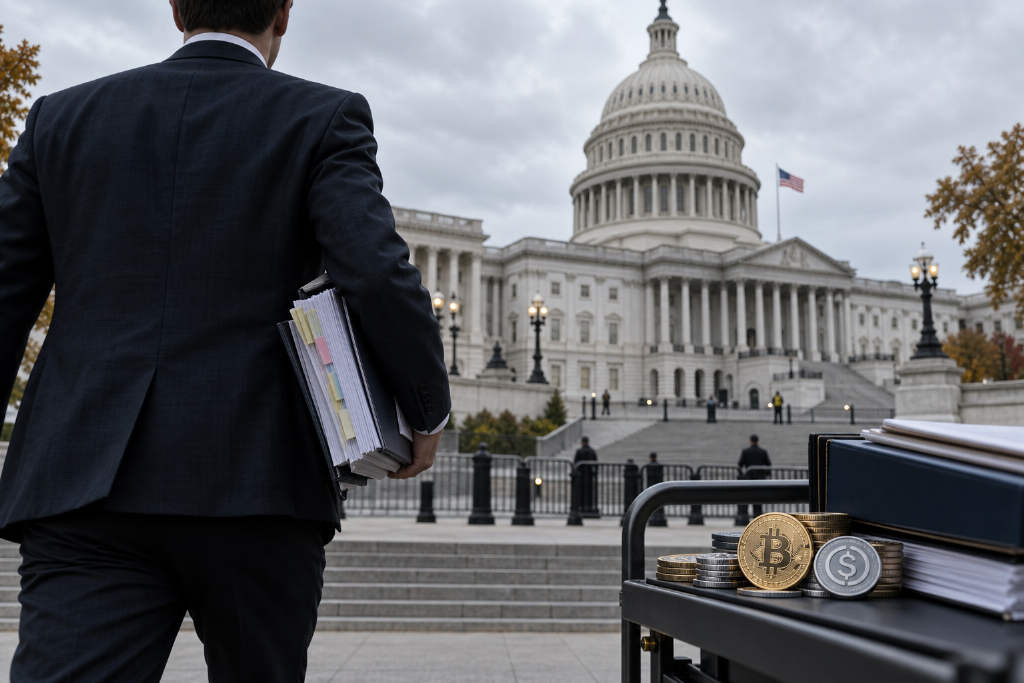
The U.S. Senate is scheduled to hold a key procedural vote on the CLARITY Act at 2:15 p.m. on Sept. 15, according to Crypto in America. The bill needs 60 votes to move forward to formal debate, putting the immediate focus on whether supporters can clear that threshold.
The report said Republicans have already made 126 substantive changes to the bill in response to Democratic requests. Those revisions cover ethics provisions, protections for software developers, and a "circuit breaker" mechanism tied to stablecoin deposits. Republicans have described the latest version as the "last, best, and final" text.
Even so, Democrats were still pressing a counterproposal on the eve of the vote. Their demands included tighter limits on large crypto holdings, stricter blockchain oversight provisions, and tougher conflict-of-interest rules for exchanges. Patrick Witt, executive director of the White House crypto council, said he felt "good" about the outcome, while also saying the final result would depend more on political maneuvering than on the policy itself. Separately, eight banking trade groups including the American Bankers Association continue to oppose the bill, while the White House Council of Economic Advisers has rolled out a new tool to challenge claims that stablecoins would drain bank deposits.
The U.S. Senate will hold a key procedural vote on the CLARITY Act at 2:15 p.m. on Sept. 15, according to Crypto in America. The bill needs 60 votes to advance to formal debate.
Republicans have made 126 substantive revisions to the legislation in response to Democratic requests. The changes cover ethics provisions, protections for software developers, and a "circuit breaker" mechanism for stablecoin deposits. That version has been framed as the "last, best, and final" text.
Even so, Democrats put forward a counterproposal on the eve of the vote, seeking tighter limits on large crypto holdings, stricter blockchain regulatory provisions, and stronger rules on exchange conflicts of interest.
Patrick Witt, executive director of the White House crypto council, said he felt "good" about the vote, but added that the outcome would depend more on political maneuvering than on the policy itself.
Eight banking industry groups, including the American Bankers Association, continue to oppose the bill, arguing that current stablecoin yield provisions contain loopholes. The White House Council of Economic Advisers has also introduced a new tool to rebut the banking sector's argument that stablecoins would lead to deposit outflows.
This article was originally published by Bit.Fan. For more cryptocurrency news and market insights, visit www.bit.fan. Disclaimer:
The market information, project data, and third-party content displayed on this platform are for industry information sharing only and do not constitute any form of investment advice or return commitment.
Cryptocurrency trading carries high risks. Users should fully assess their risk tolerance and make independent decisions. All profits, losses, and legal responsibilities are borne by the users themselves.