
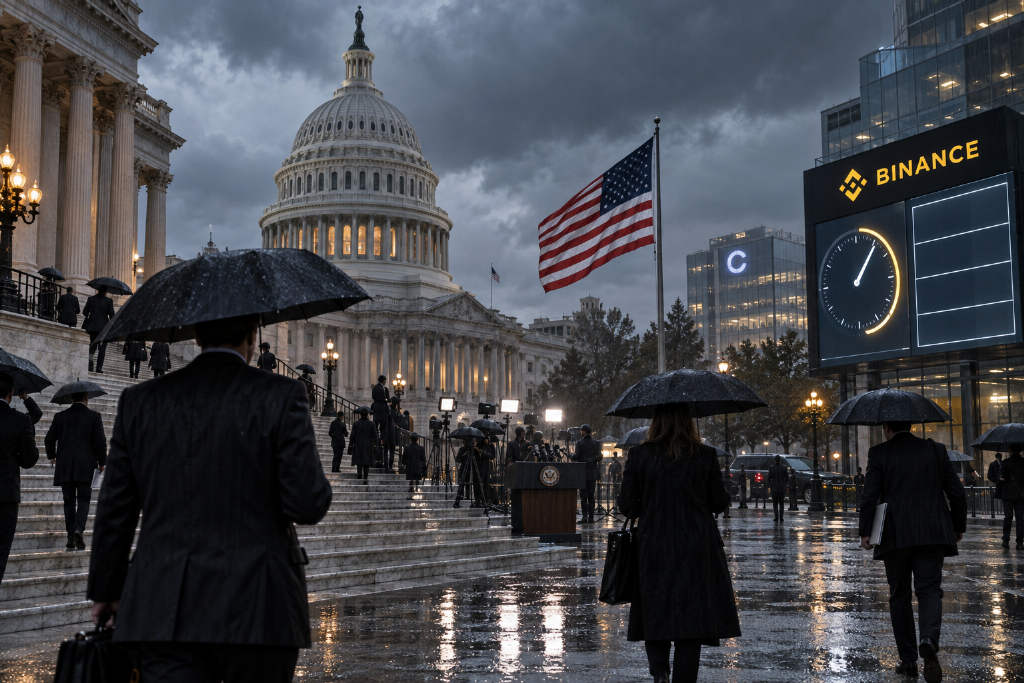
Senate vote falls short on crypto market structure bill
The U.S. Senate failed to move forward with the Digital Asset Market Clarity Act after a procedural vote came up short, according to CoinDesk. The proposal received 49 votes in favor, far below the 60-vote threshold needed to advance legislation, dealing a setback to a years-long effort led by senior senators.
The immediate dispute centered on ethics restrictions tied to President Donald Trump’s crypto holdings. Democratic Senator Mark Warner and others said the bill did not adequately prevent senior government officials from using public office to benefit their own crypto assets. Republican Senator Cynthia Lummis said Republicans had already offered their biggest concession to Democrats, including what she described as unprecedented ethics restrictions aimed at Trump, but Democrats still sought additional demands. After Republican leadership ended negotiations and pushed the vote ahead, several Democrats who had previously supported the bill switched to opposing it.
The bill had also faced pressure from the industry before the vote. Coinbase CEO Brian Armstrong had opposed the way the legislation handled stablecoin reward programs, a position that at one point slowed its progress. Even so, Republican Senator John Kennedy told the media that the measure could still return during a future lame-duck session of Congress.
Binance moves commodity TradFi perpetuals to a 24/5 schedule
Binance said in an announcement that starting at 05:00 on Sept. 16, 2026, Beijing time, its commodity-based traditional finance, or TradFi, perpetual contracts will switch to a 24/5 trading model. The exchange will also remove the previous one-hour daily maintenance break.
The adjustment applies to all commodity TradFi perpetual contracts, including XAUUSDT, XAGUSDT, XPTUSDT, XPDUSDT, COPPERUSDT, CLUSDT, BZUSDT and NATGASUSDT, along with future listings in the same category.
Multicoin Capital sends 441,000 HYPE to Coinbase Prime
Onchain analyst Onchain Lens said Multicoin Capital transferred 441,000 HYPE from four wallets to Coinbase Prime over the past six hours. The tokens were worth about $35.31 million at the time of the transfer, and the move was flagged as a possible sale preparation.
BTC ETF flows turn negative as traders wait for the Fed
Wintermute OTC trader @Jjay_dm wrote that spot BTC ETFs posted net outflows of $463 million in the week ending Sept. 14, the first negative reading since the June low. ARK and Grayscale accounted for a combined $371 million in outflows, while BlackRock was flat.
BTC fell 4.4% over the week and closed at $76,838, making it the weakest-performing asset in that period. Ether dropped 1.5%, while altcoins as a group gained 1.0%.
On the macro side, U.S. August CPI rose 0.4% month over month, with core CPI at 0.3%, both above the 0.2% expected. Producer price inflation reached 5.4% on an annual basis. Goldman Sachs then shifted its September call from no change to a rate hike, and the market-implied probability of a 25 basis point increase on Wednesday rose to 87%. At the same time, tensions in the Middle East kept climbing, Brent crude moved above $105 a barrel, and the U.S. 10-year Treasury yield hit a 20-year high.
Wintermute said it now leans neutral rather than bullish after ETF flows turned negative. It pointed to two key events this week: Tuesday’s procedural Senate vote on the CLARITY Act, and Wednesday’s Federal Reserve rate decision. In Wintermute’s view, the rate hike itself is already priced in, but any more hawkish guidance afterward, especially signals pointing to continued hikes into the first quarter of 2027, could put downside pressure on crypto markets.
BIT deposits BTC to Binance and withdraws ETH
Lookonchain said BIT deposited 1,400 BTC to Binance, worth about $107.8 million, while withdrawing 10,000 ETH valued at roughly $24.67 million.
Lazarus Group sells 911 ETH in two hours
According to Lookonchain, wallets tied to Lazarus Group sold 911 ETH over the past two hours at an average price of $2,499, for proceeds of about $2.28 million.
CZ comments on CoinEx shutdown as founder explains closure plan
Changpeng Zhao said that as some platforms wind down during the current downturn, users are at least still being allowed to withdraw assets. He contrasted that with earlier cycles, when events such as QuadrigaCX left users unable to recover funds.
CoinEx founder Yang Haipo said the exchange officially launched on Dec. 22, 2017 and will formally close on Dec. 22, 2026. He said nine years is a long time in crypto, and CoinEx went through multiple bull and bear cycles with its users while watching many projects and peers rise and leave the market in different ways.
Yang said he had come to accept that CoinEx did not become a leading exchange and that the security and compliance risks of running a crypto trading platform had become increasingly difficult to control. Revenue can decline, he said, but responsibility does not. Taking on unlimited risk with limited income is no longer a rational choice. He added that after surviving for nine years in a volatile and demanding industry, CoinEx could at least leave the market intact and with dignity, saying it may not have won the race but would finish it with dignity.
For CET, CoinEx will repurchase tokens at the initial listing price of 0.005 USDT each, with no cap on quantity. Yang said CET reflected holders’ trust in CoinEx and, for many, trust in him personally. He apologized for failing to create the long-term value once expected for CET and said the chapter should at least be closed in a responsible way.
Yang also said he had seriously considered selling CoinEx but ultimately decided against it. Users entrusted their assets to CoinEx based on trust in the platform and in him, he said, and handing that platform and trust to a new owner would not be the right way to end the journey. He said, “a clean ending is the right ending.” CoinEx will ensure full asset withdrawals for users, provide a proper departure for employees, and offer CET holders a clear and responsible arrangement.
Kevin Bass questions Anthropic-linked funding relationships
U.S. investigative blogger Kevin Bass posted on X about what he described as the interests behind Anthropic’s “AI doomerism” narrative and called on Congress to investigate.
Bass said Anthropic CEO Dario Amodei had previously proposed third-party evaluations of AI model risk and named METR as one possible evaluator, but argued that METR and related organizations have funding links to Anthropic. He said Anthropic shares held by Facebook co-founder Dustin Moskovitz were placed into the Good Ventures Foundation, which in turn is a major funder of the broader AI safety network, including METR. Bass estimated the value of the related Anthropic stake had risen from about $500 million at the start of last year to more than $7.7 billion now.
Based on that, Bass questioned whether those groups could independently assess Anthropic and AI risk. He also accused organizations including the Tarbell Center of amplifying “AI doomerism,” describing a loop of magnifying AI risk narratives, pushing regulation, and then reinforcing the funding structure around the same ecosystem. He said that mechanism could ultimately hurt the competitiveness of the U.S. AI industry.
The original note added that all of those claims reflect Kevin Bass’s own investigation and judgment, and that both the funding relationships and the causal links he described still require further independent verification.
