
Matter Labs’ Vassilis Tziokas wrote in CoinDesk that the U.S. Senate has delayed the Clarity Act until September after the market structure bill failed to secure a final vote before the August recess. That leaves digital asset market rules at least several more weeks away.
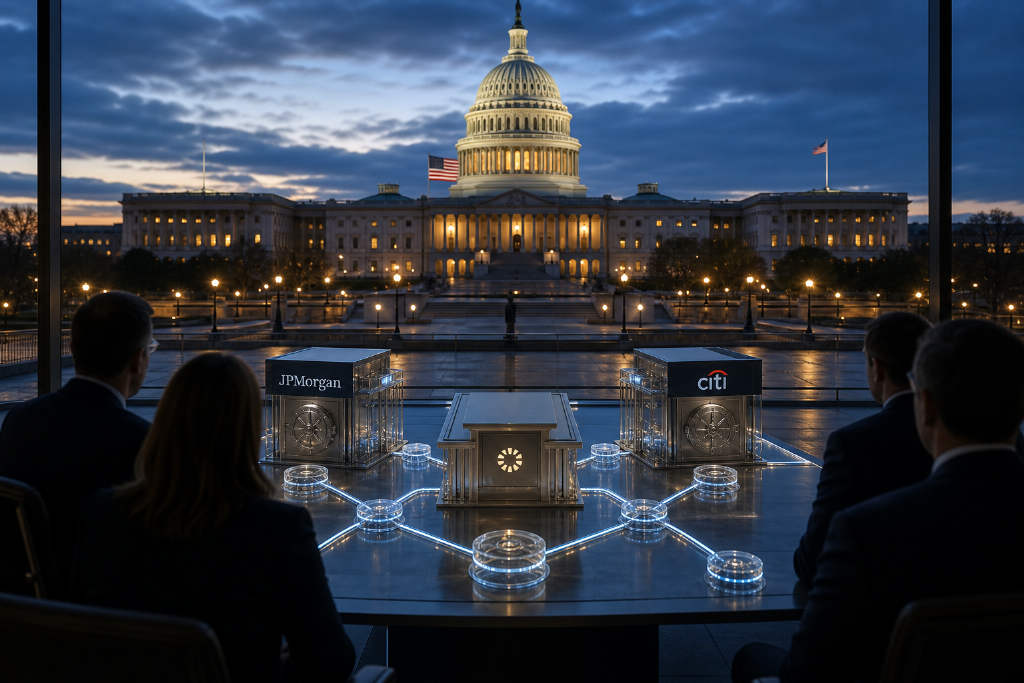
Banks, in his account, are not waiting for that process to finish. JPMorgan has processed more than $3 trillion in cumulative transactions through its Kinexys platform and has launched the deposit token JPMD. Citi is operating a cross-border Treasury token service. The Clearing House, working with 17 major financial institutions, plans to deliver on-chain clearing for tokenized deposits by 2027.
How interbank interoperability would work
Tziokas argued that interoperability between tokenized bank deposits does not come from messaging standards or token bridges. Instead, he said, it comes from the clearing process itself: the sending bank redeems its token, the receiving bank issues its own token, obligations between institutions are recorded and netted, and final settlement takes place in central bank money.
That model carries a technical burden. The system must satisfy privacy, neutrality, and verifiability at the same time. Each institution would need to run its own ledger, use cryptographic proofs to verify transfers without exposing the underlying data, and anchor the process to a neutral settlement facility that is not owned by any participant.
What the Clarity bill would and would not do
According to the article, the Clarity Act would not directly regulate tokenized deposits. It could, however, clarify the boundaries of digital asset markets and strengthen the stablecoin framework established by the GENIUS Act.
Tziokas also pointed to a Global Financial Markets Association report from April 2026. The report listed unresolved gaps including standardized treatment for cross-border tokenized deposits and guidance for off-network transfers. He described those issues as regulatory unlock points for interoperable tokenized money between banks.
Under regulatory uncertainty, he wrote, the rational choice for banks is separation, and each month of delay rewards closed gardens.