

MEXC groups three U.S. equity products under one campaign
MEXC kicked off its 0808 annual brand event in August 2026 and put three U.S. equity-related products under a zero-fee promotion during the campaign period: Stock Futures, Tokenized Stocks and RealStocks.
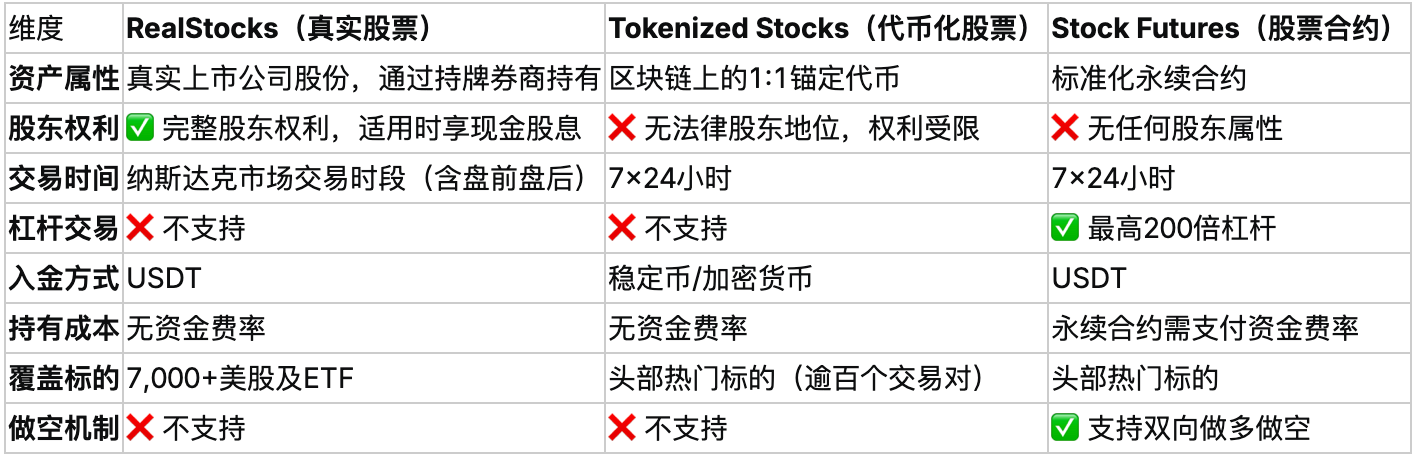
All three offer exposure to the U.S. stock market. They do not represent the same thing. Their legal nature, ownership structure, trading setup and target use cases are materially different, and MEXC framed the comparison around product definition, core features, rights structure and investor suitability.
RealStocks: direct access to actual U.S. shares through a licensed broker arrangement
RealStocks is MEXC’s U.S. stock spot trading product offered in cooperation with a regulated securities broker. The product is supported by Atomic Vaults Securities, a broker regulated by the Financial Industry Regulatory Authority, or FINRA, and connects users to actual U.S.-listed shares through regulated securities infrastructure.
Users can trade real shares of listed U.S. companies with USDT. In applicable cases, they can also receive shareholder benefits such as cash dividends. MEXC describes RealStocks as ownership of actual registered shares rather than a derivative, tokenized stock, synthetic asset or contract for difference.
The product covers four trading windows in UTC: overnight trading from 00:00 to 07:50, pre-market from 08:00 to 13:30, regular trading from 13:30 to 20:00, and after-hours trading from 20:00 to 00:00.
Funding is handled in USDT, with the system converting that balance into U.S. dollar buying power without exchange loss. MEXC said the offering covers more than 7,000 U.S. stocks and ETFs, and users do not need to open a separate account with an outside broker because the stock account can be opened within MEXC.
The exchange added that more than 120,000 users opened RealStocks accounts in the first month after launch. In MEXC’s description, the product combines the legal certainty of traditional equity ownership with the trading experience of a crypto platform.
Core features of RealStocks
- Actual equity ownership rather than tokenized or derivative exposure
- Shareholder rights, including cash dividends where applicable
- Access across overnight, pre-market, regular and after-hours sessions
- USDT funding for U.S. stock purchases
- Coverage of more than 7,000 U.S. stocks and ETFs
- No need to open a separate outside brokerage account
Tokenized Stocks: on-chain economic exposure with 24/7 trading
Tokenized Stocks are blockchain-based representations of traditional corporate equity. Under the structure described by MEXC, a licensed broker holds the underlying shares and a digital token is issued on-chain on a 1:1 basis against those holdings. MEXC said it has listed more than 100 Ondo tokenized stock trading pairs spanning sectors including AI, semiconductors and energy.
These instruments give users economic exposure to the price of a stock, not direct legal ownership of the company. The legal holder remains the issuer or its custodian, and any claim by the user depends on the issuer’s own terms.
Unlike the trading schedule for traditional U.S. equities, tokenized stocks can be traded 24/7. Because they exist as on-chain assets, they can also be used inside decentralized finance, or DeFi, such as serving as collateral in lending protocols.
Shareholder rights are limited. Users generally do not hold direct legal shareholder status. Dividends may be reflected in some form, but rights remain constrained, and voting rights are typically consultative rather than legally binding.
MEXC cited the U.S. Securities and Exchange Commission, or SEC, as saying that tokenized securities are still securities. The SEC has also drawn a distinction between custodial and synthetic tokenization and said that if a token does not grant the holder legal ownership or substantive beneficial interest in the underlying shares, it may qualify as a security-based swap.
MEXC’s comparison casts tokenized stocks as an “on-chain shadow” of equities: easier to move inside crypto infrastructure and more composable, but without the full rights attached to direct stock ownership.
Core features of Tokenized Stocks
- Blockchain-issued tokens linked to listed company share prices
- Economic exposure rather than direct equity ownership
- 24/7 trading
- Can be used as on-chain assets in DeFi
- Dividend and voting rights are limited or incomplete
- Remain within the scope of securities regulation in the U.S.
Stock Futures: leveraged and directional trading tools tied to price moves
Stock Futures are perpetual contracts based on single stocks or stock indexes. Users post USDT as margin and trade the price movement of the underlying reference rather than the stock itself.
MEXC describes the product as a contract, not an asset. It carries no legal link to stock ownership. The contracts support both long and short positions and offer leverage of up to 200x. They also trade 24/7.
Pricing is anchored to the corresponding tokenized stock spot index price. The trading interface and mechanics follow the same model used in crypto perpetual futures, which MEXC says lowers the learning curve for users already familiar with digital asset derivatives.
There are no shareholder rights attached. Users do not receive dividends and do not have voting rights. Once a position is closed, the result is simply a profit or loss denominated in USDT, not ownership of any stock.
MEXC said stock and index futures trading volume on the platform rose about 261% month over month in June 2026, which it presented as evidence of growing demand for U.S. equity derivatives.
Core features of Stock Futures
- A contract product with no underlying ownership rights
- Supports leverage and two-way long-short trading
- Up to 200x leverage
- 24/7 trading
- Price anchored to a tokenized stock spot index
- No dividends or voting rights
Choosing between ownership, flexibility and leverage
MEXC said the choice is not about which product is universally better. The key question is which structure fits the user’s objective.
When RealStocks fits
RealStocks is aimed at users who want ownership. Buying the product means becoming a shareholder of a company, with returns tied not only to price appreciation but, where applicable, to cash dividends as well. MEXC said it is suited to those who believe in a company’s long-term value and want to share in its growth and dividend stream.
- Long-term investing based on company fundamentals
- Dividend strategies focused on cash flow
- Investors who value legal shareholder rights such as voting
The trade-off is that the product follows the structure of the traditional U.S. stock market. It is not available on a 24/7 basis and does not support leverage or short selling.
When Tokenized Stocks fit
Tokenized Stocks are positioned around flexibility. They let crypto users stay inside the digital asset ecosystem while taking on U.S. stock-linked exposure. MEXC highlighted 24/7 availability as the main advantage, allowing users to react to earnings releases, policy changes or breaking events without waiting for Nasdaq hours.
- Round-the-clock trading outside regular U.S. market sessions
- Integration with DeFi, including collateral use in lending
- Fragmented allocation with lower capital thresholds across major names
The limitation is that users do not own the underlying company’s shares, and legal shareholder rights such as dividends and voting are either restricted or absent.
When Stock Futures fit
Stock Futures are designed for leverage and directional trading. MEXC describes them as pure price instruments: no ownership, no dividends, only exposure to direction. With up to 200x leverage and the ability to go both long and short, the product is aimed at short-term traders and hedging strategies.
- Short-term trading around daily or multi-day price moves
- Short exposure when users expect a stock price decline
- Hedging downside risk on existing positions
- Using smaller margin to control larger notional exposure
MEXC also noted the obvious trade-off. Leverage magnifies losses as well as gains, perpetual contracts involve funding costs, and the product carries no shareholder rights of any kind.