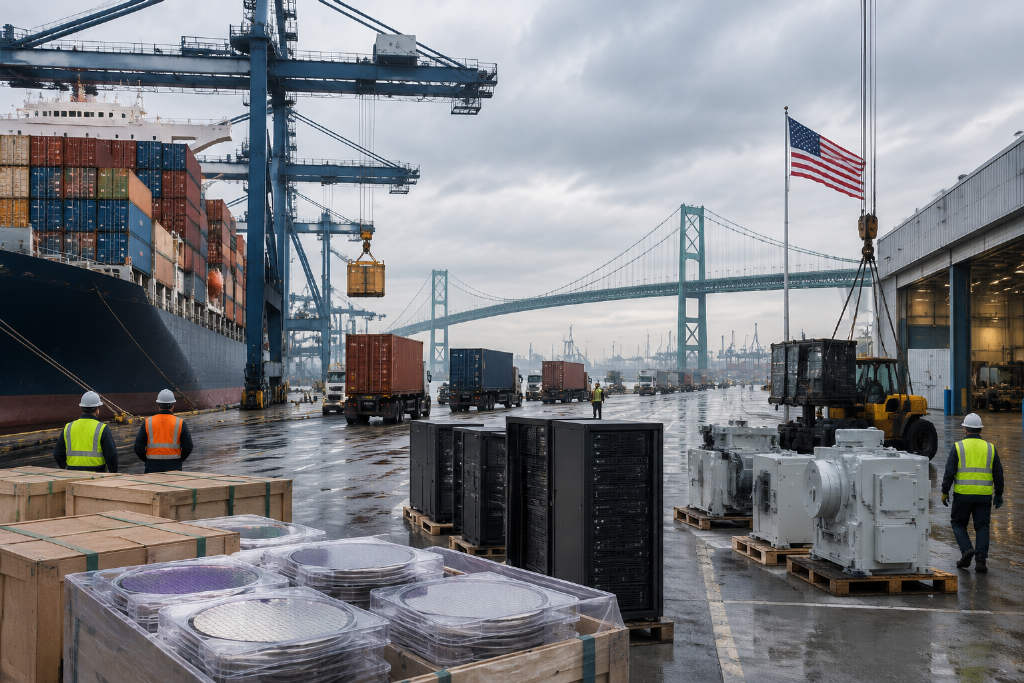
U.S. Commerce Department data showed the country’s goods and services trade deficit widened to $105.6 billion in August, up 13.7% from the revised $92.8 billion recorded in July and the highest level in 17 months. Imports rose 4.3% month over month to a record $420.8 billion, while exports increased 1.4% to $315.2 billion. A major driver was capital goods, with August capital goods imports climbing by $6.2 billion to $146.4 billion, also a record. Demand was particularly strong for products tied to AI data center construction, including advanced semiconductors and industrial electromechanical equipment. According to the analysis cited by BlockBeats, the Trump administration’s effort to curb imports and narrow the trade gap through higher tariffs has been offset by strong U.S. consumer demand and business capital spending. The report added that companies still need to source high-end chips, servers, and industrial equipment from overseas while domestic replacement capacity remains limited. It also said the import surge is expected to weigh on third-quarter GDP, though solid private consumption and business investment could still keep annualized Q3 GDP growth above 3%.
U.S. goods and services trade deficit widened to $105.6 billion in August, according to Commerce Department data cited by BlockBeats on Oct. 7. That was up 13.7% from the revised $92.8 billion in July and marked a 17-month high.
Imports rose 4.3% month over month to a record $420.8 billion, while exports increased 1.4% to $315.2 billion.
Capital goods led the increase
The data showed U.S. capital goods imports rose by $6.2 billion in August to $146.4 billion, also a record high. The jump in imports was mainly driven by capital goods, with strong demand for products linked to AI data center construction, including advanced semiconductors and industrial electromechanical equipment.
Tariffs did not reduce overall import demand
According to the analysis cited by BlockBeats, the Trump administration had sought to use higher tariffs to suppress imports and narrow the trade deficit. But strong consumer demand and business capital spending in the United States, especially the investment wave tied to AI computing infrastructure, have offset the restraining effect of tariffs on imports.
With domestic substitute capacity not yet in place, companies still need to buy high-end chips, servers, and industrial equipment from overseas. The analysis said tariffs have changed suppliers and trade routes more than they have reduced total import demand.
Implications for third-quarter GDP
The import surge is expected to continue weighing on U.S. third-quarter GDP. At the same time, strong private consumption and business capital spending could still keep annualized GDP growth above 3% in the third quarter.
This article was originally published by Bit.Fan. For more cryptocurrency news and market insights, visit www.bit.fan. Disclaimer:
The market information, project data, and third-party content displayed on this platform are for industry information sharing only and do not constitute any form of investment advice or return commitment.
Cryptocurrency trading carries high risks. Users should fully assess their risk tolerance and make independent decisions. All profits, losses, and legal responsibilities are borne by the users themselves.