
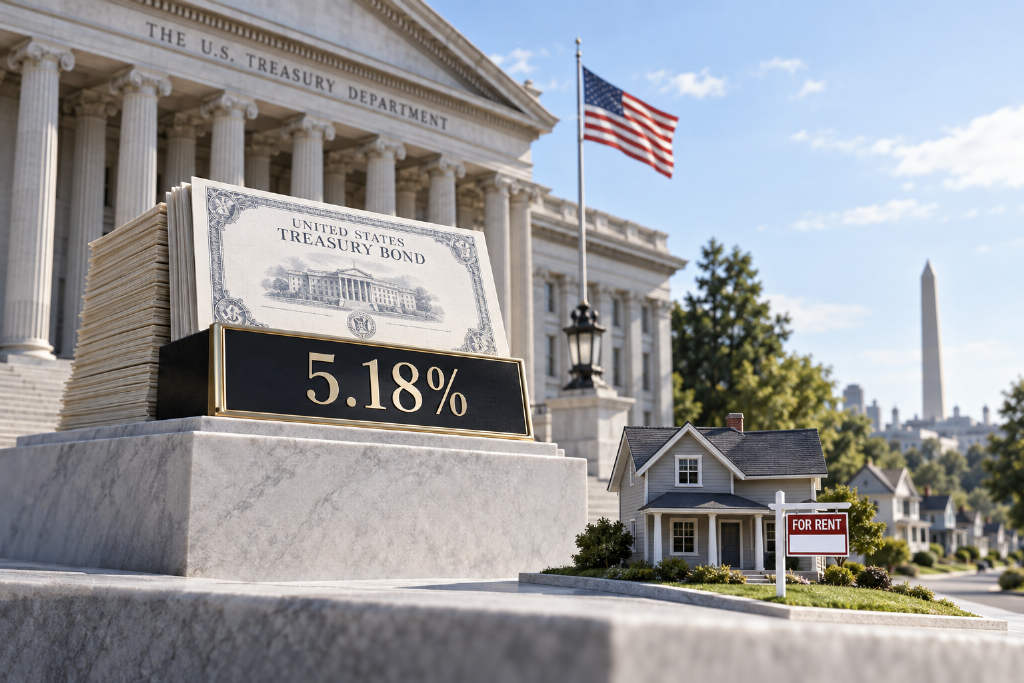
Buying a 10-year US government bond is now more profitable for the average investor than becoming a typical landlord, according to Protos. The outlet says that relative advantage has reached its highest level since July 2007.
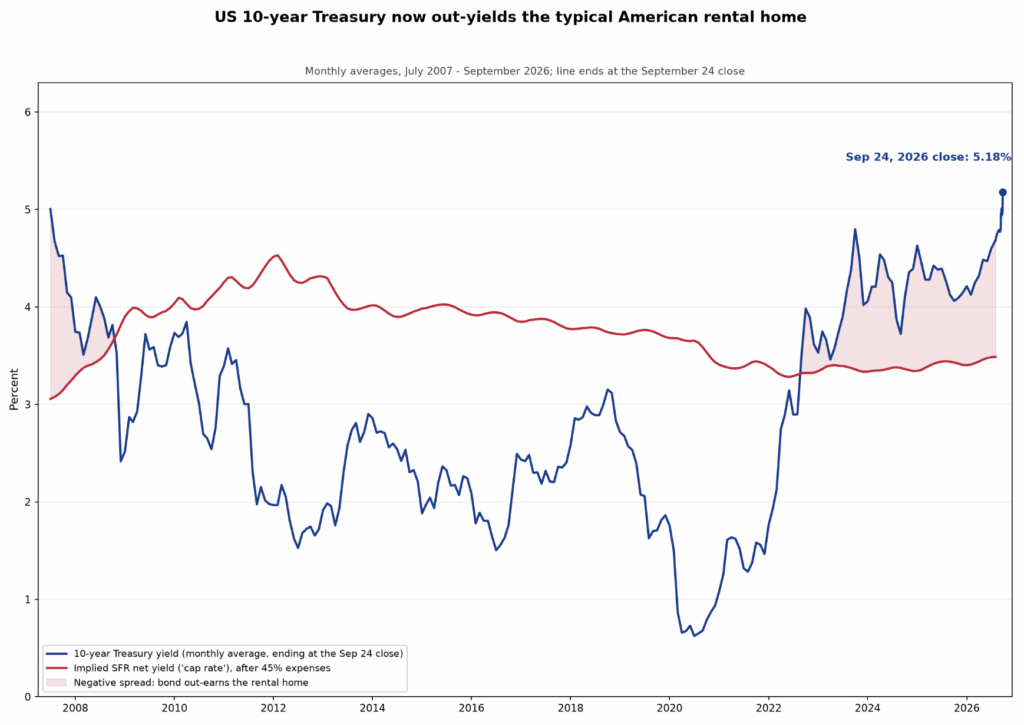
10-year Treasury yields move above rental cap rates
Protos says negative housing spreads appear when low-risk US Treasuries outperform the riskier business of renting out real estate. In the figures cited by the report, the 10-year US Treasury yield-to-maturity closed at 5.11% on Wednesday and climbed again to 5.18% on Thursday.
That compares with a US single-family home cap rate calculated with a 45% expense load. Based on a calculation cited from real estate data firm CEO Nick Gerli, 10-year Treasuries above 5.1% are comfortably ahead of a 4.8% single-family house rental cap rate.
Highest relative profitability since 2007
The report says the current gap marks the strongest relative profitability for Treasuries versus rental property since July 2007. It attributes this year’s jump in Treasury yields to an oil shock and a borrowing spree during the US war with Iran. A recent Federal Reserve rate hike then pushed yields beyond levels seen during the 2007 housing bubble, the article says.

Protos also writes that Fed Chair Kevin Warsh announced the central bank’s first rate increase in three years last week. The committee’s own projections, according to the report, also pointed to one additional increase in the Fed Funds Rate this year.
Nick Gerli says government bonds now beat cash-flow property investing
Gerli posted a chart that drew more than 250,000 views and wrote: 「Real estate for cash flow has a negative opportunity cost relative to government bonds.」
Protos notes that the 4.8% figure is only one of several benchmarks for after-cost rental property returns. Individual owners may post double-digit returns in years with minimal repairs, then lose money the next year if unexpected costs rise or occupancy falls. Returns in real estate can vary sharply.