
Long-dated U.S. Treasury yields continued to move higher on Oct. 9, as market focus shifted from the Federal Reserve’s rate path to the term premium.
A New York Fed model showed the 10-year U.S. Treasury term premium has risen by about 40 basis points since mid-September to around 0.98%, the highest level since 2014. Over the same stretch, the 10-year Treasury yield increased by about 30 basis points.
Another model, which incorporates economists’ interest-rate forecasts, showed the term premium at 1.08%, the highest reading since 2010.
Term premium moves to the center of the selloff
The term premium reflects the extra return investors demand for taking on uncertainty tied to long-term inflation, fiscal risk, bond supply, and market liquidity.
Analysts said the recent rise in long-end yields may no longer be explained only by expectations around Fed policy. Instead, it may reflect a higher level of risk compensation that investors now require to hold longer-dated Treasuries.
Fiscal borrowing and AI-related issuance add to capital demand
The U.S. annual fiscal deficit stands at about $2 trillion, with the government continuing to issue Treasuries. At the same time, AI infrastructure buildout has pushed major technology companies to raise more debt financing.
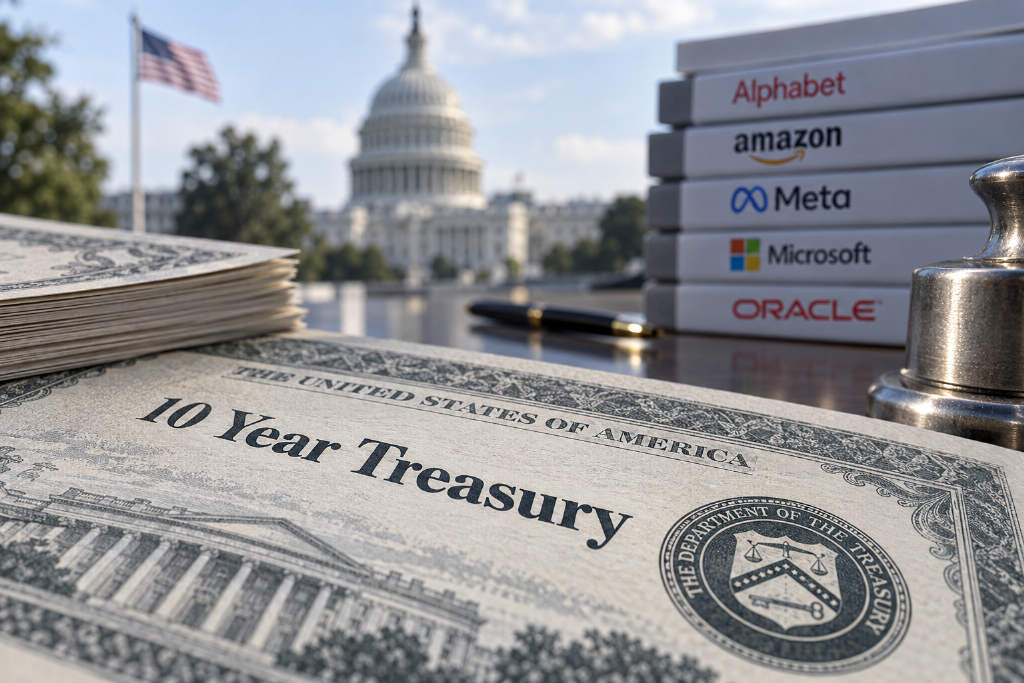
According to Reuters data, Alphabet, Amazon, Meta, Microsoft, and Oracle have issued about $220 billion of debt this year, more than double the level from the same period last year. With governments and corporations competing for long-term capital at the same time, borrowing costs could face additional upward pressure.
Long-term yields may stay elevated even if Fed expectations ease
If the term premium keeps rising, long-dated Treasury yields may not fall meaningfully even if the Fed pauses rate hikes or lowers its outlook for future rates. That could keep pressure on mortgage borrowing, corporate loans, and broader economic activity.
Analysts also said fiscal expansion, increased debt supply, and geopolitical uncertainty may signal a structural shift in the environment that has kept long-term interest rates falling for much of the past decade.