
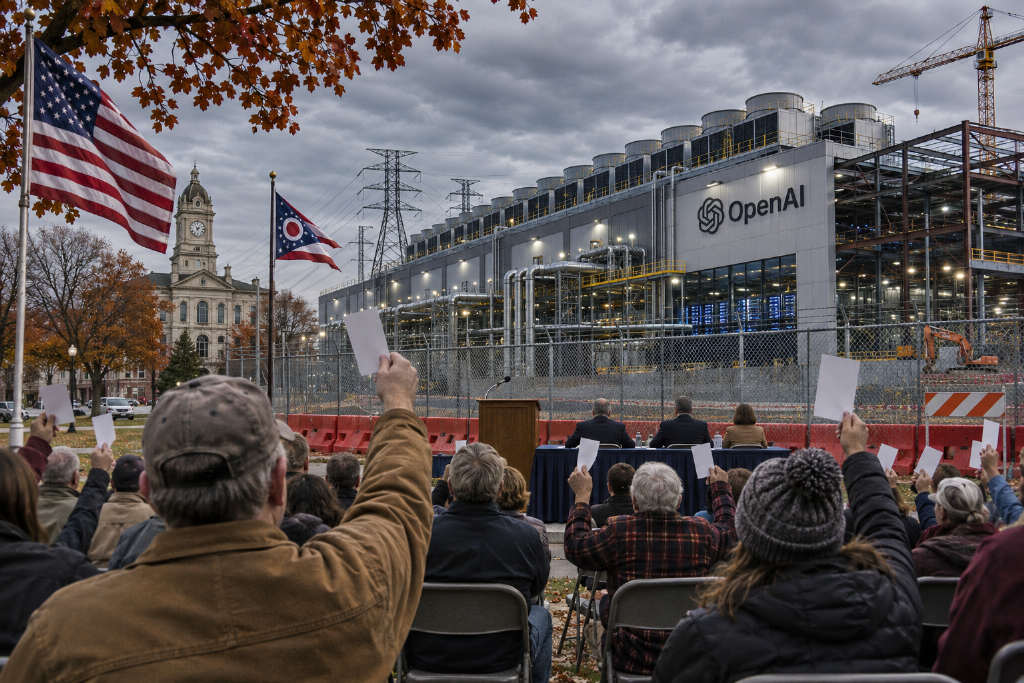
Voters in at least 29 U.S. jurisdictions backed bans or restrictions on data center development in Tuesday’s elections, according to The Washington Post, handing a new setback to the infrastructure buildout tied to artificial intelligence.
The measures varied in scope. Some would block projects outright, while others would require additional public approval before development could move ahead. A number of them were advisory votes, so passage alone would not automatically stop construction.
Ballotpedia tracked 41 data center measures on Nov. 3 ballots across 10 states. Of those, 28 were written so that a yes vote would limit development. Another 13 would allow or support projects, which means a no vote on those proposals could also be read as a loss for developers.
Ohio posted some of the strongest anti-data-center results
Ohio produced some of the clearest outcomes. The Washington Post reported that all 10 charter measures backed by the grassroots group Conserve Ohio passed. In Hubbard, Ohio, more than three-quarters of voters supported a ban on data centers.
The opposition was also strong in Granville, Trenton, and Sunbury, where voters backed restrictions by margins of roughly 78% to 82%.
Illinois and Wisconsin also saw votes to reject or slow projects
In Illinois, nearly 80% of voters in Joliet Township rejected an advisory proposal that supported AI data centers. In Janesville, Wisconsin, more than 60% approved a requirement for another public vote before major development at a former General Motors site tied to a proposed data center.
Power demand and local oversight are central issues
These facilities house the chips and servers used to train and run AI systems. Their heavy electricity demand has turned proposed campuses into local disputes over utility bills and grid capacity. Opponents have also raised concerns about water use, noise, and agreements reached without public scrutiny.
AI companies are trying to counter the backlash
Companies in the sector are already responding. Some are increasing lobbying efforts. Others are leaning on public relations campaigns to change how these projects are viewed. OpenAI, for example, has tried to rebrand data centers as “compute campuses” in an effort to separate them from the negative associations that have grown around the term.
Election wins also favored tougher oversight
The local votes came alongside victories by politicians who campaigned for stricter oversight of data centers. Democrat Gina Hinojosa defeated Republican Gov. Greg Abbott in Texas after running on a moratorium on new projects. Ohio governor-elect Amy Acton also supports a pause and tighter rules.
Industry warns broad limits could hurt AI investment
Industry leaders have argued that blanket restrictions would put U.S. AI investment at risk. BlackRock CEO Larry Fink said last month that a broad moratorium could carry serious economic consequences. “If we have a moratorium of some sort in this country, we will be in a recession,” he said.



