
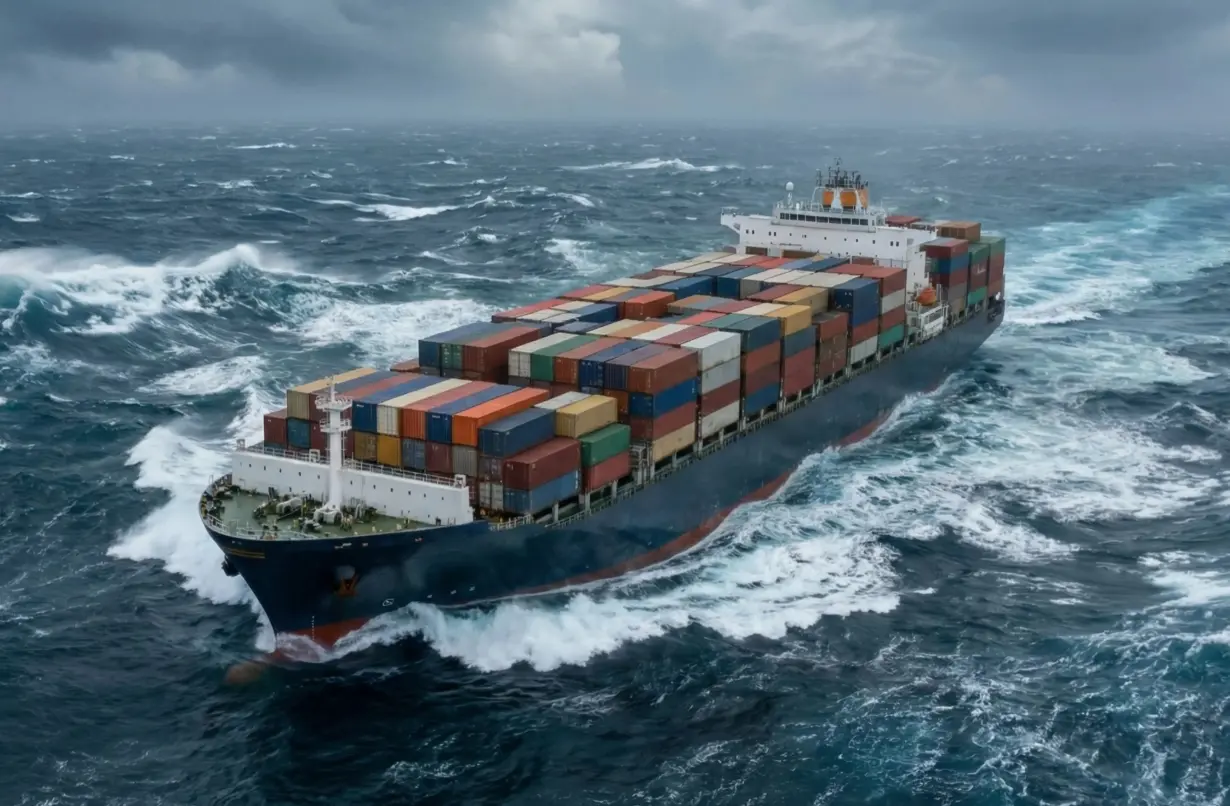
U.S. Vice President JD Vance said the conflict between the United States and Iran has moved past the opening phase and into the “middle game,” while Iranian officials on the same day set out six conditions for reopening the Strait of Hormuz.
According to Xinhua, citing a CNN report on Aug. 7 that referenced multiple people familiar with the matter, Chairman of the Joint Chiefs of Staff Dan Caine recently told senior White House officials including Vance, Secretary of State Marco Rubio, and CIA Director John Ratcliffe that he wants to find an “off-ramp” from the Iran war.
Vance says the conflict is no longer at the beginning
In an Aug. 8 interview with Fox News, Vance said the U.S.-Iran conflict “is not over,” but is “clearly no longer in the opening stage” and has entered the “middle stage.” He said Washington is using diplomatic, economic, and military means in parallel.
Vance said the U.S. is focused on increasing the amount of oil and natural gas moving through the Strait of Hormuz “as much as possible.” He also said Washington is watching whether Iran is willing to make the “necessary long-term changes” to build a better bilateral relationship, adding that “if Iran is unwilling, the U.S. will continue to apply pressure.”
He said the U.S. is also trying to build a maritime security mechanism, including mine-clearing work, and that it “needs commitments from Iran” not to fire on commercial vessels. Iran has continued to deny any direct talks, while Trump has insisted negotiations have resumed. Rubio said on Aug. 4 that the U.S. was taking part in talks between Oman and Iran.
Dan Caine privately pushes for an exit path
CNN’s report pointed to deeper concern inside the U.S. military. Caine’s central view, according to the report, is that airstrikes alone are unlikely to deliver all of the goals Trump has publicly announced. At the same time, any major escalation would come with obvious negative effects. “Caine is looking for an exit,” one source said.
The report said Caine is not alone in seeing the Iran war at a crossroads. He has spoken with several presidential advisers who hold similar views in an effort to align positions before a meeting called by Trump.
According to the report, a number of people inside the U.S. government and some analysts believe a decisive victory would require a large-scale ground deployment. That, however, could lead to heavy U.S. casualties and would run against Trump’s campaign promises. Caine said in congressional testimony that “air power has its limitations.” Commentary cited in the article said Trump’s repeated threats to expand strikes on Iranian energy facilities are unlikely to force Tehran to yield and would almost certainly trigger retaliatory attacks on the energy infrastructure of U.S. allies in the region.
Munitions strain becomes a public issue
Concerns over weapons inventories have also become more visible. Multiple sources said that since the fighting began, the U.S. military has used nearly four-fifths of its THAAD interceptor stockpile, around half of its Patriot interceptors, and close to half of its Tomahawk cruise missiles.
Trump denied a munitions shortage on Aug. 6 before later acknowledging that supplies of “certain types of ammunition” were “relatively tight.” The report said Caine has repeatedly warned Trump that stockpiles have fallen to a “dangerously low” level, and that the pressure on munitions has added to Trump’s frustration over Iran.
U.S. Central Command has broadly solicited “creative” and “unconventional” ideas internally to break the deadlock, a sign that Washington has fewer options left to push Iran into an agreement. The article also cited Niudanqin, referencing U.S. media reports, saying the aircraft carrier USS Lincoln has been deployed in the Middle East for more than eight months, with more than 5,000 personnel facing supply shortages and weak morale. Family members of some service members have called for the carrier to dock for resupply.
Iran lists six conditions for reopening Hormuz
On Aug. 8, according to Iran’s state news agency IRNA, Ali Akbar Zolghadr, secretary of Iran’s Supreme National Security Council, set out six conditions to the United States:
- Never threaten Iran;
- End all aggression against Iran and its allies;
- Lift the maritime blockade and withdraw military forces from Iran’s vicinity;
- Compensate Iran for all war losses;
- Lift all sanctions on Iran;
- Unconditionally release all frozen Iranian assets.
Zolghadr said: “These are the demands of the Iranian people, who have been shouting them in squares and streets for 160 days. The Supreme National Security Council will never retreat, whether in war or in negotiations.”
According to The Wall Street Journal, the council is dominated by hardliners and reports directly to Supreme Leader Ayatollah Ali Khamenei. The paper said the conditions do not represent the formal position of Iran’s negotiators and would plainly be unacceptable as a starting point for Washington, but they show that the Islamic Revolutionary Guard Corps is setting a high bar for any agreement.
The same report said Iranian diplomats have been more pragmatic in contacts with mediators, focusing mainly on lifting the maritime blockade, restoring sanctions waivers for oil exports, and unfreezing billions of dollars in Iranian funds.
An IRGC spokesperson said in state media on Aug. 8: “For us, the Strait of Hormuz is not merely an economic waterway, but a key component of geopolitical and strategic power.” According to Tasnim News Agency, the IRGC said reopening the strait is unrelated to the Iran-Oman talks and “depends on whether the United States fully accepts Iran’s conditions and stops interfering in regional negotiations.”
Temporary shipping route talks with Oman advance
While a full reopening remains distant, technical talks between Iran and Oman on temporary passage arrangements have moved forward. Iranian Foreign Minister Abbas Araghchi said on Aug. 8: “Given the technical complexities, we are identifying a temporary route, and I believe we are very close to reaching an agreement.”
He then drew a clear distinction, saying that does “not mean the Strait of Hormuz will reopen.” He said reopening would still depend on other conditions, including compensation by the United States for violating a memorandum of understanding.
The article said a ceasefire memorandum signed by Trump and Iran in June had sought to reopen the strait and create room for broader negotiations, but later collapsed after Iran continued attacking passing vessels.
According to The Wall Street Journal, a draft Iran-Oman agreement would establish a new traffic pattern in the strait, with inbound lanes closer to Iran and outbound lanes closer to Oman. Iran would exercise oversight over inbound vessels. Tehran is also insisting that any agreement bar U.S. Navy warships from transiting the strait, a move aimed at weakening the U.S. military presence that has lasted for decades in the Gulf. U.S. officials have told mediators they will not accept Iranian restrictions on traffic through the strait or any transit fees.
Ship attacks continue as talks stall again
The security situation remains tense. Abu Dhabi National Oil Company, or ADNOC, said three vessels were hit by missiles or drones over the past week, bringing the total number of ships struck since the war began to 15. The United Arab Emirates blamed the latest attack on Aug. 8 on the IRGC.
Last weekend, Trump halted a new round of military strikes that had been intended to break the deadlock, saying there had been progress in negotiations. Iranian President Masoud Pezeshkian also said that “now may be the right time” to push talks forward.
Still, mediators said negotiations have recently stalled over Iran’s demands for economic relief and Washington’s insistence on freedom of navigation. Zolghadr’s hardline remarks and the continued attacks on ships have added to concerns among mediators that hardliners are delaying approval of any deal.