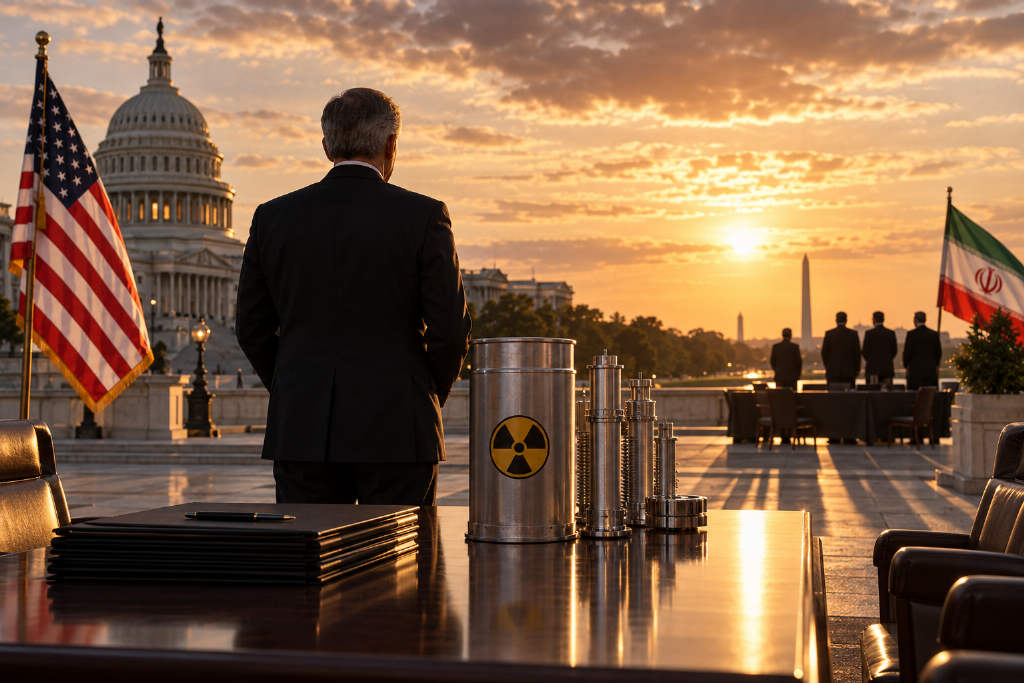
U.S. Vice President J.D. Vance said Iran must first make substantive reductions to its uranium enrichment capacity if it wants to end the seven-month U.S.-Iran war, arguing Washington will not trade concrete steps for verbal assurances. In remarks to Reuters, Vance questioned why Iran would need uranium enriched to 60% if it did not intend to pursue a nuclear weapon. He said the United States still prefers a diplomatic solution, but only under an "action for action" framework. The main dispute in current talks centers on sequencing: Iran wants a ceasefire, an end to the port blockade, the release of frozen assets, and changes to oil export sanctions before discussing nuclear issues, while the U.S. wants Tehran to take real nuclear restraint measures first and prevent the rebuilding of enrichment facilities damaged in the war. Vance also said proposals are still being exchanged through mediators including Qatar, though an earlier preliminary arrangement involving the reopening of the Strait of Hormuz and later talks on Iran’s nuclear program did not hold. He warned that if no agreement meeting U.S. demands is reached, Washington could expand military action after the November midterm elections.
U.S. Vice President J.D. Vance said Iran must first make "substantive" cuts to its uranium enrichment capacity if it wants to end the seven-month U.S.-Iran war, adding that Washington will not exchange concrete action for Tehran’s verbal promises.
Speaking to Reuters, Vance said, "If you do not want a nuclear weapon, why do you need uranium enriched to 60%?" He added that the United States remains willing to pursue a diplomatic solution, but said both sides must follow an "action for action" principle.
Dispute centers on the order of ceasefire and nuclear steps
According to the report, Washington’s core objective is to prevent Iran from obtaining a nuclear weapon and to stop other Middle Eastern countries from seeking nuclear capability as a result. The main disagreement in current U.S.-Iran talks is the sequencing of a ceasefire and nuclear issues.
Iran wants the United States to first implement a ceasefire, lift the port blockade, release frozen assets, and adjust oil export sanctions before nuclear talks move forward. The U.S., by contrast, wants Iran to take concrete nuclear restraint measures first and to prevent the rebuilding of enrichment facilities damaged during the war.
Proposals are still moving through mediators
Vance said the two sides have continued to exchange proposals through mediators including Qatar. He also said an earlier preliminary arrangement — restoring passage through the Strait of Hormuz and then discussing Iran’s nuclear program — did not hold.
Vance warned that if no agreement meeting U.S. demands is reached, the United States could expand military action after the November midterm elections.
This article was originally published by Bit.Fan. For more cryptocurrency news and market insights, visit www.bit.fan. Disclaimer:
The market information, project data, and third-party content displayed on this platform are for industry information sharing only and do not constitute any form of investment advice or return commitment.
Cryptocurrency trading carries high risks. Users should fully assess their risk tolerance and make independent decisions. All profits, losses, and legal responsibilities are borne by the users themselves.