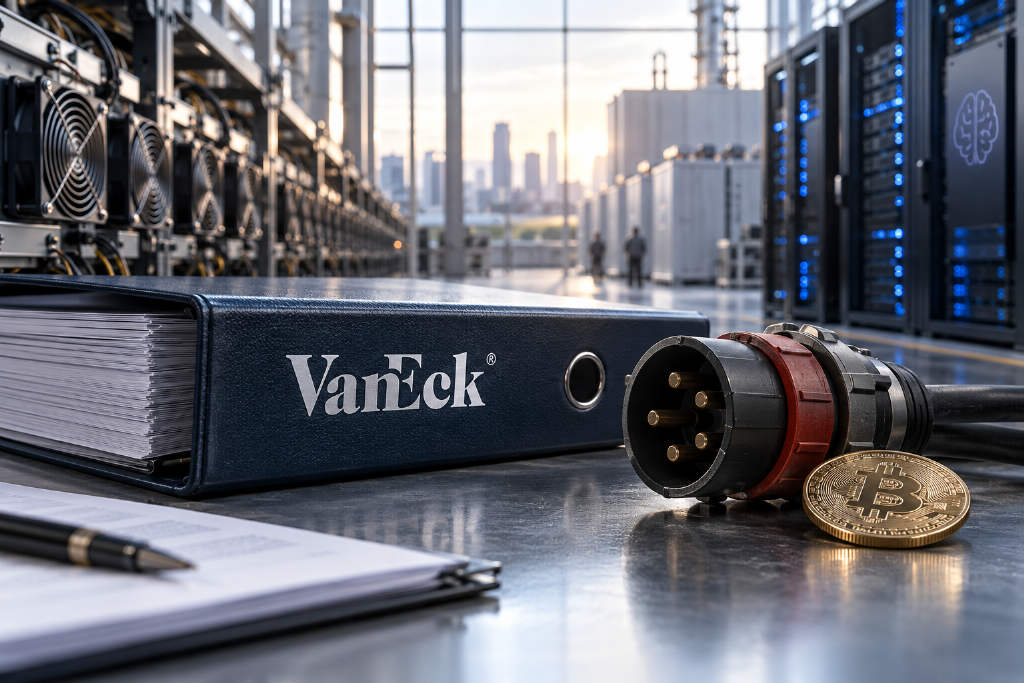
VanEck’s head of digital assets research, Matthew Sigel, said in an interview on Oct. 3 that the rapid buildout of the artificial intelligence industry is changing how the market values Bitcoin mining companies. In his view, miners are no longer judged only by hash rate and BTC production capacity. Their access to power, especially long-term contracted supply, is becoming more valuable as AI data centers compete for large amounts of stable electricity.
Sigel said some miners have signed 10- to 20-year power lease agreements with investment-grade counterparties, and that these contracts give them an element of optionality beyond straightforward Bitcoin exposure. He added that electricity is becoming a scarcer resource as AI expands, which could open new business paths for miners with low-cost, long-duration power arrangements, including a shift toward AI infrastructure.
On the market side, Sigel said Bitcoin is showing signs of seller fatigue and that investors should watch for opportunities after pullbacks. He also compared Bitcoin and gold in portfolio construction, arguing that Bitcoin could still gain a larger share over time. As for quantum computing, he described it as a long-term risk worth monitoring, but not one that currently justifies selling BTC. VanEck remains positive on long-term Bitcoin adoption and sees Bitcoin reaching a portion of gold’s market value as one possible valuation reference.
VanEck head of digital assets research Matthew Sigel said in an interview on Oct. 3 that Bitcoin mining companies are seeing new value emerge in their power resources and long-term electricity contracts as the artificial intelligence industry expands quickly.
AI demand is reshaping how mining companies are valued
Sigel said miners were previously viewed mainly through the lens of hash rate and their ability to produce BTC. That is starting to change as AI data centers seek large amounts of stable power, pushing the market to reassess the value of miners’ electricity contracts.
He said some mining companies have signed long-term power lease agreements lasting 10 to 20 years with investment-grade counterparties. Those contracts, he said, give miners an element of optionality that goes beyond simple BTC exposure.
In Sigel’s view, the growth of the AI industry is making electricity an increasingly scarce resource. Miners that have secured low-cost power over long periods could gain new commercial opportunities from that position, including a move into AI infrastructure.
Bitcoin market outlook and quantum computing risk
On Bitcoin itself, Sigel said the market is showing signs of seller fatigue and that investors should pay attention to opportunities after pullbacks.
He also compared the role of gold and Bitcoin in portfolios and said Bitcoin could continue to expand its market share over time.
On the potential impact of quantum computing on the Bitcoin network, Sigel said it is a long-term risk that deserves attention, but it is not enough at this stage to justify selling BTC.
VanEck remains constructive on the long-term adoption trend for Bitcoin and sees Bitcoin reaching a certain share of gold’s market capitalization as one reference point for future valuation.
This article was originally published by Bit.Fan. For more cryptocurrency news and market insights, visit www.bit.fan. Disclaimer:
The market information, project data, and third-party content displayed on this platform are for industry information sharing only and do not constitute any form of investment advice or return commitment.
Cryptocurrency trading carries high risks. Users should fully assess their risk tolerance and make independent decisions. All profits, losses, and legal responsibilities are borne by the users themselves.