

A Hong Kong startup has moved into focus after a medical AI paper made it into Nature Communications. The paper, which examined AI-assisted decision-making for kidney cancer surgery, put Vina Intelligence on the map as the first Chinese data-generation technology company and the fourth worldwide to publish in a major Nature journal with an impact factor above 10 in the past three years. The report says Chinese large-model companies previously published there include DeepSeek and ModelBest.
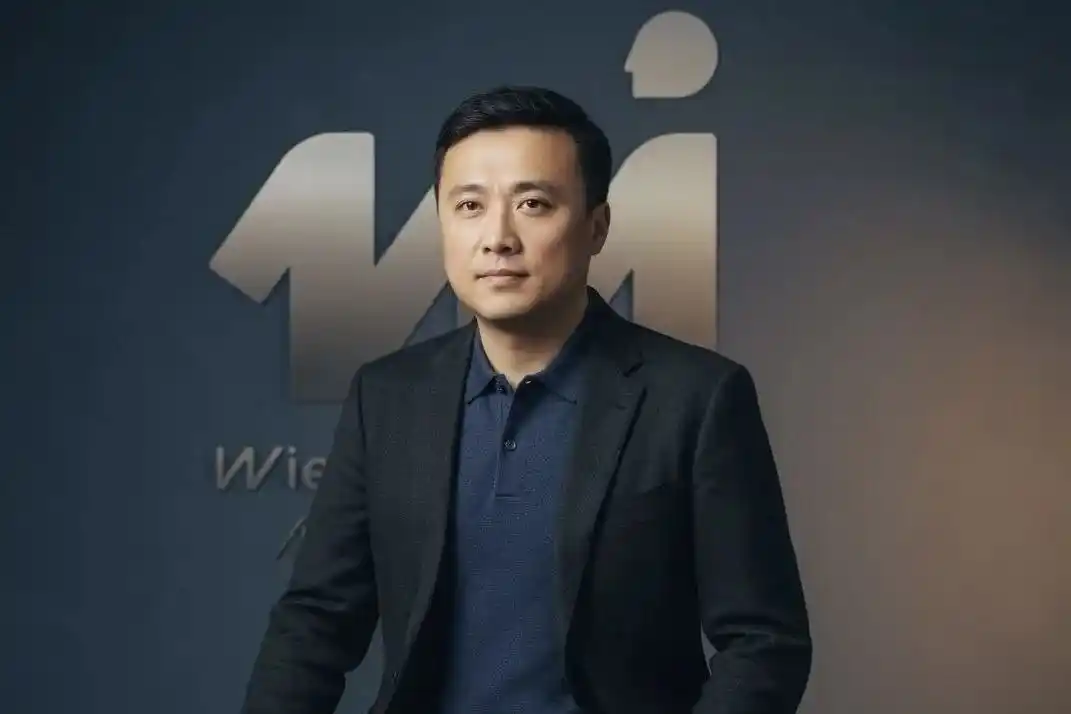
Behind the company is Professor Liu Qifeng. The report says Liu previously built the world’s first thousand-GPU H800 SuperPod cluster at the Hong Kong University of Science and Technology, pre-trained China’s third 100-billion-parameter large model, and managed more than $100 million in project R&D funding. He later turned his attention to a different problem: improving AI’s ability to ask questions so it could generate higher-quality reasoning and Q&A data. That became the basis for founding Vina Intelligence in Hong Kong.
A Nature Communications paper built around a clinical decision problem
The paper started with a concrete medical question. In early 2025, a relative of Liu’s was diagnosed with kidney cancer. The attending physician was Zhang Zhiling, director at Sun Yat-sen University Cancer Center. As with other kidney cancer surgeries, doctors faced a recurring dilemma: whether there could be a more quantitative and intelligent basis for choosing between partial nephrectomy and radical nephrectomy.
The report frames the issue this way: can AI predict complex choices in the real world? That led to a collaboration between medicine and AI in the hospital ward itself. Zhang handled the medical work and worked with multiple hospitals on data collection, while Vina Intelligence took charge of AI and data processing. The paper’s co-first author, Wang Yatian, is a PhD student at HKUST and an intern at Vina Intelligence, supervised jointly by Liu and Professor Luo Wenhan.
To address challenges from multi-source, heterogeneous and sparse data, the team proposed an RDPM model. It placed 3D imaging and clinical variables and indicators into the same prediction framework, then trained and validated the model on a cohort of 1,621 patients. In external multi-center testing, the AUC reached 0.788 to 0.873. According to the report, the paper predicted long-term renal function decline risk and offered quantifiable support for surgery decisions that have depended heavily on experience.
Liu sees that public test in a low-tolerance medical setting as tied to a broader point about AI. Large models are built on prediction, generating answers by predicting the next token, which makes them naturally good at answering. Vina Intelligence is pushing one step beyond that. Its focus is to make AI good at asking questions as well.
From HKUST professor to founder
The report quotes people around Liu as saying, “Others do what is hot. He makes what he does become hot.”
His background stretches back to 2001, when he entered the National Laboratory of Pattern Recognition at the Institute of Automation, Chinese Academy of Sciences, studying under academician Tan Tieniu. Tan won the 2022 King-Sun Fu Prize, described in the report as the highest international award in pattern recognition. Liu later worked as a researcher at Samsung Lab, a data scientist at Yahoo! Lab, director of Gamma AI Lab at Ping An Group, and AI director at the Hong Kong Institute of AI for Science of the Chinese Academy of Sciences. In 2018, he co-founded the Hong Kong Society of Artificial Intelligence and Robotics with academician Yang Qiang. In 2021, he wrote proposals for “Hong Kong Cloud Brain” and a “Hong Kong foundational large model” for the Hong Kong government, becoming an early advocate of AI supercomputing and model training in the city.
The report ties these stops to one theme: getting machines to discover patterns in complex information and turn them into judgments.
The turning point came in 2023 as ChatGPT surged in popularity. According to the report, with support from the Hong Kong government and university leadership, Liu joined six universities at HKUST and, together with academician Guo Yike, launched the Hong Kong Generative AI R&D Center. He led the construction of what the report calls the world’s first thousand-GPU H800 SuperPod AI supercomputing cluster. In 2024, the team completed pre-training and post-training for China’s third 100-billion-parameter mixture-of-experts, or MoE, large model.
That experience led him to what he saw as the next gap. As large models go deeper, they rely more heavily on high-quality data, especially reasoning and Q&A data across industries. In his view, making large models capable of high-quality questioning became the priority.
Vina Intelligence’s thesis: from token back to data
Liu breaks the development of large models into three stages. First comes “from data to model,” where internet-scale data is used for pre-training. Then comes “from model to token,” where models output tokens to generate content or carry out tasks. The next stage is “from token to data,” where large-model systems actively ask questions, reason step by step and check answers, producing reasoning and Q&A data.
That creates a feedback loop of “data → model → token → data,” which Liu argues is what gives AI the capacity for self-learning. The report quotes Qing dynasty scholar Liu Kai’s On Asking: “A true learner must love asking. Asking and learning advance together. Without learning, there is no doubt to pursue; without asking, there is no breadth of knowledge.”
Vina Intelligence was formally established in Hong Kong in July 2024. Its name comes from Norbert Wiener, the founder of cybernetics. Liu’s interest, the report says, is in the feedback loop at the center of cybernetics. The company’s mission is to help AI ask accurately and answer correctly, so the “data → model → token → data” loop can run at scale and Agentic AI can evolve on its own in specialized domains.
The company is trying to solve what the report describes as a counterintuitive problem. Large models are moving fast, yet deploying them in enterprise settings remains difficult. The main reason, in this telling, is low accuracy. The report compares it to exam prep: textbooks alone do not produce high scores if there is no workbook. In AI terms, domain documents look like textbooks, while reasoning and Q&A data act as the exercise set.
What Vina Intelligence is building, then, is that missing workbook for different industries. The goal is not only to let AI study the material, but also to practice with questions, which the report says could address bottlenecks around unreliable measurement, hard optimization and imprecise answers in today’s flood of agents.
cQrA and the break from traditional labeling
The report also pushes back on a popular view that question answering is already outdated and execution is all that matters. Liu argues execution depends on two pillars: the accuracy of a single agent in a professional domain and the coordination ability among multiple agents. Right now, he says, execution is still not reliable, in part because the accuracy rate of single-agent Q&A is often below 70%, short of any threshold for trustworthiness.
At Vina Intelligence, the “exercise set” is defined as cQrA: context, Question, reasoning, and Answer. Context is the task environment, Question is the question generated, reasoning is the thought process, and Answer is the checked answer. In practice, the model is expected to generate all three layers—question, reasoning, and answer—inside a specific industry context.
That marks a clear difference from traditional data labeling. The report says conventional labeling depends heavily on human labor and sometimes experts, which makes it expensive and hard to scale. It often supplies answers only, with little reasoning, while expert knowledge is consumed by repetitive work. Vina Intelligence wants Agentic AI to act as a tireless team of intelligent specialists that can automatically generate cQrA data with full chains of thought. More than cutting cost, the report says, the loop lets each round of generated data feed back into generation and evaluation models, lifting the next round’s precision and logic.
HK$50 million seed round led by Lenovo Capital
Vina Intelligence quickly drew attention from industry and investors. The report says the company completed a HK$50 million seed round shortly after launch, led by Lenovo Capital.
In the report’s description, Lenovo Capital has invested across the three core elements of AI: in compute through companies such as MetaX and Cambricon, in models through firms including Zhipu and StepFun, and now in data through Vina Intelligence. MetaX and Vina Intelligence are also said to be working closely together. The report frames that partnership this way: one has designed a computing platform for the coming “data → model → token → data” loop era, while the other is defining the workload for that future paradigm.
Testing commercialization across four industries
Commercial validation started with two blunt questions. First, would professional institutions pay for generated data without large-scale expert labeling? Second, could the method be replicated across industries?
To test that, Vina Intelligence chose not to follow the traditional B2B deep-tech approach of drilling into one industry first. Instead, it went for breadth. The company deliberately picked four sectors that appear unrelated but demand high accuracy: values safety, government affairs, insurance, and horse racing. According to the report, each has already landed a top-tier client.
Liu said in the interview, “We proved that a small team, without industry experts, and at low cost, can achieve cross-industry replication.” By his account, the company has now completed validation from “0 to 4,” and the next step is to scale from “1 to M x N,” meaning M industries and N top clients in each industry.
Liu’s view on the next phase of AI
Behind that strategy is a long-term view of data. Liu argues that part of the gap between China and the US in AI comes from how data has been valued. The report says data has long been treated as dirty, repetitive work, and data engineers are generally paid less than algorithm and model engineers.
That is changing. As data production moves from manual annotation toward reasoning, interaction and closed-loop feedback, large-model companies are putting more resources into the data layer. The report says there is now industry consensus that generating reasoning and interaction data sets the upper bound for model capability.
Liu goes one step further. In his view, the most important thing in the future is not the model, and not even data alone, but the larger loop itself. The real moat, he argues, is an autonomous learning loop where model training and data generation keep driving each other through coordination and feedback to produce better data over time.
He extends that same idea to embodied intelligence. Traditional training methods rely on imitation of human behavior. But, according to the report, real intelligence should look more like a baby learning to walk: repeated attempts, repeated falls, autonomous generation of action data, and constant optimization of decision models through looped feedback.
Liu says the closed-loop training logic from the digital world is now extending into the physical world. Whether agents are entering industries or robots are moving into real-world settings, both will require huge volumes of high-quality reasoning and interaction data generated in advance. In that setting, cQrA evolves into cTrA: context, Task, reasoning, and Action. The report presents that as both a new training fuel and a new evaluation yardstick.
For the longer-term vision, Liu puts it in one line: “Let us generate this world.”
The original article was published by the WeChat public account Touzijie (ID: pedaily2012) and written by Wang Lu.