
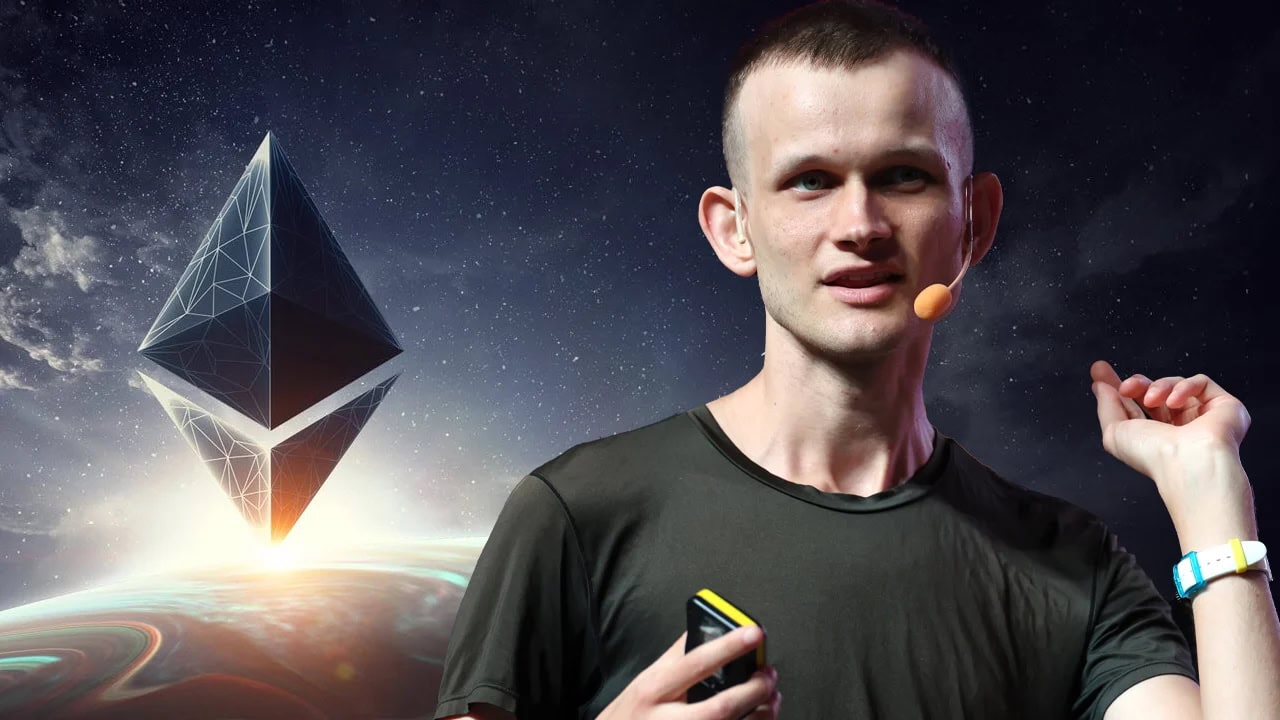
Ethereum co-founder Vitalik Buterin has published key points of a long-term roadmap draft, outlining a "Lean Ethereum" plan over the next 3 to 4 years that amounts to a near-total rebuild of the protocol. He described it as the network's third major iteration, comparable in scale to the Merge upgrade. Buterin stated that nearly every core module will be replaced.
Posting on social platform X over the weekend, Buterin clarified that Lean Ethereum is "not a single upgrade" but a multi-year engineering effort spanning 3 to 4 years, composed of a series of technical iterations. He called it the third major iteration in Ethereum's development and emphasized that its impact rivals that of the Merge. "Almost every major component of the protocol will be replaced," he added.
The update stems from a technical meeting Buterin and the Ethereum research team held in Berlin in late June. The latest draft was published on strawmap.org, originally proposed by Ethereum Foundation researcher Justin Drake in February, detailing a roadmap of seven major upgrades through 2029.
Core Architecture Overhaul: From Transaction Validation to Data Storage
Lean Ethereum covers a wide range of protocol layers, including transaction validation mechanisms, post-quantum cryptography, block finality, and full-chain state storage architecture. Buterin said these upgrades can be completed without breaking existing decentralized applications (dApps), citing the Merge as a precedent: "We've done it once with the Merge, and we can do it again."
He also noted that the upcoming Hegota upgrade, expected in 2026, might be the last hard fork before Lean Ethereum begins, after which all upgrades will enter a full reconstruction phase.
Storage Reform Is the Most Critical Piece
Among the many changes, Buterin highlighted the redesign of the data storage mechanism as the most transformative. Currently, Ethereum stores all state data (token balances, exchange contracts, etc.) in a single, high-maintenance format. The future plan reserves this expensive system for the most complex applications while creating a new, low-cost storage layer for simpler ones.
Buterin envisioned that by 2030, this new storage layer would have 50 times the capacity of the old one. Most tokens, NFTs, and DeFi applications could seamlessly migrate to this low-cost layer, while complex contracts like Uniswap could remain on the original system. Although migration would not be mandatory, Buterin said it would be cost-effective: redesigning token architecture for the new system could reduce transaction fees by over 10 times.
Quantum Security and Privacy Elevated in Priority
Buterin also stressed that quantum security has become a much higher priority. Concerns that future quantum computers could break existing blockchain cryptography have driven the roadmap to explicitly call for replacing all vulnerable components before the threat materializes. He said the immediate task is to find a quantum-resistant design for Blob, the data storage technique used by Layer 2 scaling solutions to reduce fees. This work has been quietly ongoing for months.
Privacy received similar attention. Buterin stated that privacy is no longer an afterthought but a primary design goal from the start. New features must incorporate private transaction logic at the design phase. Both topics are included in the roadmap's five "North Star" goals: building a quantum-resistant network for long-term security and integrating private Ether transfers directly into the base layer, eliminating reliance on third-party applications.
Core Execution Engine Rewrite: EVM to Be Replaced
Buterin revisited the long-term plan to transform the Ethereum Virtual Machine (EVM). He named RISC-V and leanISA as potential replacements, aiming to create a new execution engine that would turn the current EVM into a translation layer for backward compatibility. A leaner and more efficient engine would significantly reduce the computational cost of verifying transactions with mathematical proofs and natively embed privacy features into applications. However, Buterin admitted this is a long-term goal with much work ahead.
Buterin also said Ethereum's capacity will continue to grow over the next five years, with plans to increase the Gas limit during the "Glamsterdam" upgrade to boost overall throughput. Notably, the Glamsterdam upgrade was initially scheduled for early 2026 but has not yet gone live. In addition, the Ethereum Foundation recently restructured, cutting around 20% of its staff (about 54 people), signaling internal alignment with the broader overhaul.