
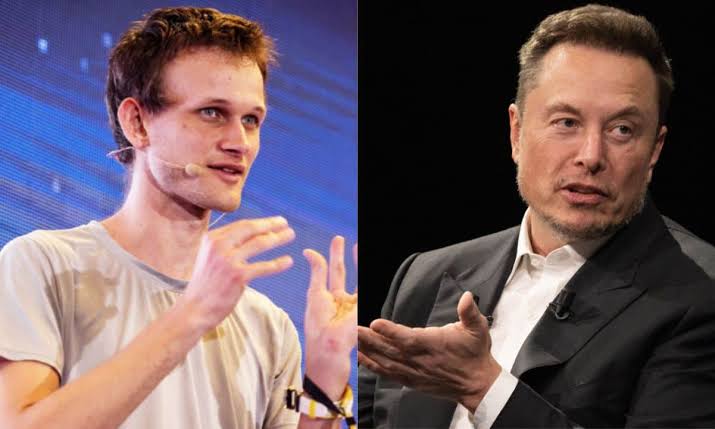
Ethereum co-founder Vitalik Buterin said on July 11 that X should be redesigned into a global AI governance coordination platform, and he directed the idea publicly to Elon Musk. His argument was simple: decisions on AI development, risk limits, and public policy should not be shaped only by governments, major AI labs, multinational companies, and top think tanks.

The post quickly drew attention across crypto and AI circles. Buterin did not frame the issue around a single regulator. He pointed instead to open platforms, public debate, and verifiable tools as a way to give more people influence over decisions that could define AI’s future.
X as infrastructure for global coordination
Buterin said current AI governance discussions are heavily concentrated in the hands of state actors, large research institutions, global corporations, and policy elites, leaving ordinary people with limited room to participate in a meaningful way.
He argued that X already has several traits that make it relevant to governance: real-time global discussion, Community Notes, public argument, and broad information distribution. If the platform built stronger coordination functions on top of those features, he said, it could become infrastructure for linking people who hold very different positions.
For Musk, the idea also lines up with his long-stated ambition to build X into an everything app and a central public square for information.
Pre-agreed triggers for slowing or pausing AI
The backdrop to Buterin’s post is a widening split between AI safety advocates and accelerationists.
One side believes superintelligence could emerge around 2040 and says humanity needs strong braking mechanisms in place well before that point. The other treats AI as a continuation of ordinary technological progress and argues that excessive fear could hold back innovation.
Buterin said he remains uncertain about the exact AI timeline, but he added that society cannot wait until risks fully break out before trying to coordinate a response. He proposed what he called pre-agreed trigger conditions, so that once specific warning signals appear, the global community could activate mechanisms to slow or pause AI.
The scenarios he listed included a super-pandemic, unemployment above 25%, and the appearance of large-scale autonomous lethal drones. The core idea is to get people with different views to agree in advance on a minimum set of red lines, reducing the risk of future crises marked by conflicting interpretations and mutual distrust.
d/acc and the role of crypto tools
Buterin’s long-running framework of defensive accelerationism, or d/acc, also returned to the center of the discussion. The framework argues for prioritizing investment and technical development in fields that improve social resilience, including pandemic preparedness, public knowledge verification, secure open-source hardware, formal verification, cryptography, privacy protection, and decentralized infrastructure.
In this framing, those technologies can strengthen the defensive and coordination capacity of ordinary people even if AI advances quickly.
If X were to move toward an AI governance role, crypto infrastructure could become part of that design. Prediction markets could be used to track the probability of AI-related risk events. On-chain governance could create transparent records of community decisions. Zero-knowledge proofs could help verify credible information while preserving privacy.
Buterin has previously praised Community Notes and prediction markets, describing them as important social knowledge technologies of this generation. In this latest appeal to Musk, he effectively placed those tools inside a broader AI governance model.
X, Grok, and crypto governance in the same conversation
The idea could also reinforce the positioning of Musk’s xAI and Grok. The article noted that Musk has long framed Grok as an AI tool aimed at truth-seeking and combating misinformation. If X were designed as a more transparent and verifiable public coordination platform, Grok could serve as an interface for information organization, debate support, and governance discussion.
At the same time, Buterin has warned that X could turn into a tool for coordinated attacks and hate mobilization if it is not designed well. In that sense, the platform’s own governance design would determine whether this vision is viable.
For the crypto industry, the proposal pushes Web3 technology deeper into the center of AI governance discussions. If AI safety, public decision-making, prediction markets, on-chain identity, and zero-knowledge tools become more tightly integrated, the related infrastructure could extend beyond finance and trading into the machinery of digital social coordination.
What began as a public suggestion to Musk about X’s product direction also carried a broader message: principles long associated with Ethereum, including open participation, decentralized verification, and resistance to concentrated power, belong inside the global argument over how AI should be governed.