

Q2 13F filings showed institutional crypto holdings rising even as bitcoin fell
August 14 was the SEC’s deadline for institutional investors to submit their Q2 13F filings, and once the documents were released in bulk, Wall Street’s crypto holdings were back in focus.
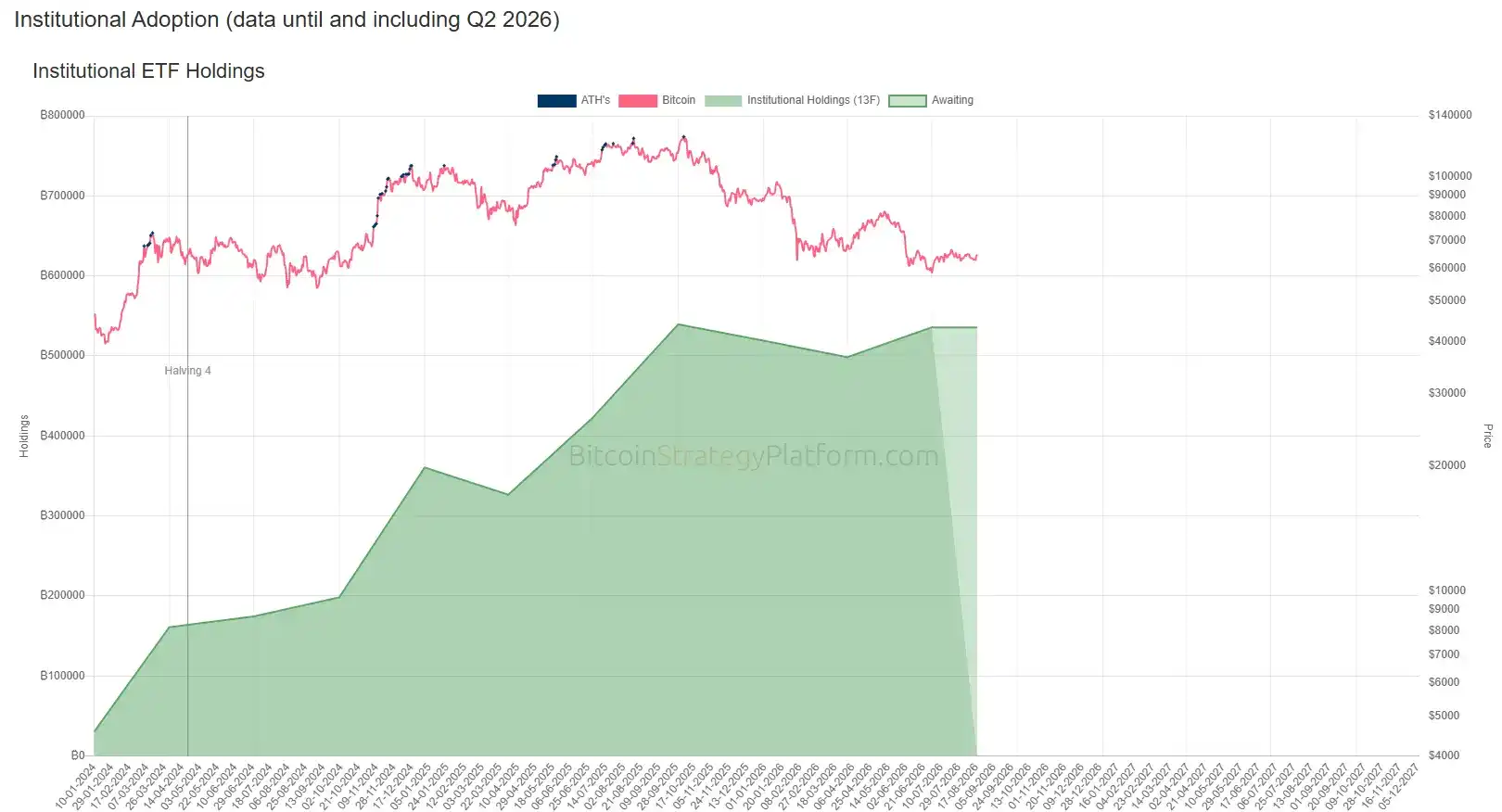
This quarter, institutional positioning diverged sharply from price action. Bitcoin fell about 14.2%, yet reported institutional crypto holdings increased.
Bitcoin Strategy’s estimate based on 13F data showed institutional BTC holdings rising from about 498,000 coins to 536,000, up 7.5% quarter over quarter. Over the same period, total ETF holdings fell from about 1.297 million coins to 1.211 million.
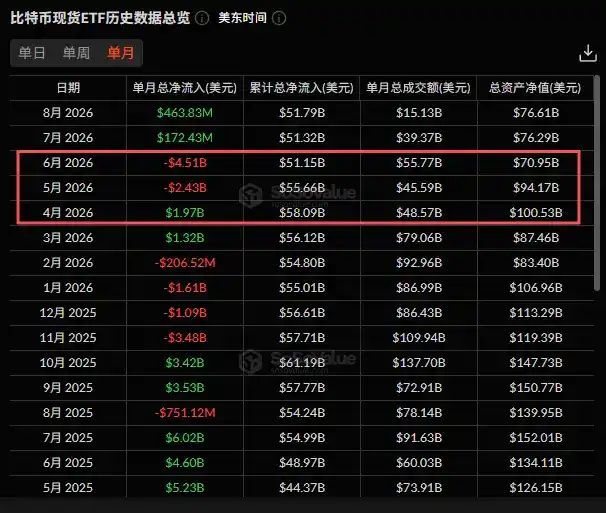
SoSoValue data showed U.S. spot bitcoin ETFs remained in net redemption mode throughout the quarter, with roughly $2.4 billion of outflows in May and $4.5 billion in June. June marked the worst monthly result since launch. Spot ether ETFs also posted about $700 million in net outflows in the quarter.
Capital kept concentrating in the biggest funds
The number of institutions reporting bitcoin holdings fell from about 2,000 to about 1,900.
Bloomberg data showed that as of August 13, IBIT alone had about 1,500 institutional holders and roughly $47.35 billion in net assets.
Banks made ETH the clearer winner
ChainCatcher noted earlier, in its Q1 holdings review, that institutions were becoming more interested in ether allocation, with Jane Street, Wells Fargo and JPMorgan adding ETH ETFs during periods of selling. In Q2, that pattern became more visible among banks.
According to DWF Labs, measured by the amount of crypto assets represented, Morgan Stanley’s BTC exposure rose 3.7% quarter over quarter, while ETH exposure rose 18.6%. JPMorgan’s BTC exposure increased 12.2%, while ETH exposure climbed 67.3%. In both cases, ETH growth was far stronger than BTC growth.
The position changes were even clearer at the holdings level. Morgan Stanley increased ETHA by about 202% to 4.6 million shares. JPMorgan lifted ETHA by about 338% to nearly 1.17 million shares. Bank of America raised ETHA from about 67,500 shares to about 1.98 million shares, roughly 29 times the previous level.
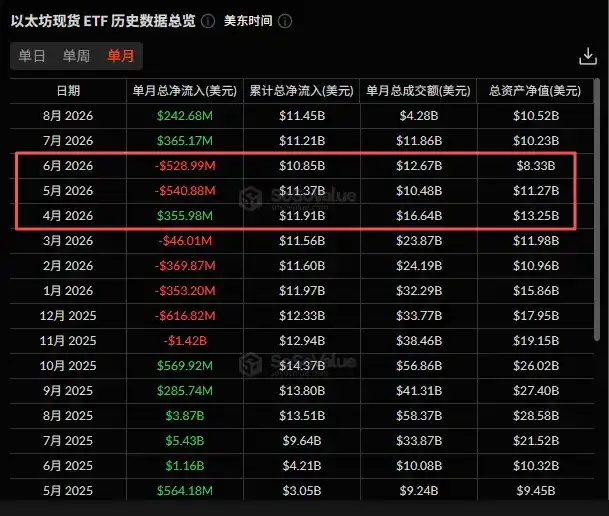
Still, spot ether ETFs as a group were net sellers in Q2. SoSoValue data showed inflows of about $356 million in April, followed by outflows of about $541 million in May and $529 million in June, for a quarterly net outflow of about $714 million.
Jane Street bought back IBIT while hedge funds leaned harder on options
In the previous quarter, Jane Street had cut its IBIT position by about 71%, prompting market speculation that it was turning bearish on bitcoin. In Q2, it reversed course and added about 24.9 million IBIT shares, a quarter-over-quarter increase of about 324%, making it one of the largest buyers in the period. Its spot bitcoin ETF exposure now stands at about $990 million, including about $828 million in IBIT.
As an authorized participant and market maker, its quarter-end inventory reflects subscriptions, redemptions and hedging needs. A large spot increase does not necessarily signal a directional bet.
13F filings only report quarter-end spot long positions. Once options are included, several firms look very different.
Brevan Howard cut its spot IBIT holdings from 24.3 million shares to 7.21 million, a reduction of about 70.4%. At the same time, it held call options equivalent to about 7.23 million IBIT shares and put options equivalent to about 5.27 million shares.
Graham Capital reduced spot IBIT from about 926,000 shares to 259,000, a drop of about 72%, while holding put options tied to about 1.74 million IBIT shares, valued at about $57.94 million. Millennium, the large multi-strategy firm, cut spot IBIT from about 19.29 million shares to 9.69 million, down about 49.8%.
UBS increased direct IBIT ownership by about 12% to 407,890 shares, but its call options equivalent to IBIT shares surged from 80,000 to about 1.95 million shares, more than 24 times higher. Its put exposure fell by about 53%.
Paul Tudor Jones’ Tudor fund looked more conflicted. It raised spot IBIT by almost 20% to 688,500 shares, ending nearly a year of reductions, but cut call options linked to IBIT by about 85%, from 998,000 shares to about 148,000.
Crypto equities split wider apart
Crypto-linked stocks are becoming a necessary allocation for many institutions, and Strategy is one of the most representative names.
In Q2, Strategy cracked the long-held “never sell bitcoin” story. At the end of May, it sold 32 bitcoins for the first time to pay preferred dividends, and on June 29 its board authorized a framework to monetize up to $1.25 billion in bitcoin. Since the 13F cutoff was June 30, the larger post-quarter sales were not captured, but the narrative around bitcoin-proxy stocks had already changed.
Bank of America cut Strategy from about 3.97 million shares to about 1.18 million, a reduction of about 70%. Renaissance bought 422,900 new shares, lifting its position to 2.55 million shares worth about $242 million. BlackRock also increased its MSTR stake to about 19.39 million shares, worth about $1.69 billion, although that move may have been driven more by passive index exposure than by active conviction.
Renaissance Technologies bought 422,881 Strategy shares, bringing its total to 2.55 million shares and its stake value to $242.3 million, up 20%. Royal Bank of Canada added 46,000 Strategy shares and now holds about 385,000 shares worth about $37.2 million, with its position up 13.5%.
Circle was another name that drew shared interest. Morgan Stanley lifted its stake from about 1.46 million shares to about 8.32 million, while ARK also added a modest 1% to 4.56 million shares. For Coinbase, the two firms moved in opposite directions: Morgan Stanley sold about 550,000 shares, while ARK added about 5.8% to 2.51 million shares and cut Robinhood by about 12.8%.
ARK’s Circle weight fell from about 3.34% in Q1 to 1.85%, but share count actually rose slightly. The lower weight was mainly dilution from a larger portfolio after a new SpaceX position.
After Morgan Stanley’s large Q2 addition, it cut its CRCL target price from $106 to $38 in early August, saying shrinking USDC balances exposed Circle’s sensitivity to reserve income and implied a shift toward lower-margin transaction revenue.
Fresh entries appeared, while some large holders paused
In Q2, Spain’s Santander disclosed bitcoin and ether ETF holdings for the first time, although the positions were tiny relative to its more than $10 billion U.S. equity book. UBS also kept building its crypto exposure quarter by quarter, and this time added about $1.5 million in mining company American Bitcoin.
Morgan Stanley also opened new positions in the Grayscale Solana Staking ETF and the Fidelity Solana Fund, with market values of about $4.25 million and $2.26 million respectively. JPMorgan opened a new position in the Bitwise Solana Staking ETF and bought back XRP after liquidating it in Q1, building small stakes through Bitwise and Grayscale XRP funds.
Advisory firm Edelman Financial Engines disclosed about $34 million in spot bitcoin ETF exposure, mainly in BlackRock’s iShares Bitcoin Trust and Grayscale products. The position is still small within its broader portfolio, but it is larger than its roughly $25 million stake in Amazon.
Abu Dhabi’s Mubadala and the Abu Dhabi Investment Council kept about 14.7219 million and 8.2187 million IBIT shares unchanged, worth a combined $764 million. Their multi-quarter pace of additions paused in Q2.
Harvard University’s endowment held about 3.0446 million IBIT shares worth about $101.4 million, unchanged from the end of Q1 and ending two straight quarters of reductions. Its holdings in iShares Gold Trust and SPDR Gold Trust totaled about $171.2 million, now exceeding its bitcoin exposure.
ETH flows improved again in the third quarter
Looking across the quarter’s institutional moves, several signals are taking shape: ETF fund flows are increasingly diverging from institutional behavior, crypto’s institutionalization is deepening, and institutions are becoming more divided on crypto-linked equities, especially after Strategy started selling bitcoin. Ether has also become a clearer buy on the institutional side, and third-quarter flows are already reflecting that shift.
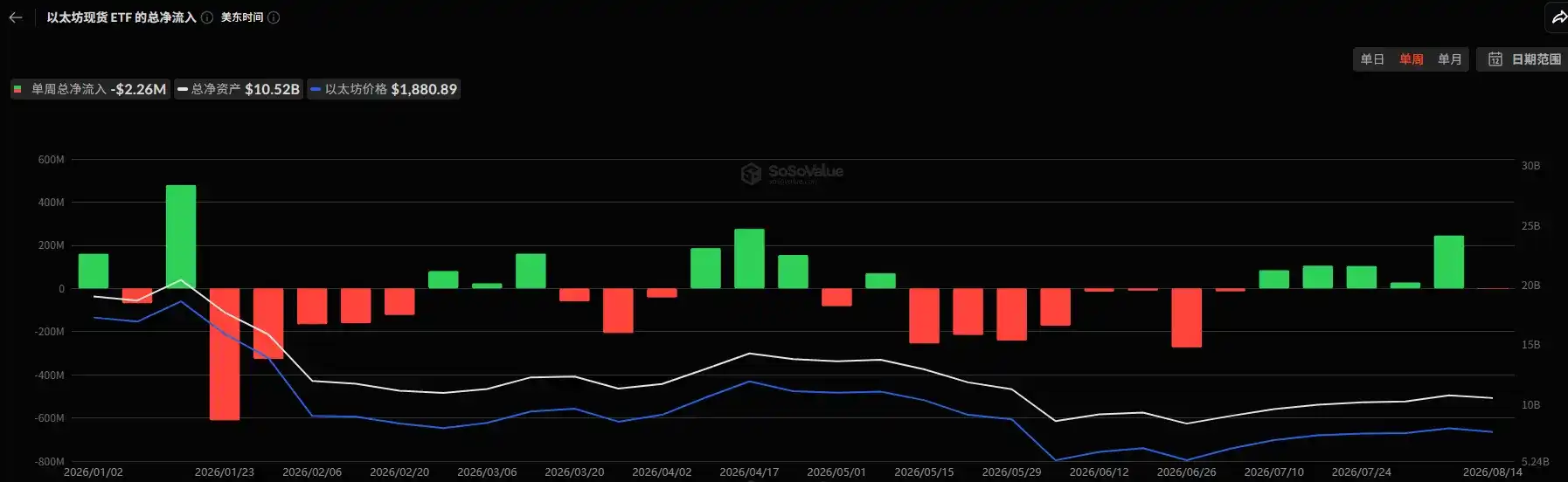
SoSoValue data showed ether ETFs posted about $365 million of net inflows in July and about $243 million so far in August, taking the combined two-month total above $600 million. ETH has rebounded from about $1,570 at the end of June to around $1,900 now, up roughly 20%.
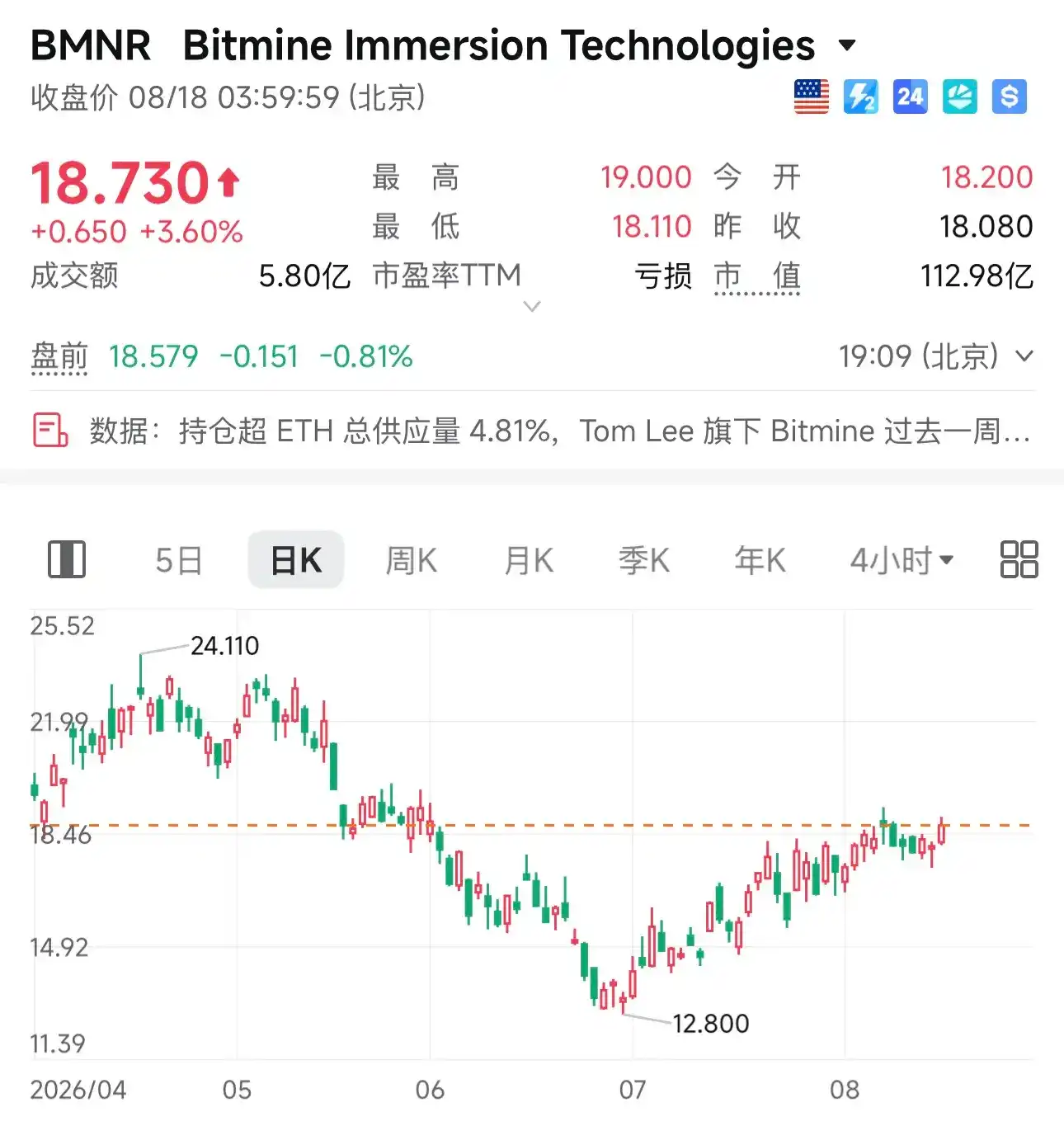
Even BitMine, an ether treasury company, has strengthened alongside it, with its stock rising from about $13.3 at the end of June to nearly $19, up about 40%.