
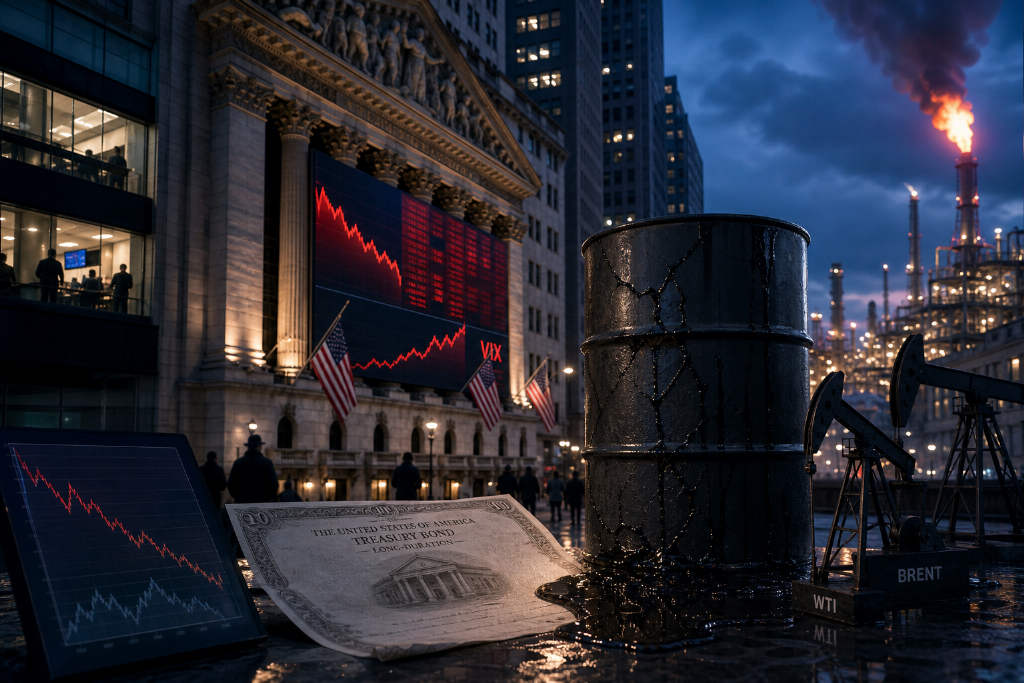
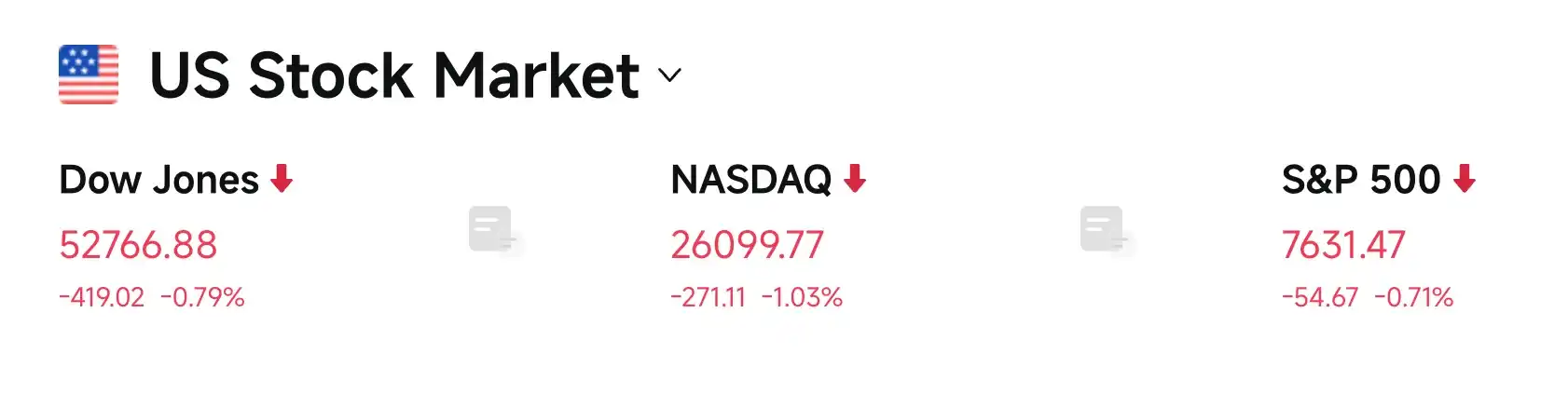
Wall Street did not get a positive start to September. Escalating tensions in the Middle East, a spike in oil prices and a fresh selloff in long-dated sovereign bonds hit markets on the first trading day of the month. The Dow Jones Industrial Average fell 0.79%, the S&P 500 lost 0.71% and the Nasdaq Composite dropped 1.03%. The VIX jumped 9.52% to 16.34, with sentiment shifting quickly from greed toward fear.

Scott Rubner, chief equity and equity derivatives strategist at Citadel Securities, warned that U.S. stocks had entered a “tactical downside window” for September and said investors should reduce exposure on strength and buy protection at lower levels. He pointed to fading earnings momentum, seasonally weaker retail and buyback demand, a large options expiry calendar and still-low hedging costs, arguing that the risk-reward profile no longer favored chasing the rally.
Middle East escalation sent oil sharply higher
At midday U.S. Eastern Time on Sept. 1, U.S. forces struck targets tied to Iran’s Islamic Revolutionary Guard Corps. Trump said the targets included Iranian radar systems and warned that if Iran retaliated, the United States would respond with “greater force.” Iran, for its part, said it would deliver a devastating blow to U.S. enemies and launched heavy ballistic missiles toward a U.S. military camp on the Gulf of Aqaba coast in Jordan.
Oil markets moved fast. October WTI crude settled up 5.20% at $90.22 a barrel and traded above $90.60 intraday, marking the first break above $90 since late July. Brent crude rose 4.6% to $94.65 and topped $96 during the session.
Refined products moved even more violently. Diesel prices climbed to their highest level in more than four years. The spread between U.S. heating oil futures and crude rose above $106 a barrel, a record high, while retail diesel reached $5.63 a gallon, close to the all-time peak of $5.80 set during the Russia-Ukraine war in 2022.
A senior commodities strategist at Saxo Bank said the renewed hostilities had raised fears of a prolonged disruption to energy flows through the Strait of Hormuz. Rich Privorotsky, Goldman Sachs’ head of first-order derivatives trading, said diesel was the real core of the move. Since February, global refined-product wholesale prices have risen by $40 a barrel, with diesel contributing more than 40% of that increase. Global refined-product exports are down 6 million barrels a day from a year earlier, a 25% decline, and the Persian Gulf and Russia account for 75% of that drop.
Against that backdrop, Trump gathered executives from more than a dozen refiners at the White House on Tuesday, including Marathon Petroleum, Chevron and Phillips 66, urging them to raise domestic gasoline and diesel production before the November midterm elections to help contain fuel prices. Refining executives responded that federal biofuel blending quota policy was itself pushing end-user prices higher.
Long-dated yields rose again, the dollar firmed and gold slipped below $4,300
Long-end yields moved higher across major markets. The U.S. 10-year Treasury yield climbed to about 4.80%, up roughly 5 basis points on the day and marking a high for Trump’s current term. The 2-year yield rose to about 4.40%, up around 6 basis points. The 30-year Treasury yield touched 5.29% intraday, returning to the highs seen before the Aug. 19 intervention referenced in the report.
Moves outside the U.S. were broad-based. Japan’s 10-year government bond yield broke above 3% for the first time in 30 years. Germany’s 10-year yield rose to 3.36%, France’s to 4.21% and the U.K. 30-year yield to 5.869%, all multi-year highs. The Bloomberg Global Government Bond Index yield rose for a fourth straight day to 3.72%, back to levels last seen in mid-2008.
The report said the support from the Treasury Department’s expanded buyback program was fading. A portfolio manager at J.P. Morgan Asset Management said the buybacks could be overwhelmed by the wave of supply tied to AI-related buildout. Natixis’ head of North America U.S. rates strategy said long-end yields would remain elevated until welfare reform changed the fiscal deficit picture, describing buybacks as only a drop in the bucket. Bank of America’s head of U.S. rates strategy said the market had repeatedly failed to hold any meaningful rally in rates, as investors continued to demand higher compensation for extending duration.
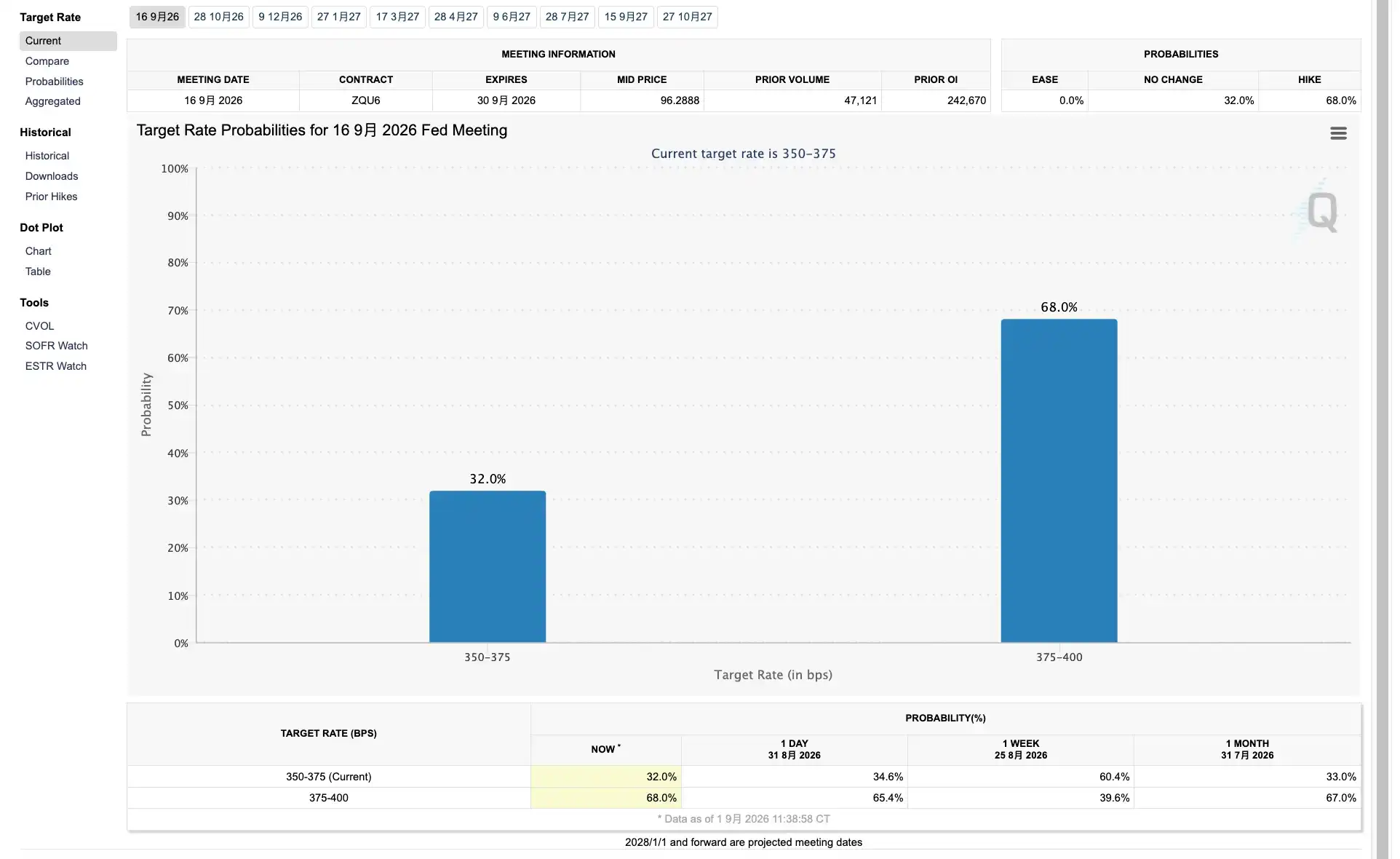
Federal Reserve Governor Michael Barr said the central bank should be prepared to raise rates if inflation does not slow clearly. CME data showed the market-implied probability of a September rate hike had risen to about 68%, up from less than 40% a week earlier. Nick Timiraos, often referred to as the Fed’s mouthpiece, wrote that persistently rising energy prices were testing the Fed’s earlier view that the inflation shock would be temporary.
The U.S. dollar index rose 0.27% to around 99.8, returning to the level seen before the intervention cited in the article. Spot gold briefly fell below $4,300, and silver also dropped below $64 at one point. Idanna Appio, a portfolio manager at First Eagle, said the divergence between gold and real yields had lasted for some time and would eventually converge. Jeff Hirsch, founder of the Stock Trader’s Almanac, said gold has historically tended to enter a seasonally strong period in autumn and year-end after stabilizing in mid-July, but the key driver in the latest session was plainly real yields rather than seasonality.
Rates pressure hit long-duration AI trades while energy led the market
Higher yields weighed on long-duration assets. The software ETF IGV fell more than 3.46%, while the semiconductor ETF SOXX dropped more than 2.10% to a one-month low. Goldman Sachs’ broad U.S. AI basket lost 1.92%, compared with a 0.36% decline for the market excluding AI, showing a wider underperformance gap for AI-linked names.
Energy was the only clearly positive sector in the S&P 500, with the energy ETF up 1.27%. Transport shares were hit by rising diesel costs, sending the Dow Jones Transportation Average down 2.51% to its lowest level since May. The Russell 2000 fell 1.23% for a third straight session, and a high-beta momentum basket broke below its July low.
That said, the report did not describe AI demand as broken. Dell surged more than 8% in after-hours trading after falling 6.87% in the regular session. The company reported second-quarter revenue of $47 billion, up 58% year over year, and adjusted earnings per share of $7.04, far above expectations. It also raised full-year revenue guidance to $192 billion. AI server orders reached $60.9 billion, and backlog stood at $95 billion.
Anthropic also launched a new model, Fable 5.1. According to the report, it led in eight benchmark tests, doubled its scientific research score and cut cache-read pricing and workload costs sharply to intensify competition on application-layer AI economics. The market viewed that move as part of Anthropic’s customer grab ahead of a planned IPO at a $2 trillion valuation. Goldman Sachs said hyperscalers were still spending aggressively despite the rate shock, that Agentic AI could become a new catalyst and that DRAM and NAND were likely to remain in short supply from 2026 through 2028.
Company moves across software, chips, transport and healthcare
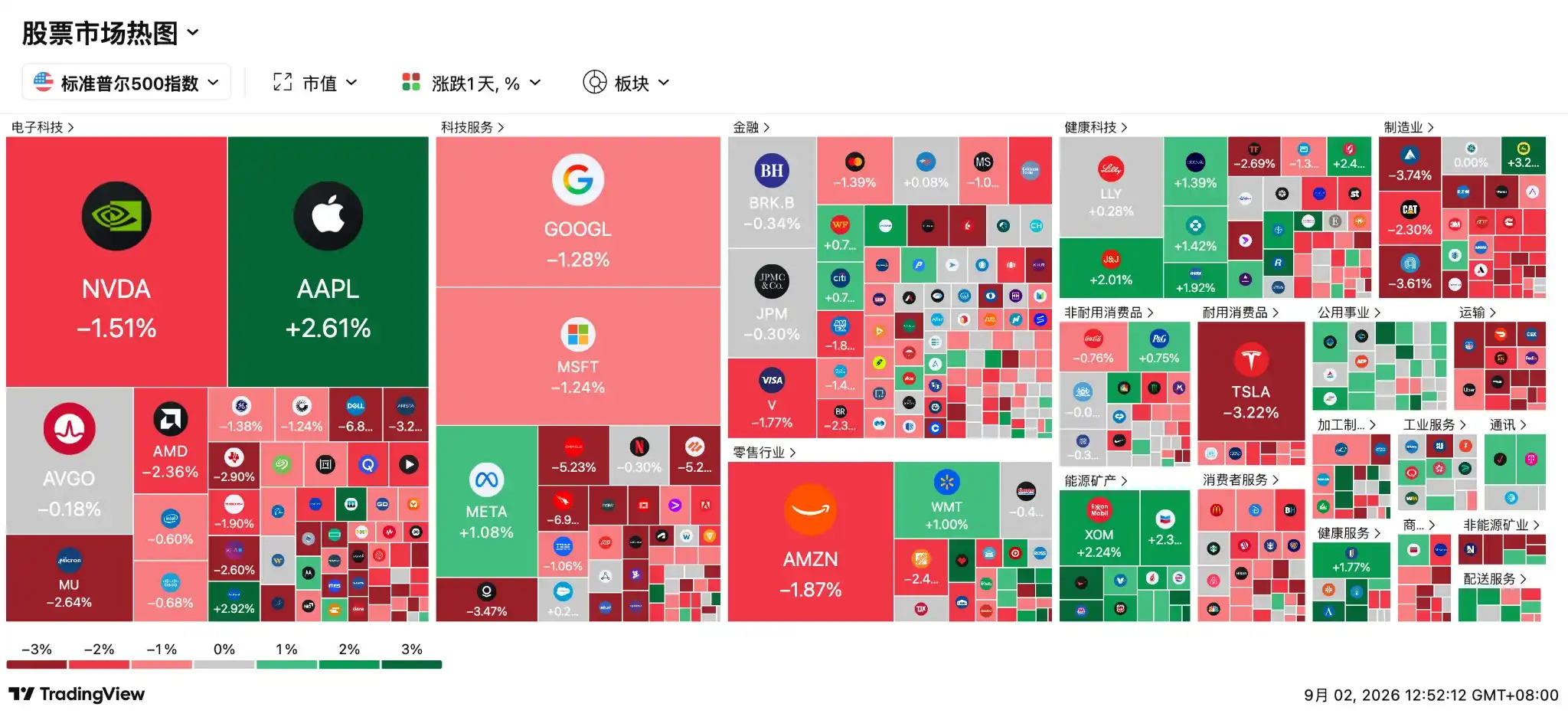
Oracle fell 5.27% as investors focused on balance-sheet pressure and capex expectations. The report said the company would take on $43 billion in debt in fiscal 2026, spend $55.66 billion in capital expenditure and post negative free cash flow of $23.7 billion.
Software stocks were broadly weak. IGV fell 3.46%, ServiceNow dropped 3.44%, Snowflake lost 3.51%, Palantir declined 3.47% and Adobe fell 2.29%.
NVIDIA closed down 1.51% as higher Treasury yields pressured richly valued AI chip names. Analyst Ming-Chi Kuo said NVIDIA had restarted its Rubin CPX AI inference prefill chip, with mass production expected in early 2027. The chip is expected to use 168GB of HBM4 memory and target prefill and KV cache generation for long-context inference.
Micron fell 2.64%. Alongside sector weakness, pressure also came from a strike threat by Micron’s labor union in Taiwan, the company’s largest manufacturing base globally. The union said more than 80% of members supported a strike, while Micron said this year’s performance bonus would be a record high, with details due in October.
Apple rose 2.61% on the first trading day after John Ternus succeeded Tim Cook as the company’s eighth CEO. Investors did not discount the leadership transition. The stock instead drew a premium after Ternus said in his first letter to employees that next week’s iPhone launch would be “extraordinary.”
Amazon dropped 1.87% after the U.S. Federal Trade Commission and 22 states sued the company, alleging it manipulated ad auctions and overcharged by more than $20 billion across 1.2 million advertisers.
Tesla fell 3.22%. The company is set to hold its Cybercab event in Austin, Texas, on Sept. 3. Investors remain focused on whether a dedicated Robotaxi vehicle can open a real commercialization path, though the day’s higher-rate backdrop and weaker risk appetite overshadowed that product catalyst.
Palo Alto Networks fell 5.24% despite issuing guidance above expectations. The company forecast fiscal 2027 adjusted EPS of $4.16 to $4.19, above the market estimate of $4.11. It also projected next-generation security ARR of $11.075 billion to $11.175 billion, up 22% to 23% year over year. CEO Nikesh Arora said progress in AI was pushing cybersecurity to the top of CIO priority lists.
The healthcare ETF rose 0.66%. Moderna surged 9.93% after Bank of America raised its price target to $170 from $40. Novavax gained 8.00%, and Novartis rose 6.04% on positive late-stage clinical data for an oral multiple sclerosis treatment.
GoPro jumped 40.38% and was up nearly 90% over two days. The company agreed to sell itself to optical communications company Starman for $285 million, shifting from action cameras into AI data center optical transceivers as well as government, defense, aerospace and robotics markets. The report added that YouTube personality Mark Fischbach reportedly owns an 8.5% stake, making him the largest shareholder and drawing more retail attention.
Energy shares advanced broadly. Exxon Mobil rose 2.25%, Chevron gained 2.38% and ConocoPhillips added 2.79%. With oil above $90, investors marked up profit expectations for upstream producers, and the energy ETF rose 1.27%.
Transport shares fell as diesel prices drove logistics costs higher. The Dow Jones Transportation Average lost 2.51% and the transport ETF dropped 2.63%. FedEx fell 1.91% and UPS slipped 0.80%.
Dell closed down 6.87% before rallying more than 8% after hours. The stock fell with AI hardware names during the session, then reversed sharply after earnings beat by a wide margin. The company raised full-year revenue guidance to $192 billion and reported strong AI server orders and backlog.
Credo Technology fell nearly 9% and dropped more than 10% after hours. First-quarter revenue came in at $479 million, up 114.7% from a year earlier, while adjusted EPS reached $1.20, both ahead of expectations. The company said fiscal 2027 optical revenue would exceed $600 million and described AEC as its largest business, with relationships now in place with five hyperscale cloud customers. Even so, a slight sequential decline in gross margin and pressure on sector valuations triggered profit-taking. Optical names broadly fell, with Lumentum down 5.01%, AAOI off nearly 4%, and Coherent and Corning each down more than 2%.
What markets are watching next
Wednesday, Sept. 2
- 22:30 U.S. EIA crude oil inventories and Strategic Petroleum Reserve data. The report said the significance of the data had increased because of the escalating U.S.-Iran conflict and higher Strait of Hormuz risk. If commercial inventories fall and expectations for SPR restocking strengthen, WTI and Brent could keep finding support. If inventories unexpectedly build, part of the risk premium in oil could unwind.
- SEMICON Taiwan runs through Sept. 4. The event focuses on advanced packaging, HBM, semiconductor equipment and materials. Any signal on capacity expansion or technology breakthroughs could benefit advanced packaging, memory, equipment, materials and the TSMC supply chain.
Thursday, Sept. 3
- 02:00 The Federal Reserve will release the Beige Book. If the report shows wages and services inflation remain sticky, expectations for a September rate hike could strengthen. If employment and consumption cool clearly, markets may again price in a pause.
- Broadcom reports after the close, along with Hewlett Packard Enterprise, Snowflake, NetApp, FuelCell Energy, C3.ai and ChargePoint. The report described Broadcom as the key AI hardware event of the week, with investors focused on AI semiconductor revenue guidance, custom AI accelerator orders, AI networking chip demand and customer concentration. HPE will be watched for AI server and enterprise hardware demand, Snowflake for data cloud and AI application usage, NetApp for storage, C3.ai for enterprise AI software and ChargePoint for EV charging infrastructure.
- Tesla’s Cybercab event will take place in Austin. Tesla is expected to unveil a steering-wheel-free, pedal-free Cybercab. Markets are watching for confirmation that it will join a Robotaxi fleet, progress on commercial permits, the mass-production timetable and unit economics. The report said an upside surprise could act as a catalyst for Tesla, autonomous driving, sensors, in-vehicle computing and Robotaxi-linked names.
- The 2026 World Power Battery Conference runs through Sept. 4. Tesla, CATL and BYD are among the industry leaders attending, and the conference will release a power battery industry development index. Any major progress in all-solid-state batteries, fast charging, battery safety or energy storage technology could affect EVs, battery materials, equipment and storage-related shares.