
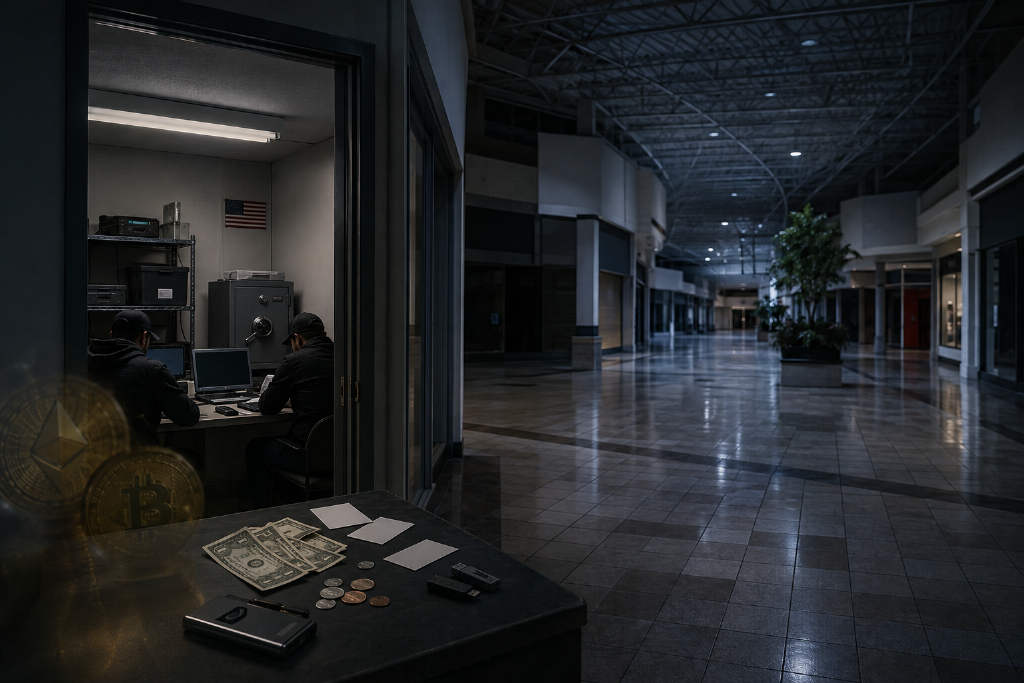
In 2021, a client calling himself Rusty approached wallet recovery specialist Chris Brooks with a dramatic claim: he and two other people had won a lawsuit and obtained 5,000 BTC, worth about $53 million at the time, along with $1 billion in ETH. Brooks and his father then flew overnight to Georgia, spent a full day working on the wallets in a back office at a shopping mall, and came away with about $10.
The episode, odd as it sounds, points to a recurring problem in crypto asset recovery. People may believe they have lost access to major holdings, but in some cases the money was never there in the first place, or not in the wallet they think they should be opening.
Recovery work focuses on access, not pulling coins back from the chain
For wallet recovery firms, "lost crypto" can describe several very different situations.
The job is not to retrieve Bitcoin from the blockchain. It is to restore the information needed to access a wallet that already exists. A user may have thrown away a hardware wallet, forgotten a password, or lost part of a seed phrase. None of that automatically means the underlying assets are gone.
Bruno Krauss, co-founder and chief technology officer of ReWallet, told Magazine: 「If you’re missing a few words, it can usually be recovered.」
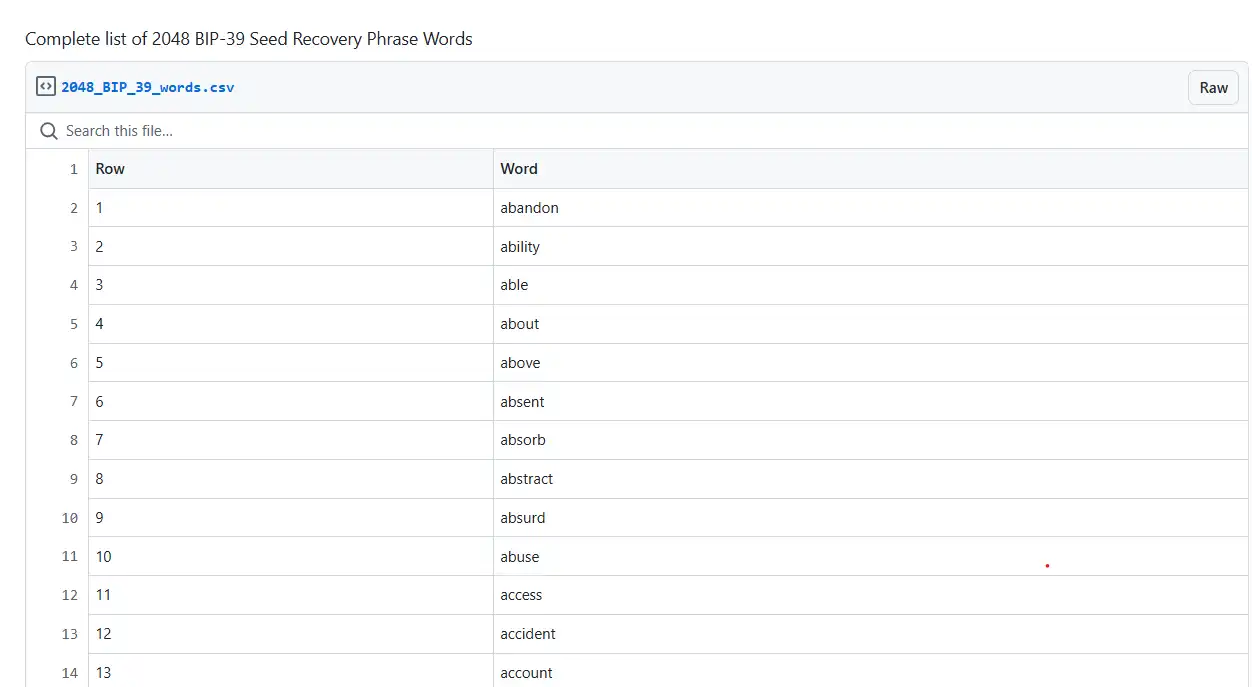
Bitcoin’s BIP39 mnemonic standard uses a list of 2,048 words. If someone knows most of the words, specialists can sometimes search the remaining possibilities in a systematic way. The fewer pieces are missing, the easier the puzzle tends to be. Password recovery follows a similar logic.
Krauss said ReWallet once recovered a 20-character password protecting about $3 million in assets by reverse engineering a flawed password generator.
Other cases do not depend on technical defects. Some turn on understanding how a person creates passwords. That can mean asking clients about preferences and personal details, including favorite foods and places, their children’s names and birthdays, or memorable milestones.
In one case, Krauss said, a client was convinced she had used her child’s name. She later remembered that the password was actually the phone number of a local delivery company. As he recounted it, she said: 「She didn’t know why, but after thinking about it, she realized, oh, that day I dropped off a package at the store and thought, hmm, that would make a good password.」
A wrong passphrase can open a valid wallet that shows a zero balance
Bennet, a Bitcoin educator who has studied wallet security, said passphrases are one of the most confusing parts of the recovery process.
A passphrase adds another layer on top of a mnemonic seed. Enter the wrong one and the wallet may not throw an error. Instead, it can open another perfectly valid wallet. Bennet told Magazine: 「A wrong passphrase won’t return an error. It will succeed and show you a zero balance.」
That leaves room for a specific kind of mistake: a user can have the correct seed phrase, enter everything as expected, and still conclude that their BTC is gone because the passphrase was wrong.
He added that passphrases offer little protection against user error. There is no list of 2,048 valid words and no checksum. If the passphrase is forgotten, the question becomes how random it was to begin with. If it was sufficiently random, recovery is often out of reach.
Lost or damaged hardware wallets do not always help much either. If the backup seed phrase still exists, the keys can usually be restored on another device. That is why recovery specialists do not necessarily need the original hardware itself. What they need is enough information to rebuild access to the keys.
In some cases, recovery means correcting a mistake rather than finding a missing wallet. Crypto sent to the wrong blockchain, such as BNB sent to Ethereum, can sometimes be recovered as long as the receiving wallet remains under the user’s control.
Brooks said Crypto Asset Recovery has been hired to crack more than 3,000 wallets for about 1,500 people, and has cracked passwords for roughly 63% of them.
There is still a hard limit
Bennet drew that line clearly: 「If your seed phrase was generated with true randomness and you completely lost it, then your Bitcoin is gone.」
That is one of the core trade-offs of self-custody. A Bitcoin wallet does not come with a bank-style recovery desk, and there is no central administrator who can verify your identity and hand the account back.
Lucien Bourdon, a Bitcoin analyst at hardware wallet maker Trezor, put it even more directly. If the wallet backup is lost and the wallet holding the keys cannot be accessed, 「no recovery company can help.」 He added a warning: 「If they could, then the wallet could be broken into, and the basis of self-custody would be undermined.」
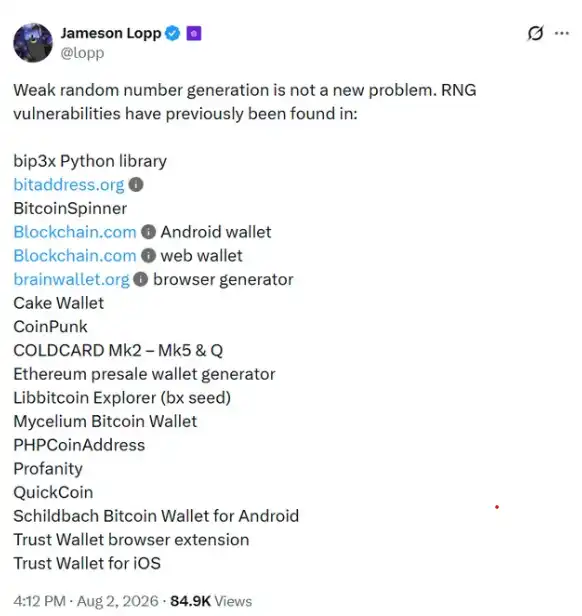
Crypto wallets rely on randomness to make practical guessing of private keys impossible. The report points to a recent Coldcard hardware wallet incident in which a firmware flaw weakened the randomness behind some wallet seed phrases, making those seeds vulnerable to brute-force attacks without physical contact.
But if a truly random seed phrase or private key has been fully destroyed, the number of possible combinations is simply too large.
Krauss said recovery specialists do occasionally find technical paths into wallets that owners thought were gone for good. Old wallet software, damaged files, badly generated passwords, and hardware flaws can all create unusual openings. In his words: 「Don’t give up hope on extreme edge cases.」
The recovery specialist may be the risk
The business carries an uncomfortable irony.
The person who may be able to help restore access to your crypto will usually need the same information that can control the funds. A seed phrase is not like a password that can be changed after exposure. If someone else gets the necessary wallet backup, that person may also gain control of the assets.
That makes choosing a recovery provider a security decision in itself. Bourdon said users should do careful due diligence, look for companies with a real track record and reviews tied to real clients, and make sure fees are charged on success rather than paid upfront. Once assets are recovered, they should be moved immediately into a new wallet with a new backup.
He also said users should be wary of anyone sending unsolicited direct messages offering to recover funds.
Krauss said other warning signs include pushing users onto WhatsApp, contacting them through a personal email account such as Gmail, demanding an upfront payment, or asking them to open an account at a specific exchange.
Charging a percentage of the amount recovered is common enough in this segment. Paying upfront to someone who promises to recover a wallet should be treated as a warning sign.
Most cracked wallets hold less than $100, Brooks said
Brooks said the Rusty case taught him another lesson. Wallet recovery may sound like technical work, but a person who is convinced they control millions or even billions of dollars can become a security risk on their own.
Crypto Asset Recovery no longer flies out to meet clients in person the way it did in Rusty’s case. The company now handles matters remotely, and sensitive wallet information is processed through automated, air-gapped systems.
Brooks said about 71% of the wallets his team cracks contain less than $100. The company does not charge for recovering wallets in that category.
If there is one thing he wants crypto users to understand, he said, it is this: 「Understand what a seed phrase is and why it matters. That is the simplest way to make sure you never need us.」