
Campaign Progress and Results
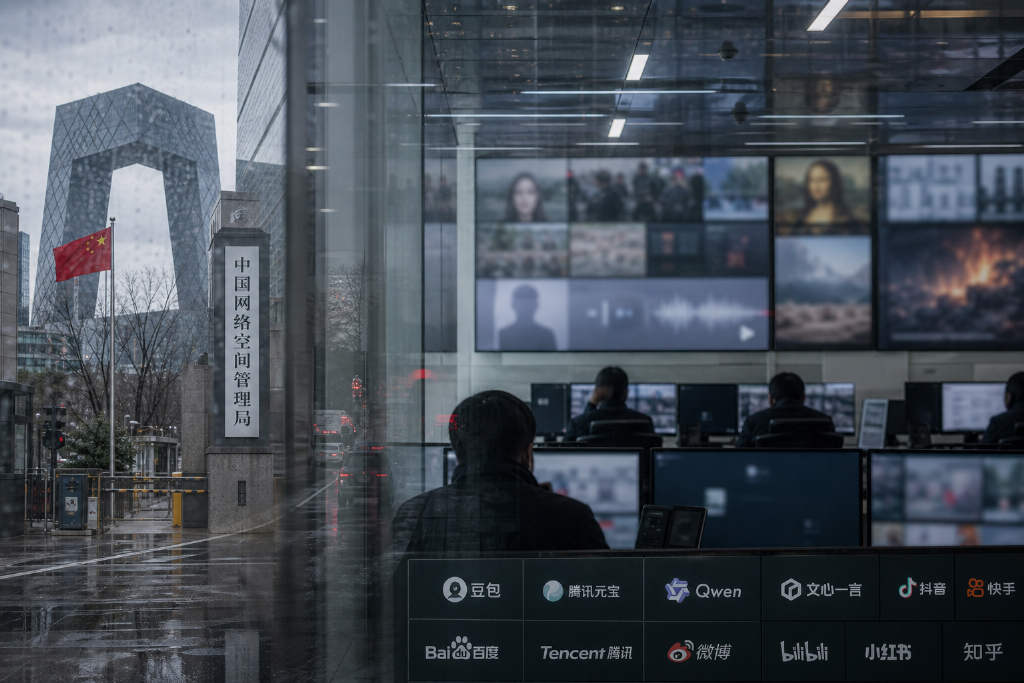
China's Central Cyberspace Affairs Commission (CAC) has rolled out the second phase of its "Qinglang" (Clean and Clear) campaign aimed at misuse of AI applications. The drive is going after AI-made false information, violent and vulgar material, impersonation, and content that violates minors' rights. So far, authorities say they have deleted more than 5.61 million pieces of illegal information, closed over 49,000 accounts, and handled more than 2,400 illegal websites and applications.
Platform Responses
Big platforms such as Douyin, Kuaishou, Weibo, Tencent, Baidu, Bilibili, Xiaohongshu, Zhihu, Douban, and Taobao have been beefing up their multimodal recognition tools, while dynamically widening face databases, voiceprint databases, and sample databases tied to violations. They have also stepped up action against violating accounts and content, and together have published 46 governance bulletins. AI platforms including Doubao, Yuanbao, Qianwen, and Wenxin Yiyan (Ernie Bot) are tightening review of original data, putting stricter limits on harmful content output, and raising labeling requirements for AI-generated content. And app stores run by Huawei, Xiaomi, OPPO, and vivo are tightening developer access and listing reviews, while carrying out random checks on apps already available on their platforms.
Typical Cases and Penalties
During the campaign, cyberspace authorities also disclosed a string of typical cases. Among them: using AI to "magically alter" classic literary works, creating fake information about disasters and social hot topics, using AI face-swapping and voice-changing to impersonate public figures, churning out violent and vulgar content at scale, using AI to make content that infringes on minors' rights, and using AI "hosted" software for astroturfing activities. For AI products and applications found in violation, the relevant authorities will use legal measures including warnings, fines, removal from app stores, or shutdown.