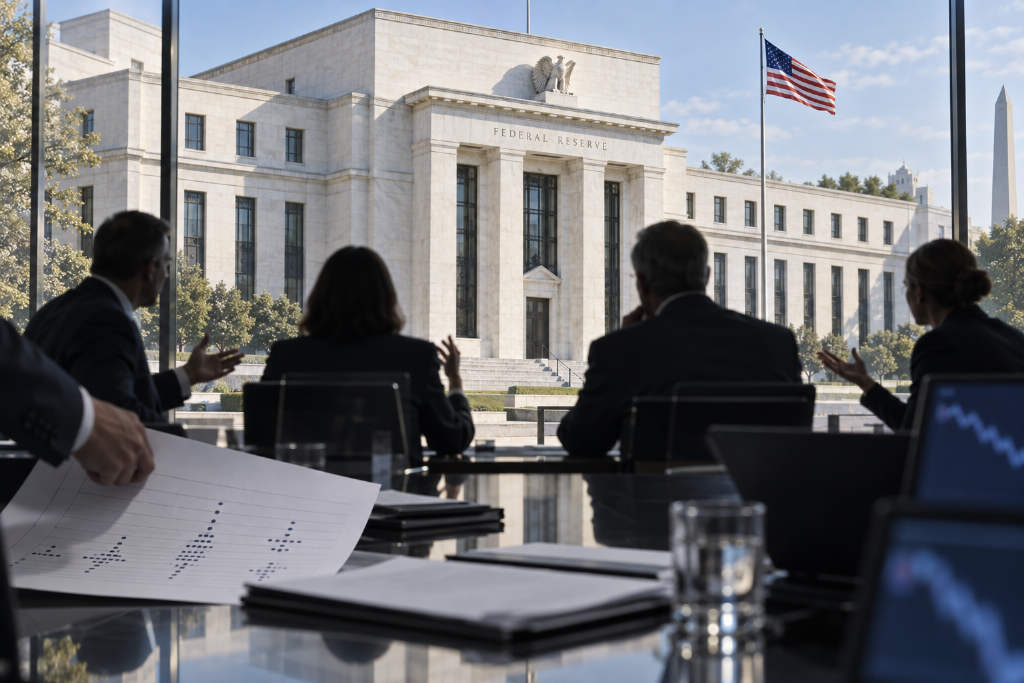
Odaily reported that Federal Reserve Chair Kevin Warsh is pressing for a major shift in how the central bank communicates with markets. His proposal would sharply reduce public hints about the future path of interest rates, weaken the closely watched quarterly dot plot, and could even eliminate it altogether. Warsh’s view is that excessive transparency and heavy reliance on forward guidance turn market pricing into an echo of central bank rhetoric rather than an independent reading of economic conditions. In his telling, that weakens the market’s ability to reflect the real economy through asset prices.
The approach has already met strong opposition inside the Federal Reserve. According to the report, many policymakers argue that managing expectations is an essential central bank function. They say choosing to speak less would not necessarily produce calmer or more rational pricing. Instead, it could leave investors without a clear reference point and trigger repeated bouts of sharp market volatility. The dispute points to a deeper divide over whether central bank communication should guide markets closely or step back and let incoming data do more of the work.
Odaily reported that Federal Reserve Chair Kevin Warsh is pushing a major change in the Fed’s communication strategy from inside the central bank.
Warsh wants the Fed to sharply reduce its public signaling on the future path of interest rates, weaken the closely watched quarterly dot plot, and possibly remove it altogether. Under that approach, investors would be left to price assets based on economic data rather than official hints.
In Warsh’s view, overly transparent forward guidance turns market prices into an “echo chamber” of the central bank’s own messaging, distorting the ability of asset prices to reflect real economic conditions.
The idea has already triggered strong pushback within the Federal Reserve. Many policymakers, the report said, argue that managing expectations is an essential central bank responsibility. In their view, deliberate silence would not create more rational pricing. It could instead leave markets without a reference point and lead to frequent episodes of sharp volatility.
This article was originally published by Bit.Fan. For more cryptocurrency news and market insights, visit www.bit.fan. Disclaimer:
The market information, project data, and third-party content displayed on this platform are for industry information sharing only and do not constitute any form of investment advice or return commitment.
Cryptocurrency trading carries high risks. Users should fully assess their risk tolerance and make independent decisions. All profits, losses, and legal responsibilities are borne by the users themselves.