
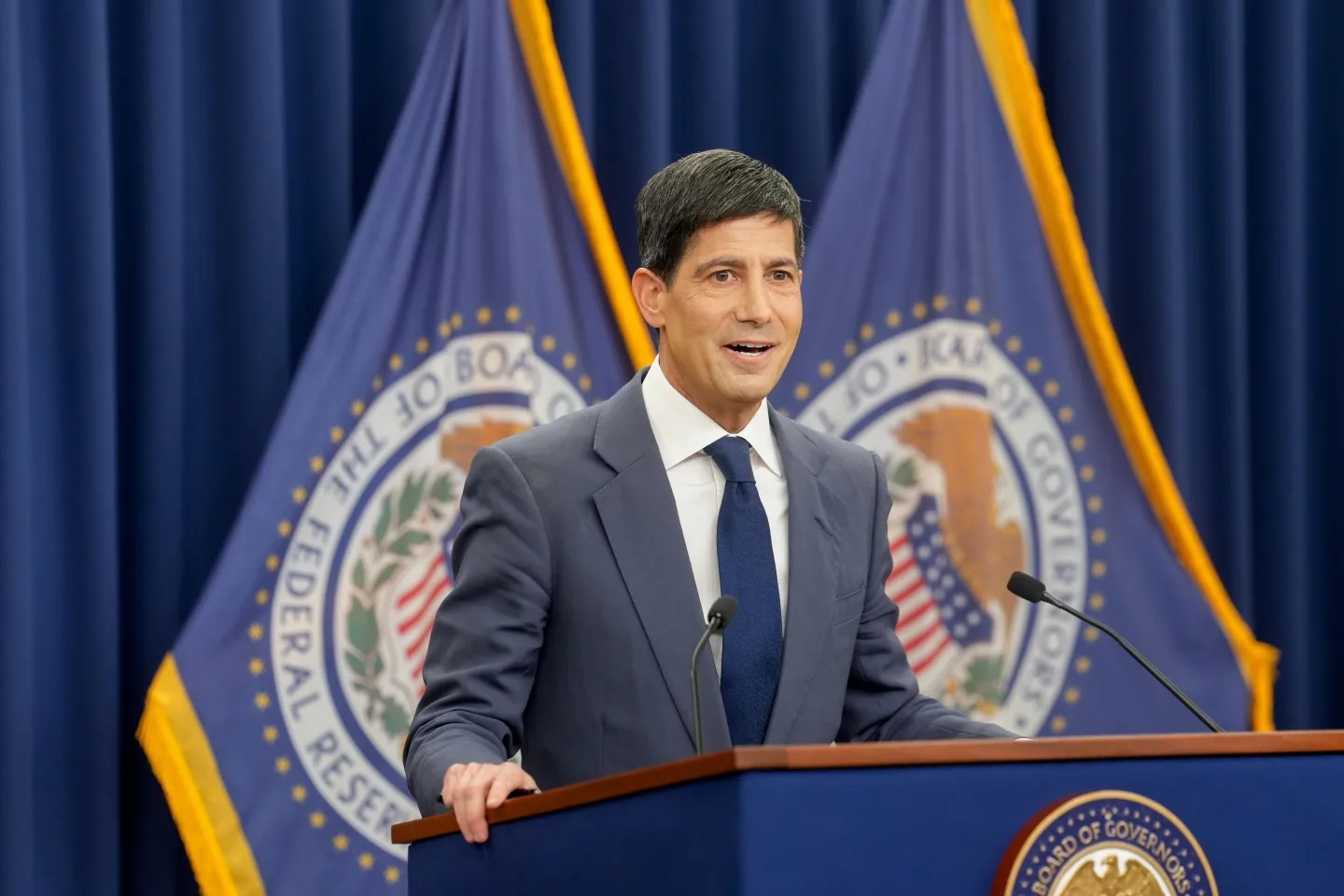
Federal Reserve Chair Kevin Warsh is reportedly weighing a plan to reduce the number of Federal Open Market Committee meetings held each year, a change that could reshape the policy cadence global markets have tracked for decades.
Under the current system, the FOMC has held eight regular meetings a year since 1981, or roughly one every six weeks. U.S. law requires the committee to meet at least four times annually.
The report said Warsh has asked Fed officials to submit their views, and the direction of the adjustment could become clearer before the Sept. 15-16 meeting. The Federal Reserve has not made a formal decision, however, and the remaining 2026 meetings are still set to follow the existing schedule. A new framework is seen as more likely to start in 2027.
At his nomination hearing in April, Warsh said four meetings a year would not be enough, which suggests the final arrangement could land somewhere between four and eight. The proposal also fits with other changes he has pushed since taking office, including shorter policy statements, less forward guidance and a review of the data and inflation framework used by the Fed.
Fewer meetings do not automatically mean easier policy
A lower meeting count does not, by itself, signal that the Fed is preparing to cut rates or back away from fighting inflation. The bigger shift would be in how policy signals reach the market. If investors get less guidance from regularly scheduled meetings and post-meeting press conferences, they may need to rely more directly on inflation, employment and growth data to judge the rate path.
At the July meeting, the Fed voted 9-3 to keep rates unchanged at 3.50% to 3.75%, marking a fifth straight hold. Even so, three officials still supported a 25-basis-point rate increase. At that point, rate markets were pricing in roughly a 65% to 66% chance of a September hike, showing that tightening risk had not disappeared.
The article also said Warsh has lowered policy transparency, avoided spelling out the next move in advance and is considering reducing post-meeting press conferences. If meetings become less frequent, each decision could carry a larger policy adjustment, while markets may find it harder to absorb the outcome ahead of time. For Bitcoin, that could mean fewer short-term volatility events tied to FOMC dates, but sharper price reactions around the meetings that remain.
The 2.2% inflation reading is one of the key Bitcoin signals to watch
The current challenge for the Fed, according to the report, is that inflation gauges are pointing in different directions. Headline personal consumption expenditures inflation is still running at 3.7% year over year, while core PCE is 3.3%, both well above the 2% target. But the Dallas Fed’s trimmed mean PCE stands at 2.2%, and the Cleveland Fed’s estimate for 10-year inflation expectations is holding at 2.43%.
If Warsh treats energy and other more volatile components as short-term noise and gives greater weight to the 2.2% trimmed mean PCE reading, the Fed could choose to leave rates unchanged again in September. The article said a lower probability of further hikes would help ease real rates and the dollar, reducing the holding cost of non-yielding assets and potentially drawing capital back toward risk assets such as Bitcoin.
Bitcoin was trading at about $63,000 at the time, the report said. If it can reclaim $64,500 and break above the $65,300 resistance area, it may then test $66,000 to $68,000. If the Fed keeps treating the 3.7% headline PCE reading as the main signal, though, expectations for more tightening and higher Treasury yields could persist, leaving Bitcoin at risk of slipping below $62,000.
Bitcoin may be priced more by data and capital flows than by the meeting calendar
The article said the deeper message behind a smaller FOMC schedule is that the Fed is trying to fade the role of fixed dates and forward guidance, replacing them with a more data-centered decision model. In that scenario, Bitcoin may gradually move away from a trading rhythm built around waiting for the Fed’s next verdict every few weeks, with inflation trends, real rates, the dollar and spot ETF flows taking a larger role in price discovery.
That shift is still not enough to prove the hiking cycle is over. The U.S. 10-year Treasury yield remains close to 4.74%, and after subtracting long-term inflation expectations, the article gives a simple estimate of the real rate at about 2.31%. That continues to compete with Bitcoin, which does not generate cash yield.
Fund flows are not yet offering a stable direction either. U.S. spot Bitcoin ETFs saw about $233 million in inflows on July 30, then switched to about $87.9 million in outflows the following day, a sign that institutional capital has not settled into a consistent trend.
The report said Bitcoin’s ability to move beyond the shadow of further tightening will depend on whether the Fed starts to place more weight on lower core inflation signals, and whether the market can confirm that hike odds, real rates and the dollar are all moving lower at the same time. Warsh’s idea would change the way policy signals are delivered. The next clues, the article said, may come from the Jackson Hole central banking gathering and the September FOMC meeting.